


In Stock
MDRX rotor disc
₹5,420.00
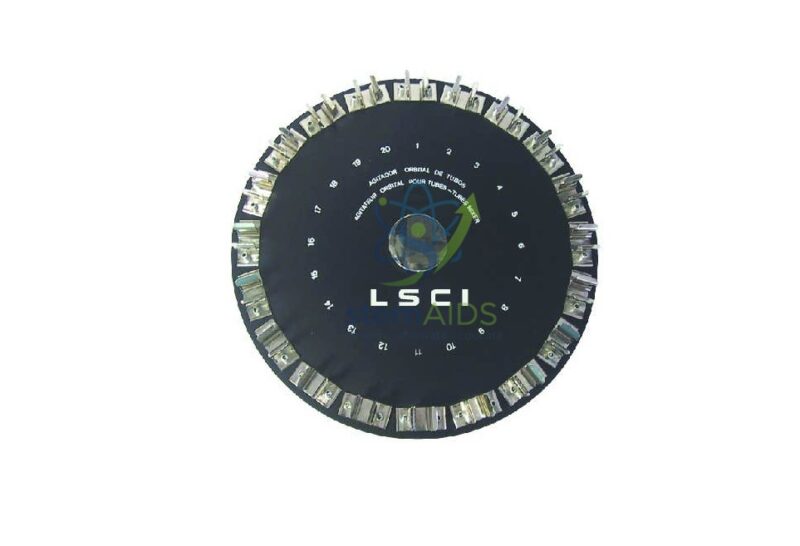
Quick Answer: The MDRX rotor disc is a round tube-holding disc for a rotary agitator, pictured as a dark disc with a ring of tube clips around its edge; it is fitted to the agitator’s drive to carry tubes as they turn end over end.
Why Buy a Separate Rotor Disc
On a disc rotator, the disc is the part that wears. Clips lose their grip after thousands of tube insertions, and a disc can be scratched or cracked by a dropped tube or harsh cleaning. The MDRX rotor disc replaces a tired disc without replacing the motor, and it can also serve as a second disc so one set of tubes is loaded while another runs.
The photo shows a dark disc with clips evenly spaced around the rim and a central hub for mounting. MDRX is the model designation in the title, so the disc should be matched to an agitator that takes MDRX discs. The maker’s logo on the disc also appears on the Rotating inclined plane agitator, but neither listing states that the two fit each other.
Loading follows the usual rule for rotating discs: spread tubes evenly and pair similar weights opposite each other. A second disc also lets a lab keep one disc for biological samples and another for chemical work, which reduces the risk of carry-over between them.
Specifications
| Type | Rotor disc (tube-holding disc) for a rotary agitator |
| Designation | MDRX, as titled |
| Tube mounting | Clips around the rim, as pictured |
| Colour | Dark disc, as pictured |
| Compatible agitator and clip size | Confirm at enquiry |
Reasons Labs Order a Rotor Disc
- Replacing a disc whose clips no longer hold tubes firmly
- Keeping a spare disc pre-loaded so one batch runs while the next is prepared
- Separating discs used for biological samples from those used for chemical mixing
- Restoring an agitator after a disc has cracked or warped
Care & Handling
- Test each clip with an empty tube before use, and retire the disc if tubes slip.
- Clean with mild detergent or a compatible disinfectant rather than solvents that could attack the disc material.
- Store spare discs flat, away from heat, so they stay true.
Why Choose LabEquip
Labs that already run a disc agitator buy the MDRX rotor disc to keep it in service or to double its throughput. Related rotator parts, including support rods for rotary shaker discs, are in General Lab Products.
Frequently Asked Questions
Which agitator does the MDRX rotor disc fit?
It is intended for agitators that take MDRX discs, so the designation in the title is the key. Send the model of your agitator and the fit can be checked before you order.
Why would a lab want a second disc?
A second disc lets one set of tubes be loaded while another batch is turning, and it allows separate discs for biological and chemical work so samples do not cross-contaminate.
How can I tell that the clips are worn?
A worn clip lets a tube turn or slide when pushed lightly, and tubes may drop out at speed. Test with an empty tube; if several clips are loose, replace the disc.
How is the disc changed?
Switch off the agitator, remove the tubes, release the disc from the drive hub as described in the agitator’s instructions, fit the new disc and turn it by hand before switching on.
Can the disc be autoclaved?
Only if its material is rated for steam sterilisation, which the title does not state. Wiping with 70% ethanol or another suitable disinfectant is the safer routine.
Does it matter where tubes go on the disc?
Yes. Spread tubes evenly around the rim and place tubes of similar weight opposite each other, so the disc turns smoothly and the drive is not strained.
Last Updated: September 2026
You must be logged in to post a review.
Bestsellers




Reviews
There are no reviews yet.