


In Stock
LED Headlamp
Advanced Photometric Control: Features a high-output LED module delivering a constant color temperature of 5500K–6000K, integrated with a precision-engineered optical lens that enables seamless adjustment of beam spot diameter to ensure maximum target contrast.
Power Management Architecture: Powered by a high-density, rechargeable Lithium-ion battery system offering 4–6 hours of continuous operation at peak luminosity, paired with a lightweight, ergonomic chassis designed to ensure zero-pressure stabilization during prolonged clinical use.
$6.77
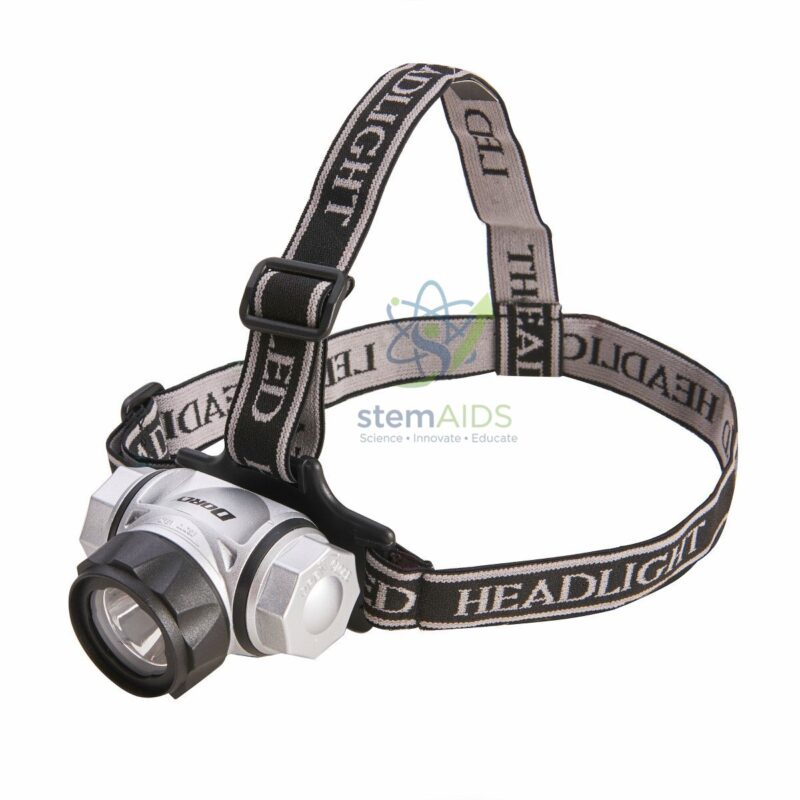
Quick Answer: The LED Headlamp is a small battery-powered LED light worn on an elastic headband, so its beam follows the wearer’s gaze and both hands stay free. The listing photograph shows a lamp unit on a grey band with an over-the-head strap, suited to fieldwork after dark, bench repairs and inspection jobs.
Hands-Free Light for Close Work
An LED headlamp puts the light source just above the eyes, so shadows fall behind the object being examined rather than across it, which is what makes it useful for close tasks such as reading a meter inside a cabinet or wiring a plug. LEDs draw far less power than filament bulbs for the same light and tolerate knocks better, which is why they have replaced bulb headlamps.
In the photograph, the lamp sits on an elastic band with a second strap running over the top of the head. That top strap stops the lamp sliding down the forehead when the wearer bends or moves quickly. The lamp head usually tilts downward so the beam can be aimed at the hands or at the ground ahead. Battery type, number of brightness modes and whether the beam can be focused are not stated in the listing.
A headlamp gives no head protection. Where a hard hat is also needed, the Helmet with Lamps carries a cap lamp on a safety helmet instead.
Where a Headlamp Helps
- Night fieldwork such as moth trapping, frog counts and bat walks on biology field courses.
- Checking wiring, gas lines and plumbing under benches and inside cabinets.
- Astronomy club sessions, using the lowest setting or a red cover over the lens to protect night vision.
- Emergency light in preparation rooms during power cuts.
Specifications
| Type | LED headlamp |
| Mounting | Elastic headband with over-the-head strap (listing photograph) |
| Lamp head | LED lamp unit that tilts |
| Power | Battery-powered |
| Battery type, modes and beam | Confirm at enquiry |
Batteries and Band
- Take the batteries out before storing the headlamp for long periods, since leaking cells corrode the contacts.
- If the band detaches from the lamp, wash it separately in mild soapy water and let it dry.
- Carry a spare set of batteries with the lamp on field trips.
- Avoid shining the beam into other people’s eyes; at close range a bright LED dazzles.
Why Choose LabEquip
Biology field course leaders, lab technicians and estates staff buy headlamps as practical hands-free lights, often one per student for night surveys. LabEquip lists it in General Lab Products, and group quantities can be requested on the contact page.
Frequently Asked Questions
Why use a headlamp instead of a torch?
A torch occupies one hand and points wherever that hand points, while a headlamp leaves both hands free and lights up whatever you look at. That matters when writing field notes, handling specimens or using tools in the dark.
What does the top strap do?
It runs over the crown and takes some of the lamp’s weight, so the band does not slide down the forehead when you bend over or move quickly. It also lets the main band be worn a little looser.
How do I protect night vision while using a headlamp?
Use the lowest brightness that lets you see, point the beam down at your work and avoid looking into other people’s lamps. Red light disturbs dark adaptation less than white light, so a red filter or red mode helps during stargazing.
Can the headlamp be worn over a hard hat?
Many elastic bands stretch over a helmet, but they can slip on the smooth shell. Helmets with lamp clips, or a helmet with a built-in cap lamp, hold the light more securely.
Which way should the beam point for close work?
Tilt the lamp head down so the centre of the beam lands where your hands are working. Pointing it straight ahead leaves close work at the dim edge of the beam and dazzles anyone facing you.
Can students share headlamps on field trips?
Yes, if the band is adjusted for each wearer and wiped between users. Label each lamp and check the batteries before handing them out, so no one is left in the dark partway through a survey.
Last Updated: September 2026
You must be logged in to post a review.
Bestsellers




Reviews
There are no reviews yet.