


In Stock
Industrial Safety Helmet
Kinetic Energy Dissipation: Constructed from a high-density polyethylene (HDPE) outer shell integrated with a 6-point textile suspension system, specifically engineered for multi-axial force distribution and superior vertical impact absorption.
Ergonomic Stabilization: Features a precision ratchet-lock nape adjustment and universal 30mm side-slots, facilitating a stabilized anatomical fit-profile while allowing the seamless integration of secondary hearing and facial protection peripherals.
₹585.00
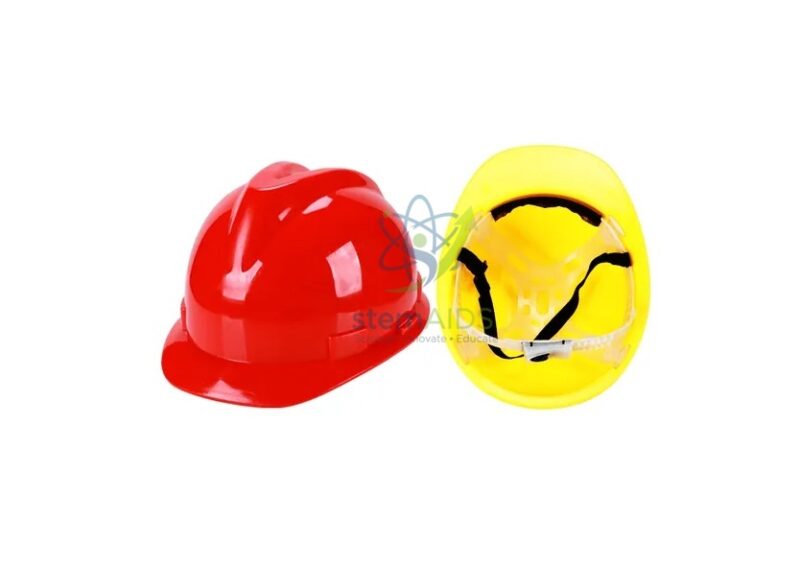
Quick Answer: The Industrial Safety Helmet is a hard hat: a rigid plastic shell held away from the head by an inner harness, worn to protect against falling objects and bumps in workshops, stores, plant rooms and construction areas. The listing photograph shows red and yellow shells.
Shell and Harness Working Together
An industrial safety helmet protects in two stages. The shell spreads the force of a falling tool or bolt over a wider area and deflects glancing blows, while the harness inside keeps a gap between shell and skull so the shell can flex without passing the full impact to the head. That clearance matters: a helmet with a torn or missing harness gives far less protection even when the shell looks perfect.
The harness is sized to the head by a ratchet knob or a pin-and-hole band, and a sweatband at the forehead absorbs perspiration. Many helmets also have side slots for accessories such as ear muffs or a visor; LabEquip lists slot-fix versions such as the Helmet with Slot Fix Face Shield for jobs that also need face protection.
On large sites, helmet colour often shows a person’s role, for instance visitors, supervisors or electricians, but the scheme is set by each employer or college rather than by the helmet. The listing photograph shows red and yellow shells, so ask for the colour mix that matches your own scheme.
Inspection and Care
- Before each use, check the shell for cracks, dents and a chalky or faded surface, which are signs of ageing plastic.
- Do not paint the shell, clean it with solvents or stick on labels unless the helmet maker allows it; these can weaken the plastic.
- Keep helmets off vehicle rear shelves and window sills, where heat and sunlight age them quickly.
- Replace any helmet that has taken a heavy blow, and change a worn harness or sweatband.
Specifications
| Type | Industrial safety helmet (hard hat) |
| Construction | Rigid plastic shell with inner suspension harness |
| Adjustment | Head-size adjustment on the harness |
| Colours in photograph | Red, yellow |
| Shell material and accessory slots | Confirm at enquiry |
Where Hard Hats Are Needed
- Engineering and ITI workshops with overhead cranes, hoists or high racking.
- Construction and renovation work on school and college campuses.
- Stores and warehouses where stock is lifted onto upper shelves.
- Industrial visits and field trips to plants, quarries and building sites.
Why Choose LabEquip
Estates teams, engineering departments and training institutes buy hard hats in sets for staff, students and site visitors, often in more than one colour. LabEquip lists this helmet in General Lab Products, and colour splits and quantities for a group can be sent through the contact page.
Frequently Asked Questions
How should an industrial safety helmet fit?
It should sit level on the head, about a finger’s width above the eyebrows, and stay on when you bend forward. Tighten the harness until the helmet no longer wobbles, but not so far that it presses painfully on the forehead.
Can I wear a cap under a hard hat?
Only a thin liner or balaclava made for the purpose. A cap or thick hat changes the gap between harness and head and can stop the helmet sitting properly, which reduces protection.
Why does the harness matter so much?
The harness holds the shell off the head, leaving a space that lets the shell flex and absorb energy in an impact. Without that clearance the blow passes more directly to the skull, so a damaged harness should be replaced straight away.
Is a ventilated helmet suitable for electrical work?
No. Vent holes can let a conductor or live part reach the head, so helmets used near exposed electrical parts should have an unvented shell. Vented designs belong where electrical hazards are absent.
What do the different helmet colours mean?
There is no single national scheme. Many sites use colours to identify groups such as visitors, supervisors, engineers or first aiders, but each employer sets its own code, so follow the one posted at your site.
When should a hard hat be replaced?
Replace it after any significant impact, when the shell is cracked, brittle or faded, or when it reaches the replacement date given by its maker. Harnesses wear out sooner than shells and can often be changed separately.
Last Updated: September 2026
You must be logged in to post a review.
Bestsellers




Reviews
There are no reviews yet.