




In Stock
Funnel Stand, Wooden
Premium Seasoned Hardwood: Crafted from kiln-dried, high-density wood that resists warping, cracking, and moisture absorption over time.
Superior Acid-Resistant Finish: Coated with a specialized, heavy-duty clear lacquer that protects the wood from chemical spills, acids, and alkalis.
$3.05
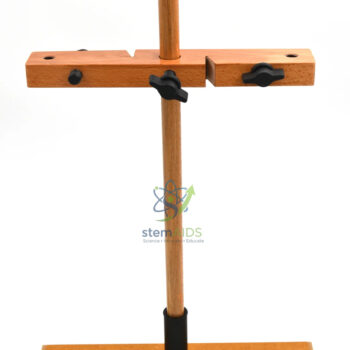
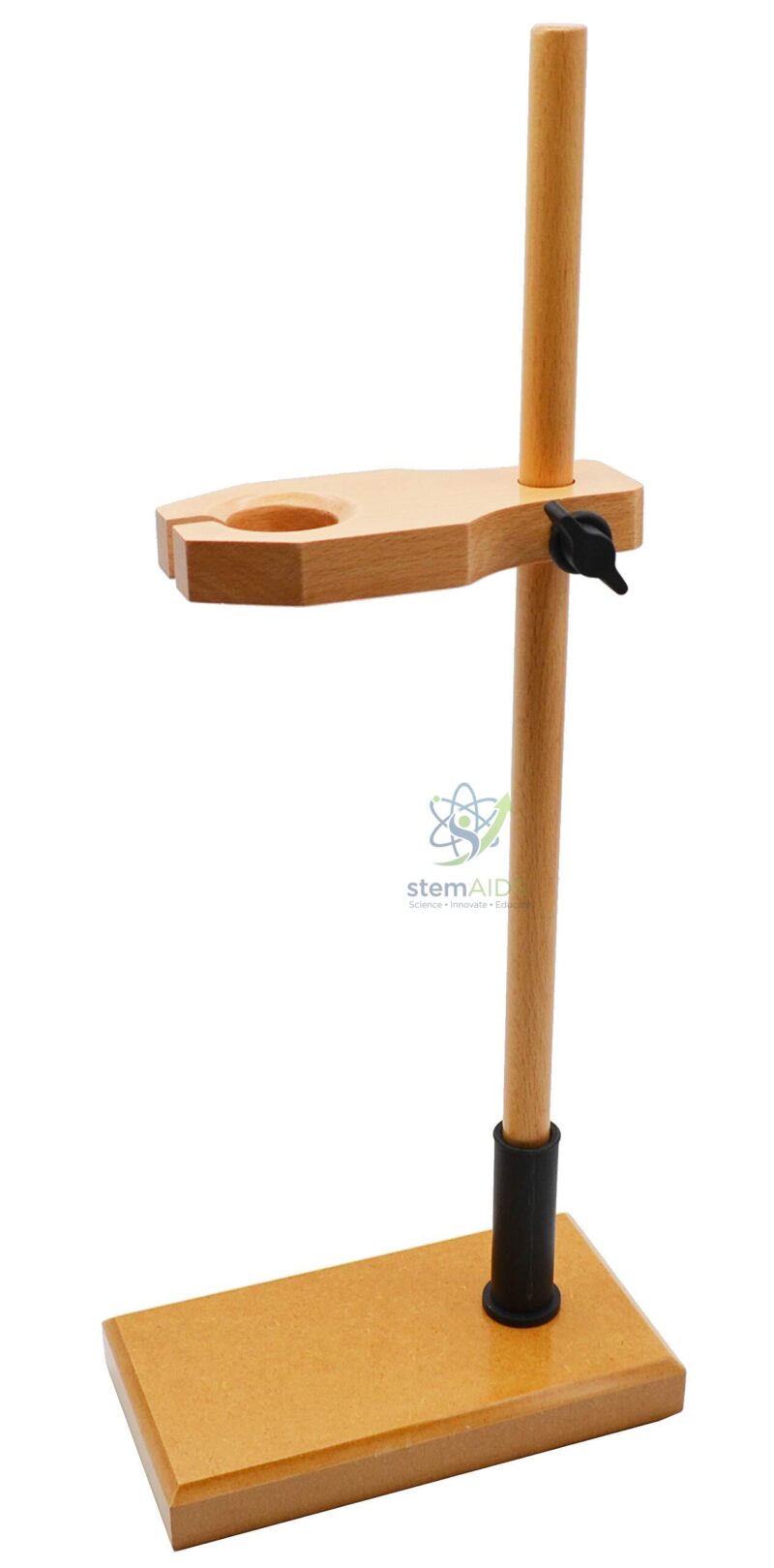
Quick Answer: The Funnel Stand, Wooden is a filtration support made from wood: a flat base, an upright rod and a sliding arm with an opening that holds a filter funnel over a beaker or flask. The listing image shows a single funnel position locked at height by a thumbscrew.
Setting Up Gravity Filtration
In gravity filtration the funnel must stay still while liquid is poured in, and its stem should touch the inner wall of the receiving vessel so the filtrate runs down the glass instead of splashing. The wooden funnel stand makes both easy: the arm slides on the upright until the stem reaches just inside the beaker, then the thumbscrew locks it.
Wood suits filtration benches because nothing in it rusts when filtrates drip, and the arm does not scratch glass funnels. It does absorb liquid, so solutions spilt on the arm should be wiped off, and strongly acidic or alkaline filtrates are better handled with a plastic funnel holder.
A long stem 60 degree funnel is a typical partner: the stem fills with liquid during filtration, and that column of liquid speeds the flow. The arm opening is not sized in the title, so match it with the funnel diameters you use.
Applications
- Gravity filtration of mixtures, such as separating sand from salt solution
- Filtering solutions before crystallisation in salt preparation practicals
- Supporting a funnel while transferring liquids into narrow-necked bottles
- Holding a funnel with a cotton wool plug for simple clean-up of a solution
Specifications
| Material | Wood (type and finish not stated) |
| Parts | Base, upright rod, sliding funnel arm (as pictured) |
| Funnel positions | One, in the listing image |
| Height setting | Thumbscrew on the arm |
| Opening diameter | Confirm at enquiry |
Care & Handling
- Wipe drips off the arm and base after each filtration and let the wood dry.
- Keep the stand away from burners and hot plates.
- Tighten the thumbscrew by hand, since forcing it can split the wooden arm.
Why Choose LabEquip
Primary and secondary schools often prefer wooden funnel stands for filtration practicals because they are light, quiet and rust-free on wet benches. LabEquip lists it in the General Lab Products range; send your quantities.
Frequently Asked Questions
Why should the funnel stem touch the side of the beaker?
The filtrate then runs down the glass wall instead of dropping into the liquid below. That prevents splashing and loss of filtrate, and helps the liquid flow steadily.
How do I fold filter paper for this set-up?
Fold the circle in half, then into quarters, and open it into a cone with three layers on one side and one on the other. Wet it with a little of the solvent so it sticks to the funnel wall.
Is a wooden stand suitable for acidic filtrates?
For occasional dilute solutions, yes, provided spills are wiped off. For regular work with strong acids or alkalis, a plastic holder lasts longer because it does not absorb the liquid.
How high should the funnel be set?
Set it so the stem tip sits just inside the receiving vessel and touches its wall, with the funnel rim comfortably below eye level for pouring.
Can it hold a separating funnel?
A separating funnel is heavier and taller, and its tap needs clear space below. A retort stand with a ring, or a dedicated separating funnel holder, is more secure for liquid-liquid extraction.
What size funnel fits the stand?
That depends on the opening in the arm, which the title does not state. Measure the outside diameter of your funnels just below the rim and compare it with the opening of the stand you choose.
Last Updated: September 2026
You must be logged in to post a review.
Bestsellers




Reviews
There are no reviews yet.