




In Stock
Ear Muffs
Acoustic Insulation: Features high-density open-cell acoustic foam inserts encapsulated within impact-resistant ABS ear cups, providing a certified noise attenuation profile optimized for high-frequency mechanical dampening.
Mechanical Adjustability: Engineered with a telescopic stainless steel headband and soft-padded synthetic leather cushions, ensuring a consistent peripheral seal and uniform pressure distribution for extended-wear comfort.
₹655.00
Quick Answer: These Ear Muffs are hearing protectors made of two padded ear cups on an adjustable headband, which enclose the ears and reduce the noise reaching them in workshops, machine rooms and noisy areas of a laboratory.
How Muffs Cut Noise
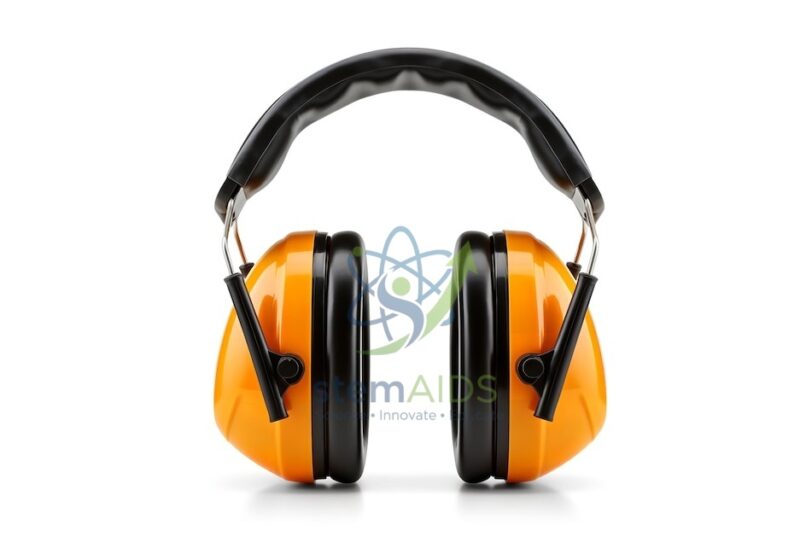
Each cup is a rigid shell lined with sound-absorbing foam and edged with a soft cushion that seals against the head around the ear. The seal stops sound leaking in at the edges, and the shell and lining absorb much of the sound that strikes them. The headband presses the cups gently in place; the listing photograph shows orange cups on a padded black band.
How much a hearing protector reduces noise is given by its attenuation rating, printed on the product or its packaging as an SNR or NRR value. The listing does not state it, so compare the marking with the noise levels in your workshop. As a practical guide, if you have to raise your voice to be heard by someone about an arm’s length away, the noise is loud enough to need protection.
Muffs are easy to check at a glance, quick to put on and take off, and simple to share when the cushions are wiped between users, which makes them practical in workshops where students rotate between machines. For longer shifts in hot conditions, or where a muff gets in the way of a helmet, reusable ear plugs are an alternative.
Noisy Settings
- Engineering and ITI workshops with lathes, grinders and power saws.
- Generator, compressor and plant rooms.
- Grounds maintenance with mowers and brush cutters.
- Physics lessons on sound, showing how absorbing materials reduce loudness.
Specifications
| Type | Passive hearing protectors (muff type) |
| Design | Padded cups on an adjustable headband |
| Colour in listing photograph | Orange cups, black headband |
| Use | Noisy workshops, machine rooms, grounds maintenance |
| Attenuation rating (SNR or NRR) | Confirm at enquiry |
Care & Handling
- Wipe the cushions after each user with a mild disinfectant wipe and let them dry.
- Look for cracks and hardening in the cushions; a split cushion breaks the seal and lets noise in.
- Do not stretch the headband wide or leave it bent open, which weakens the clamping force.
- Keep them in a clean, dry place away from heat and direct sunlight.
Why Choose LabEquip
Engineering colleges, ITIs, school workshops and maintenance teams buy ear muffs for students and staff who work near machines. LabEquip lists this standard pair and the Superior grade in General Lab Products, and workshop quantities can be arranged through the contact page.
Frequently Asked Questions
How do I know if hearing protection is needed?
If you have to shout to be heard by someone about an arm’s length away, or your ears ring after work, the noise is loud enough to damage hearing over time. Wear protection whenever machines of that loudness are running.
How should the muffs be fitted?
Push hair back from the ears, place the cups so they fully enclose each ear, and adjust the headband until the cushions seal evenly. Spectacle arms, caps and long hair under the cushions break the seal and reduce protection.
Are muffs or ear plugs more effective?
Both work when worn correctly. Muffs are quicker to fit and easier to check, while plugs are cooler, lighter and fit under helmets. Some very noisy tasks call for both together.
What do SNR and NRR mean?
They are single-number attenuation ratings used in different regions, showing roughly how many decibels a protector reduces noise by under test conditions. Protection in real use is usually lower, especially with a poor fit.
Can students share them?
Yes, if the cushions are wiped with a disinfectant wipe between users and allowed to dry. For daily use by the same person, issuing individual pairs is more hygienic.
When should the cushions be replaced?
When they are cracked, flattened or hard, or no longer seal comfortably against the head. Fit new cushions if the model takes them; if the headband has lost its tension, replace the whole unit.
Last Updated: September 2026
You must be logged in to post a review.
Bestsellers




Reviews
There are no reviews yet.