



In Stock
Aerator 150 L/h
Aérateur 150 L/h Engineered for a standardized volumetric flow rate of 150 liters per hour, ensuring uniform gas diffusion through microporous stones even in high-viscosity laboratory cultures or deep-tank configurations.
Low-Decibel Kinetic Housing Features integrated sound-dampening chambers and anti-vibration rubberized feet to maintain acoustic neutrality under continuous 24/7 duty cycles in noise-sensitive research and clinical settings.
$14.15
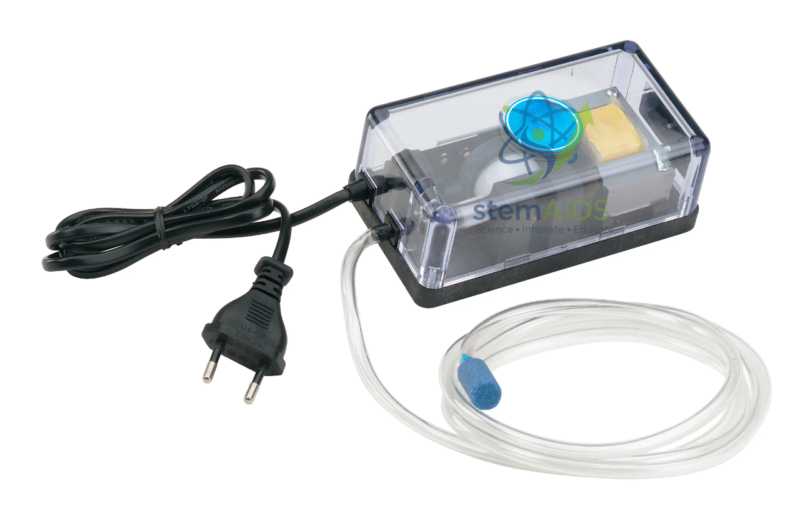
Quick Answer: The Aerator 150 L/h is a small electric diaphragm air pump with a rated air output of 150 litres per hour, pictured in a clear case with airline tubing and a blue air stone. As an aquarium aerator it bubbles air through water to keep it circulating and oxygenated, and the same pump serves hydroponics tanks and culture vessels in the laboratory.
Inside a Diaphragm Air Pump
An electromagnet inside the case makes a small arm vibrate rapidly, flexing a rubber diaphragm. Each movement draws air in through a filter and pushes it out through a one-way valve into the airline. The clear case in the listing photo shows this mechanism, so the pump can be used to explain how it works as well as to aerate water.
The rated flow applies when there is little resistance; pushing air through a fine air stone and down to the bottom of a deep container reduces it, because the pump has to overcome the water pressure. The air stone breaks the stream into fine bubbles, which lift water from the bottom to the top. Most of the oxygen actually enters at the surface, and the circulation keeps that surface renewed.
Compared with the Air Pump for Aquarium 180 L/h in this range, this unit has a lower rated output and is pictured with its tubing and air stone. A gentler flow often suits small tanks, sample jars and hatcheries, where strong bubbling would disturb delicate organisms.
Where the Aerator Is Used
- Aerating a small classroom aquarium or a holding tank for pond animals
- Keeping roots supplied with oxygen in a deep-water hydroponics set-up
- Hatching brine shrimp eggs, which need constant gentle aeration
- Keeping algae or yeast cultures mixed in flasks during growth experiments
Specifications
| Type | Electromagnetic diaphragm air pump |
| Rated air output | 150 L/h (from the product title) |
| Pictured accessories | Airline tubing and air stone |
| Case | Clear case, as pictured |
| Supply voltage and plug type | Confirm at enquiry |
Care & Handling
- Place the pump above the water level, or fit a non-return valve, so water cannot siphon back into it if the power fails.
- Soak or replace the air stone when bubbles become coarse or the flow drops, since stones clog with deposits.
- Stand the pump on a soft pad to reduce vibration noise, and keep it dry.
- Unplug before handling the tubing or putting hands in the water.
Why Choose LabEquip
Biology teachers, hydroponics trainers and aquaculture students choose a small aerator when they need gentle, reliable bubbling for a tank or culture. LabEquip lists it in the General Lab Products range; the Botany and Hydroponics kit is one set-up that benefits from aeration.
Frequently Asked Questions
Why does the air flow drop when the air stone is deep in the water?
The pump must push against the pressure of the water above the stone, which increases with depth, and the fine pores of the stone add resistance. The rated 150 L/h is reached only with little back pressure, so expect less in a deep tank.
Do fine bubbles add more oxygen than large ones?
Fine bubbles have more surface area and rise more slowly, so a little more oxygen dissolves from them directly. The main benefit of either kind is circulation, which brings oxygen-poor water up to the surface where gas exchange happens.
Is a non-return valve needed?
It is recommended whenever the pump sits below the water line. If the power fails, water can siphon back along the tubing into the pump and out onto the bench or near the socket.
Can one aerator run two containers?
Yes, with a T-piece or a gang valve dividing the airline, though each outlet then gets part of the total flow. Valves allow the flow to be balanced so that one container does not take all the air.
Why is aeration needed in hydroponics?
Roots respire and need oxygen. In still nutrient solution the oxygen is used up and roots can rot, so bubbling air through the solution keeps it oxygenated and mixed.
How can the pump be kept quiet?
Stand it on a foam pad or a folded cloth, keep it away from hollow surfaces that act as sounding boards, and make sure the tubing is not pressed against anything that vibrates.
Last Updated: September 2026
You must be logged in to post a review.
Bestsellers




Reviews
There are no reviews yet.