


Sale
In Stock
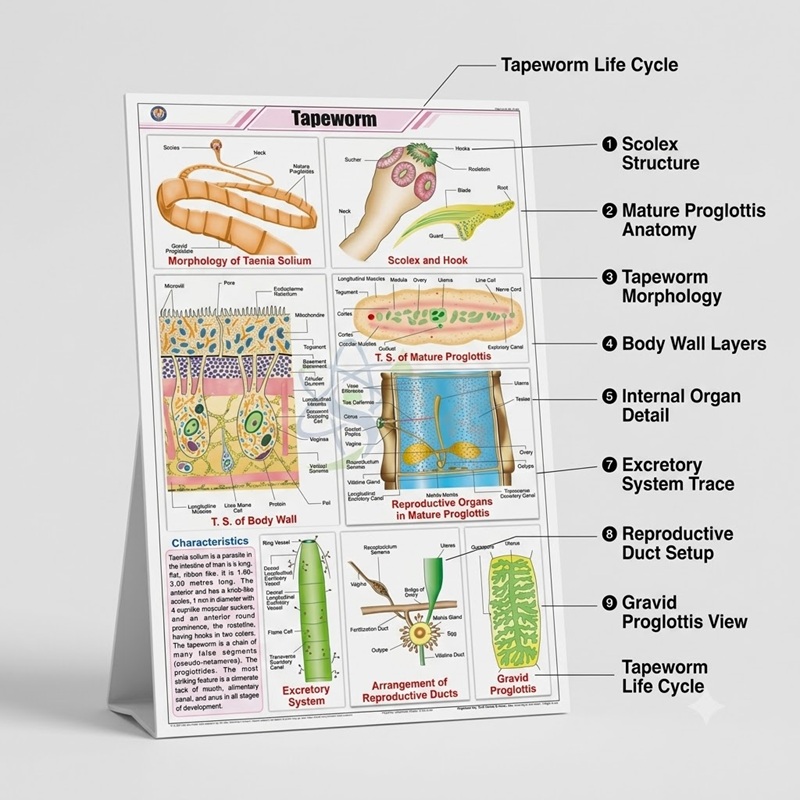
Tapeworm Life Cycle Chart
Original price was: $3.84.$1.80Current price is: $1.80.
Quick Answer: The Tapeworm Life Cycle Chart is a zoology wall chart showing the structure of an adult tapeworm, usually Taenia, and its life cycle between a human host and an intermediate host such as a pig or cow, from eggs and larval cysts to the adult worm. It supports parasitology and health lessons.
Two Hosts, One Parasite
Tapeworms are flatworms that live as adults in the human small intestine, and a life-cycle chart usually begins with the adult body. The head, or scolex, carries suckers, and in the pork tapeworm (Taenia solium) a crown of hooks on a rostellum as well; the beef tapeworm (Taenia saginata) has suckers only. Behind the neck comes a chain of segments, the proglottids, grading from young ones near the head to mature ones with reproductive organs and, at the end, gravid ones packed with eggs. The worm has no mouth or gut.
The cycle is drawn as a loop. Gravid proglottids leave the human host in the faeces, and the eggs are swallowed by a pig or cow grazing on contaminated ground. In the intermediate host the eggs hatch into six-hooked embryos that bore through the gut wall, travel in the blood and settle in muscle as cysticerci, or bladder worms. A person who eats raw or undercooked infected meat swallows these cysts, and the scolex turns out, fixes to the intestinal wall and grows into a new adult.
Many charts add a prevention panel, and that is where the lesson meets public health: cooking meat thoroughly, meat inspection, safe disposal of human waste and handwashing each break a different link in the loop.
Applications
- Teaching parasitic adaptations: hooks and suckers, no gut, very large egg output
- Explaining primary and intermediate hosts in a parasite life cycle
- Health education on meat hygiene and sanitation
- Comparing tapeworm with roundworm parasites such as hookworm in the helminths unit
Specifications
| Organism | Tapeworm (Taenia), a parasitic flatworm |
| Adult structures | Scolex with suckers (and hooks in T. solium), neck, proglottids |
| Hosts | Human (primary host); pig or cow (intermediate host) |
| Stages shown | Gravid proglottid, egg, embryo, cysticercus, adult |
| Level | Secondary zoology and health education |
| Size and finish | Confirm at enquiry |
Care & Handling
- Display the tapeworm chart for the parasitology unit, and store it with the other helminth charts so the set stays together.
- Avoid hanging it in damp corridors or near washbasins.
- Roll it loosely with a band rather than folding it.
Why Choose LabEquip
Zoology and health-education teachers usually order this chart with the Hookworm Life History Chart, so students can compare a parasite that enters through food with one that enters through the skin. Both are in LabEquip’s Educational Charts range, and bulk school orders are handled through the contact page.
Frequently Asked Questions
Why is a tapeworm called a parasite with two hosts?
It needs two different animals to complete its life cycle. The adult lives and reproduces in the human intestine, the primary or definitive host, while the larval cyst develops in the muscles of a pig or cow, the intermediate host.
How does a tapeworm feed without a mouth?
It lives surrounded by food that the host has already digested. Nutrients are absorbed directly through its whole body surface, the tegument, which is covered with tiny projections that increase the absorbing area, so it needs no digestive system.
What is a cysticercus?
A cysticercus, or bladder worm, is the larval stage of Taenia: a small fluid-filled sac with an inverted scolex inside, found in the muscles of the intermediate host. When a person eats meat containing live cysticerci, the scolex turns inside out and attaches to the intestine.
How is the pork tapeworm different from the beef tapeworm?
The pork tapeworm, Taenia solium, has a rostellum with hooks as well as four suckers, and its eggs can also infect humans directly, forming cysts in body tissues. The beef tapeworm, Taenia saginata, has suckers only and is usually longer.
How do tapeworms reproduce?
Each mature proglottid contains both male and female reproductive organs, so a tapeworm is hermaphrodite and can fertilise itself. The eggs develop in the proglottid until it is gravid; it then breaks off and leaves the host with the faeces.
How can tapeworm infection be prevented?
Cook pork and beef thoroughly, avoid raw or undercooked meat and support meat inspection. Proper sanitation stops eggs from reaching pigs and cattle, and handwashing with soap after using the toilet and before eating reduces the risk of swallowing eggs.
Last Updated: September 2026
Bestsellers


Sale



