



In Stock
Powder Funnel, Plastic
Oversized Parallel Stem: Designed with a large-diameter, non-tapered discharge tube that facilitates the unobstructed passage of large-particle solids and minimizes surface friction during high-volume reagent loading.
Low-Static Polypropylene Construction: Manufactured from medical-grade, chemically inert polymers that reduce electrostatic charge, preventing fine particulate adhesion and ensuring near-total sample recovery across diverse chemical applications.
₹120.00
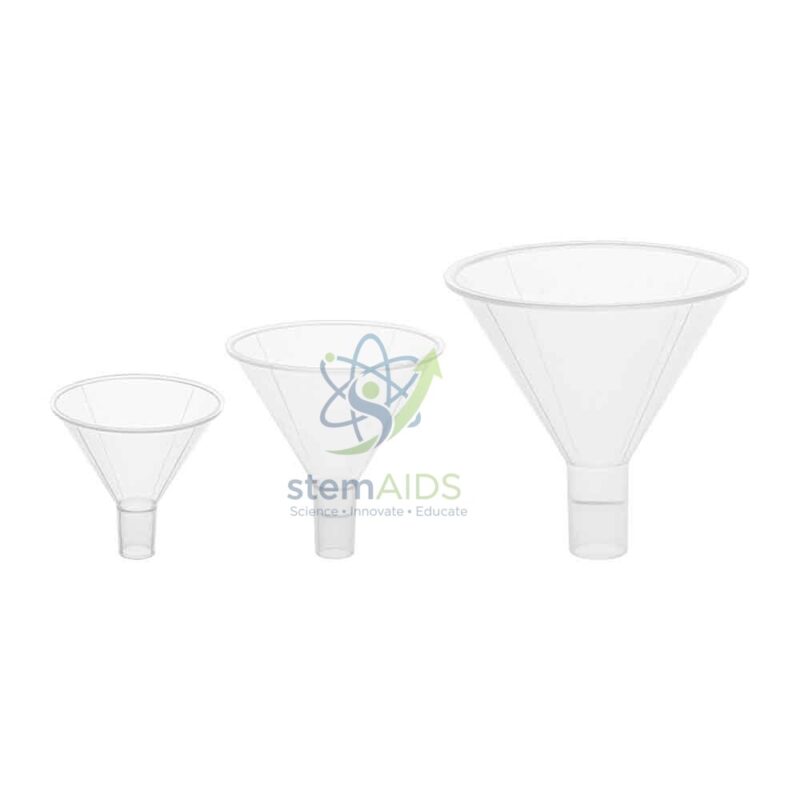
Quick Answer: A plastic powder funnel is a funnel with a short, wide stem designed for pouring solids, such as powders, crystals and granules, into narrow-necked flasks and bottles. The listing image shows three sizes of translucent funnel.
A Stem Wide Enough for Solids
An ordinary filter funnel has a long, narrow stem that is ideal for liquids and for supporting a paper cone, but a powder poured into it bridges across the stem and stops. The powder funnel keeps the cone and replaces the stem with a short, wide tube, so crystals and granules run straight through. It is the tool for getting a weighed solid into a volumetric flask or a narrow bottle without spilling any of it.
The title gives no size or resin; the image shows three graded sizes, and translucent plastic of this kind is usually polypropylene. Plastic does not build up a static charge as readily as some materials, but fine dry powders can still cling to the wall, so tapping the funnel gently while pouring helps.
When making up a standard solution, rinse the funnel into the flask with distilled water so no solid is left on it. The same funnel is handy for refilling wide mouth plastic reagent bottles, and a glass volumetric flask is the usual receiver in quantitative work.
Applications
- Transferring a weighed solid into a volumetric flask to prepare a standard solution
- Filling reagent bottles and sample tubes with powders or crystals
- Adding solid reagents to a round bottom flask before a reaction
- Pouring soil or sand samples into narrow containers for testing
Specifications
| Item | Funnel with a short, wide stem for solids |
| Sizes | Three graded sizes shown in the listing image |
| Material | Translucent plastic; usually polypropylene for this design |
| Main use | Quantitative and routine transfer of powders and crystals |
| Diameters and stem bore | Confirm at enquiry |
Care & Handling
- Use a dry funnel for dry powders; a damp wall makes solids stick and cake.
- Rinse the funnel into the receiving flask after a quantitative transfer.
- Keep separate funnels for reagents that must not cross-contaminate, and wash and dry them between uses.
Why Choose LabEquip
Technicians making up standard solutions and prep rooms refilling reagent bottles use powder funnels every day. LabEquip lists them in its chemistry lab equipment range; tell us the sizes you need through the contact page.
Frequently Asked Questions
What is the difference between a powder funnel and a filter funnel?
A powder funnel has a short, wide stem so solids flow through without blocking. A filter funnel has a longer, narrower stem designed to carry liquid and support a folded filter paper.
How do I make sure no solid is lost during transfer?
Pour the weighed solid through the funnel, tap it gently, then wash the funnel and the weighing container into the flask with small portions of distilled water from a wash bottle.
Can a powder funnel be used for liquids?
Yes, it pours liquids quickly, but the wide stem gives less control and can overflow a narrow neck. For liquids, a filter funnel or a funnel with a narrower stem is easier to use.
Why does powder stick to the funnel?
Fine powders cling because of moisture or static. Use a dry funnel, tap it while pouring, and brush or rinse any remaining powder into the receiver.
Is the plastic funnel autoclavable?
Polypropylene funnels are generally autoclavable at 121 °C. The resin is not stated in the title, so confirm it before sterilising.
Which size should I choose?
Pick a funnel whose stem fits comfortably inside the neck of the receiving flask or bottle, with room for air to escape, and whose cone holds the whole quantity of solid you pour at once.
Last Updated: September 2026
You must be logged in to post a review.
Bestsellers






Reviews
There are no reviews yet.