











In Stock
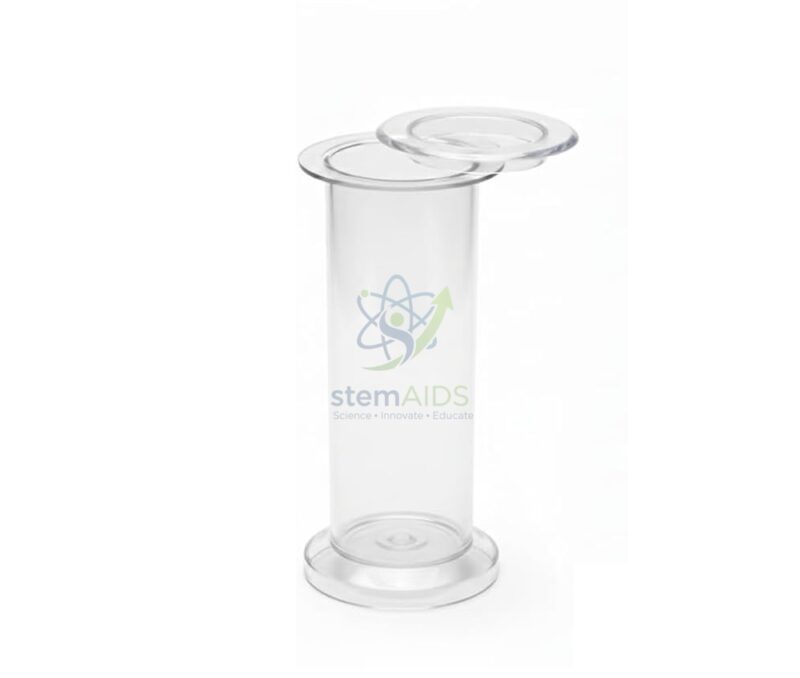
Specimen Jar (Gas Jar), Plastic
High-Impact Polypropylene Composition: Precision-molded from medical-grade, autoclavable polymers that maintain structural integrity against corrosive reagents and offer exceptional resistance to thermal shock during sterilization cycles.
Precision-Ground Flange Surface: Features a broad, reinforced rim engineered for a vacuum-tight interface with glass cover plates, ensuring zero-leakage gas displacement and consistent internal pressure during pneumatic trough experiments.
₹210.00
Quick Answer: The plastic specimen jar, also called a gas jar, is a tall, open-mouthed cylindrical plastic jar used in school labs to collect gases by displacement and to hold or display specimens. As a plastic gas jar it is lighter and less breakable than glass, but it must not be used with flames or hot reactions.
One Jar, Two Jobs
In chemistry and general science lessons the jar is filled with water, inverted in a trough and used to collect gases such as oxygen or hydrogen by displacing the water, or it is held upright or inverted to collect gases by displacing air, depending on whether the gas is denser or lighter than air. A cover plate or lid closes the mouth once the jar is full.
In biology the same shape serves as a specimen jar for displaying plants or animals, keeping aquatic organisms for short observation, or setting up simple demonstrations such as a respiration test with germinating seeds and lime water. Because it is plastic, younger students can handle it with less risk of broken glass.
The limits are heat and certain chemicals. Tests that burn something in a gas, such as a glowing splint, magnesium ribbon or sulfur in oxygen, belong in a glass jar like the gas jar with ground flange and foot. Preservatives matter too: alcohol and formalin can craze or soften some plastics, so find out the jar’s plastic before storing wet specimens long-term.
Applications
- Collecting oxygen from hydrogen peroxide and a catalyst over water in a pneumatic trough
- Showing that carbon dioxide is denser than air by collecting it in an upright jar
- Short-term display of plant specimens or freshwater organisms
- Respiration demonstrations with germinating seeds and lime water
Specifications
| Form | Tall cylindrical open-mouthed jar |
| Material | Plastic (resin to be matched to the chemicals used) |
| Uses | Gas collection by displacement; specimen holding and display |
| Heat | Not for flames, burning tests or hot liquids |
| Size and cover | Confirm at enquiry |
Care & Handling
- Wash with mild detergent and a soft brush, since abrasive cleaners scratch clear plastic.
- Keep away from Bunsen flames and hot plates.
- Trial a preservative on one jar before storing specimens in alcohol or formalin long-term.
- Store jars upright with covers on to keep dust out.
Why Choose LabEquip
Middle and secondary schools that want gas jars younger students can handle safely, and biology teachers who need display jars, order plastic jars in sets. LabEquip lists this jar in the Biology Lab Products range; confirm size and cover type on the contact page.
Frequently Asked Questions
Can a plastic gas jar be used for combustion experiments?
No. Burning splints, magnesium, sulfur or candles can melt or ignite plastic. Use a glass gas jar for any test involving flames or hot materials.
How do I collect a gas over water with this jar?
Fill the jar completely with water, cover the mouth, invert it into a trough of water and remove the cover under the surface. Place the delivery tube under the mouth; the gas collects at the top as the water is pushed out.
What is the difference between upward and downward displacement of air?
In upward displacement, a gas denser than air, such as carbon dioxide, is led to the bottom of an upright jar and pushes the air up and out. In downward displacement, a lighter gas such as hydrogen or ammonia is led into an inverted jar and pushes the air down.
Can specimens be preserved in this jar?
For short-term display, yes. For long-term wet storage in alcohol or formalin, make sure the plastic resists the preservative, since some plastics craze or soften. Glass jars remain the standard for museum specimens.
Why choose a plastic jar over glass?
Plastic jars are lighter and far less likely to break, which reduces injuries in classes with younger students. Glass is still needed for heat, flames and long-term preservation.
How should the jar be cleaned?
Rinse after each use, wash with mild detergent and a soft brush, and let it dry upside down. Avoid scouring powder, which scratches the plastic and makes it cloudy.
Last Updated: September 2026
You must be logged in to post a review.
Bestsellers




Reviews
There are no reviews yet.