





In Stock
Secchi Disk
₹210.00
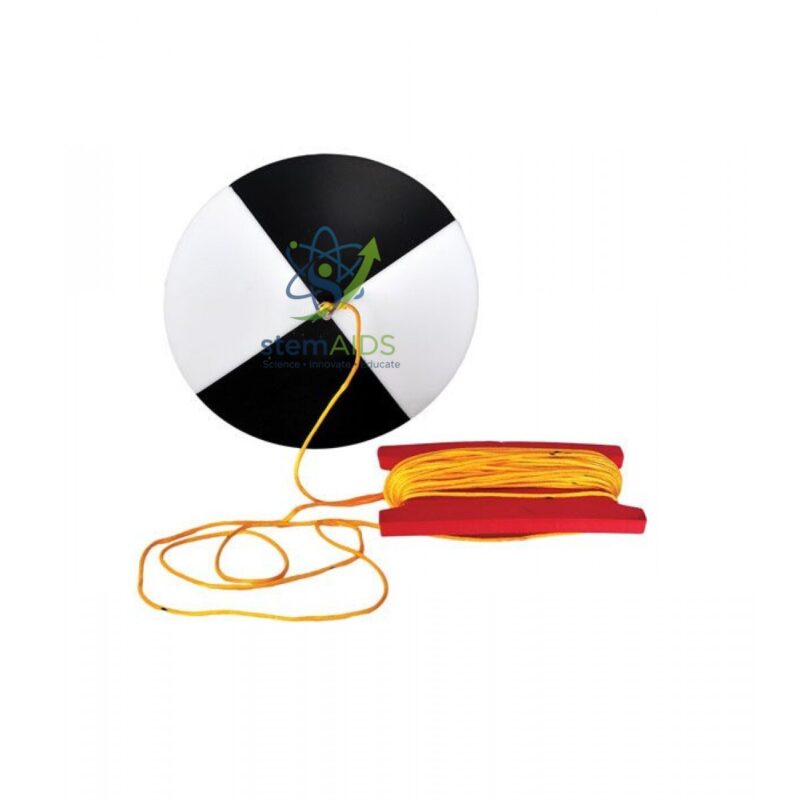
Quick Answer: A Secchi disk is a flat, weighted disk lowered on a cord into still water until it can no longer be seen; the depth at that point is the Secchi depth, a simple measure of water transparency. The listing photograph shows a disk painted in alternating black and white quadrants, with a cord on a winder.
What the Secchi Depth Tells You
Water clarity changes with what is suspended or dissolved in it. Microscopic algae, silt washed in after rain and brown dissolved organic matter all absorb and scatter light, and each one makes the disk vanish at a shallower depth. Because light penetration controls how deep plants and algae can photosynthesise, the reading links directly to the ecology of the water body. A rough rule used in many field courses is that the zone where photosynthesis can occur extends to about two to three times the Secchi depth.
Readings are taken on the shady side of a boat, jetty or bridge to cut surface glare. The observer lowers the disk slowly until it just disappears and notes the depth on the cord, lowers it a little further, then raises it until it just reappears. The average of the two depths is recorded. Repeating the reading at the same site through the year shows seasonal algal blooms and the effect of runoff, which makes it a good long-term project for school ecology clubs.
Freshwater work commonly uses a disk of about 20 cm diameter with black and white quadrants, while all-white disks are traditional at sea. The diameter and weight of this disk, and whether the cord is already marked in length intervals, are not stated in the title. If the cord is unmarked, students can mark it against a tape measure with waterproof tape.
Fieldwork Uses
- Comparing clarity between ponds, lakes or reservoirs in an ecology field study
- Tracking seasonal algal growth at one site over months
- Measuring the effect of heavy rain and runoff on water quality
- Relating transparency to the depth at which rooted water plants grow
Specifications
| Item | Disk for measuring water transparency |
| Pattern | Alternating black and white quadrants, per the listing photograph |
| Suspension | Cord on a winder, as shown in the listing photograph |
| Reading | Mean of disappearance and reappearance depths |
| Diameter, weight and cord markings | Confirm at enquiry |
Care & Handling
- Rinse the disk and cord in clean water after each use, especially after brackish or polluted water.
- Dry the cord fully before winding it for storage so it does not rot or grow mould.
- Check the knot and attachment point before every field trip, since a lost disk usually means a lost reading series.
Why Choose LabEquip
Secchi disks are bought by schools and colleges running freshwater ecology fieldwork and water-quality projects. LabEquip lists this disk in Biology Lab Products, and many groups record water temperature at the same time with a plastic-backed thermometer. Use the LabEquip contact page to confirm disk size and cord length.
Frequently Asked Questions
How is a Secchi reading taken correctly?
Work on the shaded side of a boat or jetty, without sunglasses. Lower the disk until it just disappears and note the depth, lower it slightly more, then raise it until it just reappears. Record the average of the two depths.
Why is the disk painted in black and white quadrants?
The contrast between black and white sections makes the moment of disappearance easier to judge in freshwater, where the water is often tinted. All-white disks are common in marine work, where water is usually clearer.
What makes the Secchi depth shallower?
Anything that absorbs or scatters light: algae, suspended mud and silt, and dissolved brown organic matter. A sudden drop in the reading often follows an algal bloom or heavy rain.
When should readings be taken?
Near the middle of the day, when the sun is high, in calm conditions. Many monitoring programmes suggest a window of a few hours around midday. Note cloud cover and wind with each reading so results can be compared fairly.
What if the disk reaches the bottom before it disappears?
Record the depth of the bottom and note that the disk was still visible. The water is clearer than the site can measure, so try a deeper point if one is available.
Can a Secchi disk be used in a flowing river?
Current drags the disk sideways and makes the cord slant, so the depth read from the cord is not accurate. Readings are most reliable in still water; for streams, a transparency tube is often used instead.
Last Updated: September 2026
You must be logged in to post a review.
Bestsellers




Reviews
There are no reviews yet.