
In Stock
Plastic Tweezers, PP
₹210.00
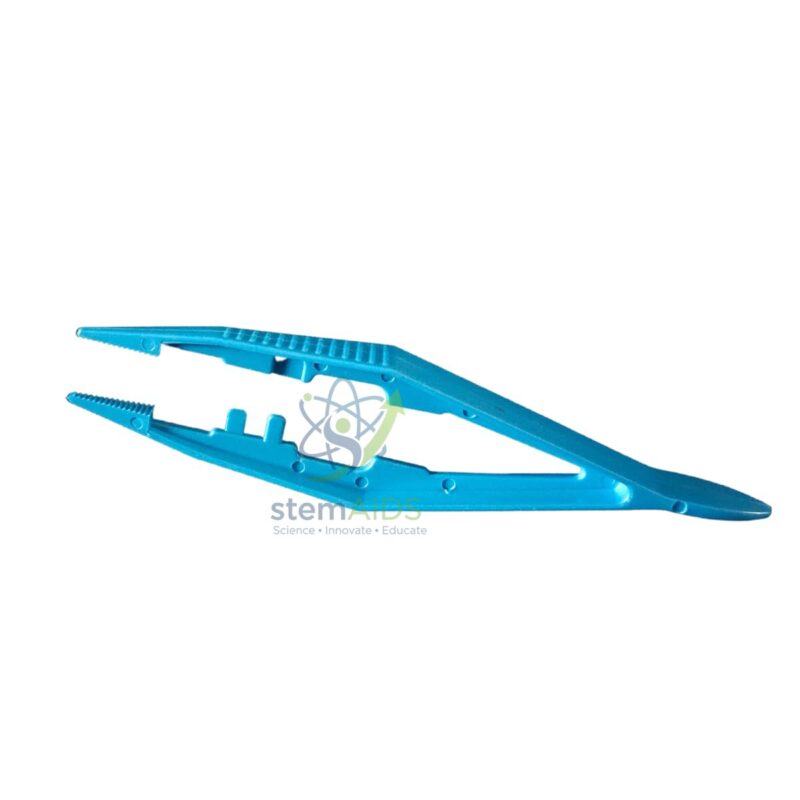
Quick Answer: Plastic Tweezers, PP are light, non-metallic tweezers moulded from polypropylene, used to pick up and move small specimens, seeds, test papers and weights. The listing photograph shows blue tweezers with pointed tips and a ridged grip area.
When Plastic Is the Better Choice
Stainless steel forceps are standard in dissection, but a polypropylene pair has advantages for many everyday tasks. Plastic tweezers do not scratch delicate surfaces, do not conduct electricity, are not affected by magnets and do not rust after contact with salty or acidic solutions. They are also light and inexpensive enough to give one to every student, which matters in practicals where many hands are sorting seeds, soil animals or leaf discs at the same time.
Polypropylene resists many dilute acids, alkalis and salt solutions at room temperature, so the tweezers can move litmus and pH papers, crystals and small pieces of apparatus without being corroded. The plastic is also generally able to withstand autoclaving, but check the rating of this item before putting it through a sterilising cycle. What they cannot do is go into a flame: they soften and melt, so they are not a substitute for metal forceps where flaming is part of the method.
Tips on moulded tweezers are coarser than those on fine steel forceps. They grip seeds, insects, small shells and filter-paper discs well, but not single hairs, pollen grains or thin tissue sections, which need fine metal points or a mounted needle.
Specifications
| Item | Tweezers for handling small objects |
| Material | Polypropylene (PP), per the title |
| Tip and grip | Pointed tips with ridged grip, as shown in the listing photograph |
| Heat | Not for flaming; check autoclave rating before sterilising |
| Length and colour options | Confirm at enquiry |
Applications
- Sorting seeds, soil invertebrates or leaf-litter animals in ecology practicals
- Moving indicator papers, filter-paper discs and small crystals without touching them
- Placing masses on a balance pan without leaving fingerprints
- Handling small specimens near electrical apparatus, where a non-conductive tool is safer
Care & Handling
- Rinse the tweezers after contact with chemicals or specimens and let them dry before storage.
- Keep them away from Bunsen burners, hot plates and hot glassware.
- Check the tips for splitting or bending; a pair that no longer closes evenly should be replaced.
Why Choose LabEquip
Plastic tweezers are usually ordered in class sets for junior science, ecology sorting and general lab use. LabEquip lists them in Biology Lab Products, where they pair with the plastic well slides used for small pond organisms. Tell us the quantity you need through the LabEquip contact page.
Frequently Asked Questions
Can PP tweezers be sterilised in a flame?
No. Polypropylene softens and melts in a flame. If sterile tweezers are needed, check the item’s autoclave rating first, or use a suitable disinfectant, or use stainless steel forceps that can be flamed.
Are PP tweezers safe to use with acids?
Polypropylene resists many dilute acids and alkalis at room temperature, so brief contact during a practical is normally fine. Rinse the tweezers afterwards. Avoid strong oxidising acids and organic solvents, which can attack plastics.
Why use polypropylene tweezers instead of metal forceps?
They are lighter, cheaper for class sets, do not rust, do not conduct electricity and are non-magnetic. They also do not scratch coins, lenses or balance masses. Metal forceps remain better for fine dissection and flaming.
Can I pick up masses with these tweezers when weighing?
Yes. Using tweezers instead of fingers keeps grease and moisture off the masses and the balance pan. Make sure the tweezers are clean and dry first.
Are the tips fine enough for very small specimens?
They handle seeds, small insects and paper discs well. For single hairs, pollen or thin sections, use fine-pointed metal forceps, a mounted needle or a small brush.
Are PP tweezers suitable for younger students?
They are light and easy to hold, and are often chosen for junior classes. The tips can still be pointed, so teach students to carry them tips down and never to use them near eyes.
Last Updated: September 2026
You must be logged in to post a review.
Bestsellers




Reviews
There are no reviews yet.