










In Stock
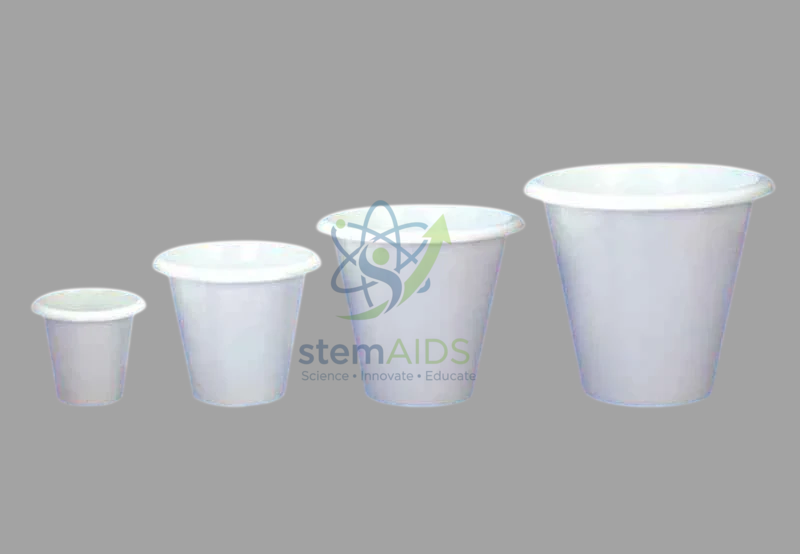
Plantation Pots, Plastic
High-Impact Polypropylene Architecture: Manufactured from medical-grade, UV-inhibited polymers that resist environmental degradation and chemical stress from concentrated fertilizers or pesticides.
Precision-Molded Basal Drainage System: Features a multi-tiered orifice configuration to prevent water stagnation and anaerobic root conditions while facilitating optimal oxygenation across diverse growth mediums.
₹265.00
Quick Answer: Plastic plantation pots are lightweight containers for growing plants in soil or potting mix, used in school and college biology for germination, plant growth and plant response experiments. Plastic plant pots hold moisture longer than clay pots and are easy to label, move and clean.
Pots as Experimental Units
In a plant experiment each pot is one experimental unit. Using identical pots, the same potting mix and the same number of seeds per pot lets students change only one factor, such as light, water, fertiliser or soil type, and compare growth fairly. Several pots per treatment give results less affected by one weak seedling, and seeds can be started on moist paper in a plastic Petri dish before transplanting.
Drainage holes stop water collecting at the bottom, where roots rot. Plastic holds water longer than terracotta, so watering should be less frequent and guided by feeling the soil rather than a fixed timetable. Sizes, colour and whether holes or saucers come with this listing can be confirmed before a class order.
Classic experiments that rely on pots include phototropism, in which seedlings on a windowsill bend towards the light; geotropism, shown by laying a potted seedling on its side; the effect of nitrogen, phosphorus and potassium on growth; and growth in sand, clay and loam compared side by side.
Specifications
| Material | Plastic (per title) |
| Use | Growing plants for biology practicals and projects |
| Drainage | Holes are usual in plant pots; check for this listing |
| Sizes, colour and quantity | Confirm at enquiry |
| Reuse | Washable and reusable between seasons |
Applications
- Germination and seedling growth practicals
- Phototropism and geotropism demonstrations
- Fertiliser, watering and soil-type comparisons
- School gardens, nurseries and botany department plant collections
Care & Handling
- Wash pots with water and mild detergent between uses to remove soil pests and fungal spores.
- Keep empty pots in shade; long exposure to strong sun can make some plastics brittle.
- Number pots with a waterproof marker or tag before sowing.
- Stand pots on trays to protect benches from water and soil.
Why Choose LabEquip
School biology departments, botany and agriculture colleges and eco-clubs use pots in sets for class experiments and garden projects. LabEquip supplies them in the Biology Lab Products range; send the sizes and numbers you need through the contact page.
Frequently Asked Questions
Are plastic pots better than clay pots for school experiments?
For experiments, plastic is usually more practical: light, cheap, uniform and unbreakable when dropped. Clay lets soil dry faster, which suits some plants but makes watering less consistent across a class.
Do the pots need drainage holes?
Yes, for most plants. Holes let extra water drain so roots do not sit in waterlogged soil and rot. If a pot has no holes, water sparingly and check soil moisture often.
How can pots be used to show phototropism?
Grow bean or maize seedlings in a pot, then place it by a window or inside a box with a single opening facing a light. Within a few days the shoots bend towards the light.
How many pots are needed for a fair experiment?
Use at least three pots per treatment, each with the same soil, seed number and watering, so one poorly growing plant does not decide the result.
What potting mix should be used?
A general potting mix or a blend of garden soil, sand and compost works for most classroom plants. Keep the same mix in every pot unless soil type is the factor being tested.
Can the pots be reused?
Yes. Empty and wash them with water and mild detergent, then dry them before storage. Cleaning removes pests and disease spores that could affect the next experiment.
Last Updated: September 2026
You must be logged in to post a review.
Bestsellers




Reviews
There are no reviews yet.