

In Stock
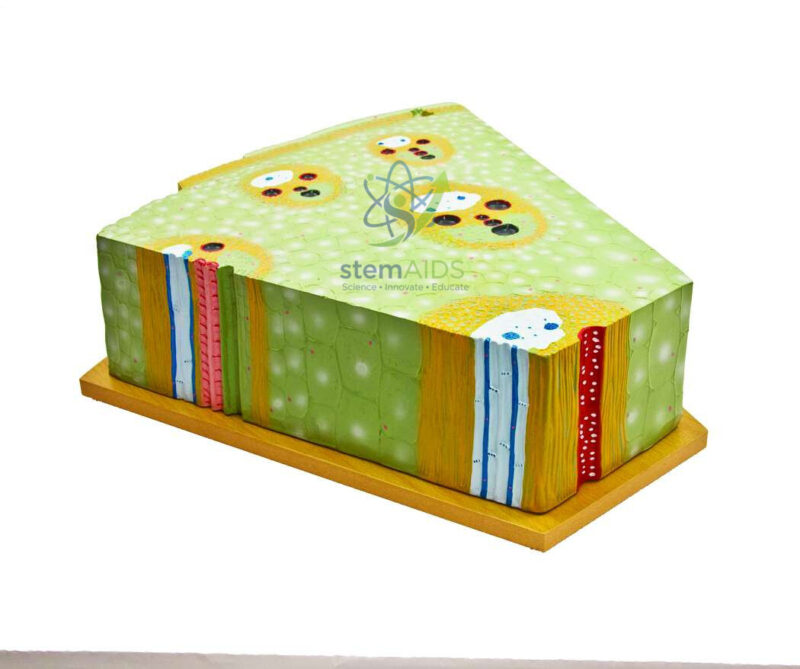
Monocotyledon Stem Model
₹470.00
StemAids Monocotyledon Stem Model is an educational biology teaching model designed to demonstrate the internal structure of a monocot stem in a clear, enlarged, and classroom-friendly format. It is suitable for school biology laboratories, college botany departments, STEM classrooms, life science practicals, and teacher-led demonstrations.
The model helps students understand the arrangement of tissues in a monocotyledon stem, including epidermis, ground tissue, vascular bundles, xylem, phloem, and supporting tissues. It provides a visual learning aid for topics related to plant anatomy, monocot plants, vascular tissue organization, and stem structure.
Product Highlights
- Educational model showing internal structure of a monocotyledon stem
- Useful for botany, biology, and life science practical demonstrations
- Helps explain scattered vascular bundles in monocot stems
- Suitable for school, college, and STEM laboratory teaching
- Supports visual learning of plant anatomy and tissue systems
- Ideal for classroom display, practical sessions, and revision lessons
Product Description
The StemAids Monocotyledon Stem Model is developed to help students observe and understand the anatomical features of a monocot stem without depending only on microscope slides or textbook diagrams. The enlarged representation makes it easier to identify the tissue arrangement and structural differences commonly found in monocotyledonous plants.
In monocot stems, vascular bundles are generally scattered throughout the ground tissue rather than arranged in a ring. This model helps teachers explain this important feature along with other parts such as epidermis, hypodermis, ground tissue, xylem, phloem, and bundle sheath. It is especially useful for comparing monocot and dicot stem structures during botany practicals.
StemAids provides educational science models and laboratory products that support hands-on learning, visual explanation, and concept-based classroom teaching. The Monocotyledon Stem Model is a useful resource for biology laboratories, plant anatomy demonstrations, school science departments, and institutional procurement.
Product Specifications
| Product Name | Monocotyledon Stem Model |
|---|---|
| Brand | StemAids |
| Product Type | Botany and plant anatomy teaching model |
| Subject Area | Biology, botany, life science, plant anatomy, and STEM education |
| Model Representation | Internal structure of monocotyledon stem |
| Key Structures Shown | Epidermis, ground tissue, scattered vascular bundles, xylem, phloem, and supporting tissues |
| Application | Classroom teaching, botany practicals, plant anatomy demonstration, revision, and laboratory display |
| Recommended Use | School biology labs, college botany labs, STEM classrooms, training institutions, and science laboratories |
| Suitable For | Students, teachers, biology instructors, lab assistants, and educational institutions |
| Usage Type | Educational demonstration and visual learning aid |
| Storage Instruction | Store in a clean, dry place away from direct sunlight, moisture, and rough handling |
How to Use
- Place the StemAids Monocotyledon Stem Model on a classroom table or demonstration platform.
- Introduce the concept of monocotyledonous plants and their stem anatomy.
- Point out the outer epidermis and explain its protective function.
- Show the ground tissue and explain how it differs from the clearly divided cortex and pith often seen in dicot stems.
- Identify the scattered vascular bundles and explain their role in transport.
- Explain the function of xylem in water transport and phloem in food transport.
- Use the model to compare monocot stem structure with dicot stem structure during revision or practical lessons.
- After use, clean the model gently with a dry or slightly damp soft cloth and store it safely.
Safety and Care Instructions
- Use the model for educational demonstration and classroom learning only.
- Handle carefully to avoid breakage, scratches, or damage to labelled parts.
- Do not expose the model to excessive heat, moisture, or direct sunlight for long periods.
- Clean with a soft cloth; avoid harsh chemicals or abrasive cleaners.
- Store in a safe laboratory cabinet or display area after use.
- Keep away from very young children unless used under teacher supervision.
Applications
- Botany practical classes
- Plant anatomy demonstrations
- Monocot and dicot stem comparison
- School and college biology teaching
- STEM and life science learning activities
- Laboratory display and revision sessions
- Teacher-led classroom explanation
- Educational institution procurement
Why Choose StemAids Monocotyledon Stem Model?
StemAids offers educational science models designed to make complex biology concepts easier to understand through visual and hands-on learning. The StemAids Monocotyledon Stem Model helps students clearly observe plant tissue arrangement, vascular bundle distribution, and structural features of monocot stems.
- Useful visual aid for botany and plant anatomy lessons
- Supports concept-based classroom teaching
- Helps students understand internal stem structure clearly
- Suitable for school, college, and laboratory demonstrations
- Convenient teaching model for biology departments and science labs
SEO Title
StemAids Monocotyledon Stem Model for Biology Lab, Botany Practical and Plant Anatomy Teaching
Meta Description
Buy StemAids Monocotyledon Stem Model for biology labs, botany practicals, plant anatomy teaching, monocot stem structure demonstration, and STEM learning.
SEO Keywords
StemAids Monocotyledon Stem Model, Monocot Stem Model, Biology Lab Plant Model, Botany Teaching Model, Plant Anatomy Model, Monocotyledon Stem Structure, School Biology Model, Educational Science Model, STEM Biology Teaching Aid, Monocot and Dicot Stem Comparison.
Frequently Asked Questions
1. What is the StemAids Monocotyledon Stem Model used for?
The model is used to teach and demonstrate the internal structure of a monocot stem, including tissue arrangement and scattered vascular bundles.
2. Is this model suitable for school biology laboratories?
Yes, the StemAids Monocotyledon Stem Model is suitable for school biology labs, college botany labs, STEM classrooms, and teacher-led practical demonstrations.
3. What structures can students learn from this model?
Students can learn about the epidermis, ground tissue, vascular bundles, xylem, phloem, and other important features of monocot stem anatomy.
4. Can this model be used to compare monocot and dicot stems?
Yes, this model is useful for explaining how monocot stems differ from dicot stems, especially in the arrangement of vascular bundles and ground tissue.
5. Is the model useful for practical exams and revision?
Yes, it is helpful for practical revision, classroom explanation, viva preparation, and visual understanding of plant anatomy topics.
6. How should the model be cleaned?
Clean the model gently with a soft dry or slightly damp cloth. Avoid abrasive cleaners, harsh chemicals, or excessive water exposure.
7. Is this product intended for laboratory experiments?
This product is intended as an educational teaching model. It is used for demonstration, observation, and concept learning rather than chemical or biological experimentation.
You must be logged in to post a review.
Bestsellers




Reviews
There are no reviews yet.