



In Stock
Mini Greenhouses
Mini serres features a precision-molded transparent cover with integrated dual-ventilation sliders, allowing researchers to calibrate gas exchange and internal vapor pressure deficit (VPD).
Reinforced Polymer Drainage Matrix. The high-impact base is designed with a tiered compartmentalization system that facilitates optimal moisture distribution while preventing anaerobic conditions in the rhizosphere.
₹785.00
Quick Answer: Mini Greenhouses are small propagators: a seed tray under a clear cover that keeps humidity and warmth around germinating seeds and young cuttings. Schools use mini greenhouses for seed raising on a bench or windowsill, and to show how a covered space traps heat.
How a Mini Greenhouse Works
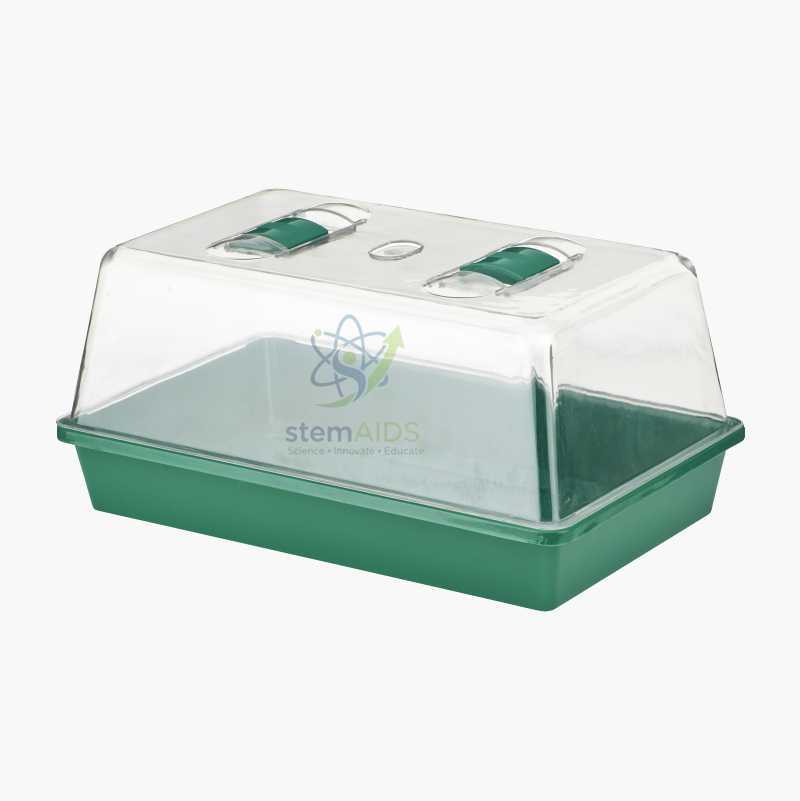
In the product photo, each mini greenhouse is a plastic base tray under a clear, domed cover with vents in the top, which is the classic propagator design. The cover lets light in and holds moist air around the seeds, so the compost surface stays damp and seedlings do not dry out. The vents let excess moisture escape once the seedlings are up, and that is the difference between a healthy propagator and a mouldy one.
A covered tray also warms up. Sunlight passes through the clear cover and heats the compost and air inside, and the cover slows the escape of that warm air. This is a small-scale version of how a real greenhouse works. It is also a convenient way into the atmospheric greenhouse effect, although there gases absorb and re-emit heat rather than a solid roof holding warm air in, so the analogy has limits worth pointing out.
Tray size, the number of cells or inserts and whether the base is heated are not stated in the listing. Mini greenhouses pair naturally with coco coir pellets or small pots for sowing, and a seed germination chart helps pupils name the stages they see.
Specifications
| Type | Seed-raising propagator (base tray with clear cover) |
| Design shown in the product photo | Plastic base tray, clear domed cover with vents |
| Purpose | Germinating seeds and rooting cuttings in humid conditions |
| Placement | Bright, warm position out of hot midday sun |
| Tray size, inserts and heating | Confirm at enquiry |
Care & Handling
- Open the vents, or lift the cover for part of each day, once seedlings have emerged, so mould and damping off do not take hold.
- Keep the mini greenhouse out of strong midday sun, which can overheat the air under the cover and scorch seedlings.
- Wash the tray and cover with warm soapy water between uses and let them dry fully before storing.
Investigations and Uses
- Raising vegetable and flower seedlings for the school garden in early spring
- Comparing germination in covered and uncovered trays
- Recording temperature inside and outside the cover to model the greenhouse effect
- Rooting cuttings of houseplants and herbs
Why Choose LabEquip
Schools often buy mini greenhouses in sets so each class or group can run its own sowing, and LabEquip lists them in its biology lab products. Let us know how many you need through the contact page.
Frequently Asked Questions
Why do seeds germinate faster in a mini greenhouse?
The cover keeps humidity high and holds warmth around the compost, so seeds take up water steadily and stay at a temperature that suits germination. Many common vegetable seeds come up sooner in a covered tray than in an open one.
When should the vents be opened?
Once most seedlings have emerged, open the vents or lift the cover for part of the day. This lowers the humidity, reduces mould and damping off, and starts hardening the seedlings to normal air.
Can a mini greenhouse model the greenhouse effect?
Partly. Recording temperatures inside and outside the cover shows that it warms up in sunlight. But a solid cover mainly traps warm air, while greenhouse gases absorb and re-emit infrared radiation, so the comparison needs explaining.
What should the seeds be sown in?
A fine, free-draining seed compost, coir pellets or small biodegradable pots all work. Avoid garden soil, which compacts in a tray and can carry fungal diseases.
How can overheating be avoided?
Place the greenhouse in bright but indirect light, avoid sunny sills in strong summer sun and open the vents on warm days. A thermometer inside the cover shows when it is getting too hot.
Can cuttings be rooted in a mini greenhouse?
Yes. Soft cuttings of plants such as coleus, mint and busy lizzie root well in the humid air, because they lose less water through their leaves while they have no roots.
Last Updated: September 2026
You must be logged in to post a review.
Bestsellers




Reviews
There are no reviews yet.