
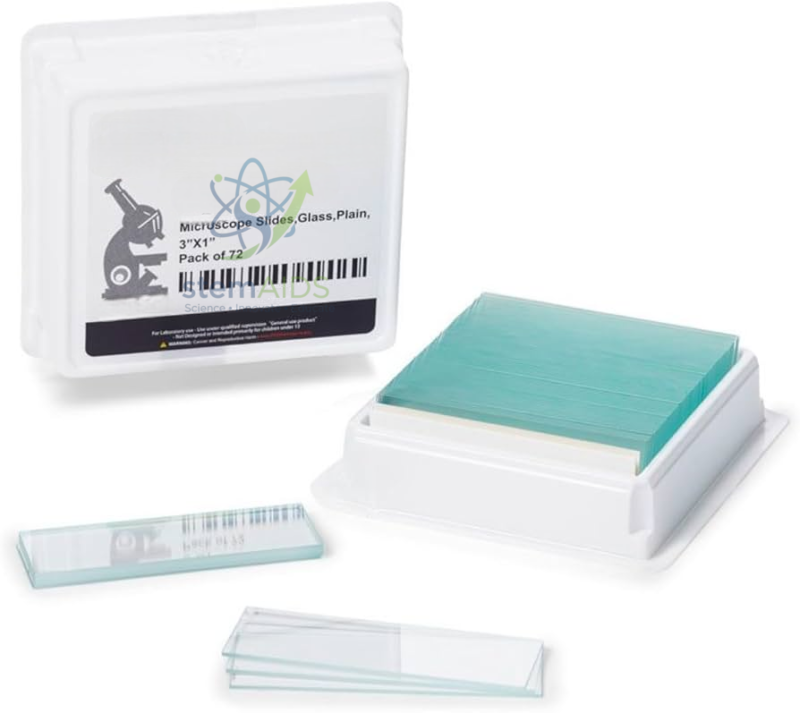
Quick Answer: Plain glass microscope slides are flat, clear rectangles of glass on which specimens are mounted for viewing under a microscope. The plain type has no frosted label area and no cavity, and is used for wet mounts, stained smears and permanent preparations.
What Makes a Slide Plain
Microscope slides come in a few variants. Frosted slides have a roughened band at one end for writing labels in pencil; cavity slides have a hollow ground into the surface; coated slides carry a treatment to help tissue sections stick. Plain glass microscope slides have none of these: both faces are smooth and clear from end to end, which makes them the general-purpose choice for everyday practical work and the most economical option for large classes.
The product photo shows the slides in a box, as they are normally supplied. Slides of this kind are usually made in the long-established 3 by 1 inch format, about 75 by 25 mm, which fits the stage clips and mechanical stages of standard microscopes, but the size, thickness, edge finish and number per box of this listing are not stated.
Clean glass matters more than it seems. A greasy slide makes aqueous stains and smears bead up instead of spreading, and fingerprints show as smudges at high power. Hold slides by their edges and wipe them with alcohol before use if they are not supplied pre-cleaned.
Everyday Uses
- Onion epidermis, cheek cell and pond water wet mounts in school practicals
- Bacterial smears for Gram staining in microbiology classes
- Blood smears in pathology and nursing training
- Root tip squashes for observing mitosis
- Permanent preparations mounted under glass coverslips
Specifications
| Item | Plain glass microscope slides |
| Surface | Smooth, clear glass with no frosted end or cavity |
| Suitable for | Wet mounts, smears, squashes and permanent mounts |
| Used with | Glass coverslips and a compound microscope |
Handling and Cleaning
- Hold plain glass slides by the edges to keep fingerprints off the viewing area.
- Soak used slides in disinfectant before washing if they carried microbes, blood or cheek cells.
- Wash in warm water with detergent, rinse, dip in alcohol and dry with lint-free tissue before reuse.
- Put chipped or broken slides in a glass or sharps container, never in the general bin.
Why Choose LabEquip
Slides are the most-used consumable in any biology or pathology lab, so schools and colleges reorder them every term. LabEquip supplies plain glass slides with its biology lab products; finished preparations can be kept in a wooden slide storage box, and bulk quantities are quoted through the contact page.
Related Products
- Glass Coverslips: Thin glass coverslips that sit over the specimen on the slide to flatten the mount and protect the objective.
- Cavity Microscope Slides Pack of 10: Slides with a recessed well for liquid and thicker specimens that do not suit a flat plain slide.
- BOX FOR 25 SLIDES: A slide box with 25 numbered grooves for keeping finished slides apart and in order.
- Slide Holding Forceps: Spring-grip forceps that hold a slide by one end during heat fixing, staining and rinsing.
- Student Microscope, Economy: A basic student microscope for viewing the wet mounts and smears prepared on these slides.
Frequently Asked Questions
What are plain glass microscope slides used for?
Plain slides are clear glass rectangles on which specimens are mounted for a compound microscope. With no frosted end or cavity, they are the general choice for wet mounts, stained smears, squashes such as onion root tips, and permanent mounts, and they are used with glass coverslips laid over the specimen.
Plain, frosted or cavity slides: which type do I need?
Plain slides cover most class practicals. Frosted slides add a rough band for pencil labels, useful when many slides must be kept and identified. Cavity slides have a hollow for thicker or liquid samples, such as pond water organisms that need room to swim or hanging-drop preparations.
How do you make a wet mount on a plain slide without air bubbles?
Put one drop of water or stain in the centre of the slide and place the specimen in it. Hold a coverslip at an angle with one edge touching the drop, then lower it slowly with a mounted needle so the liquid spreads out ahead of it and pushes the air away. Blot extra liquid from the edges with tissue.
How do I label a plain slide that has no frosted end?
Write on one end of the glass with a fine permanent marker, or stick on a small adhesive slide label, keeping the writing clear of the area under the coverslip. For slides that will be kept, a diamond-tip pen scratches a permanent mark that survives washing and stains.
Can plain glass microscope slides be washed and reused?
Slides used for harmless plant or water mounts can be soaked in warm detergent, rinsed, dried and wiped with alcohol so stains spread evenly next time. Discard slides that are chipped or scratched. Slides that carried blood, cheek cells or microbes should be disinfected and disposed of rather than reused.
How should students handle glass slides safely in class?
Hold slides by their edges, carry them flat in a tray or box, and put any broken glass straight into a labelled sharps or broken-glass container rather than a bin. Slides with body fluids go into disinfectant at the end of the practical before disposal.
Last Updated: November 2026




Reviews
There are no reviews yet.