
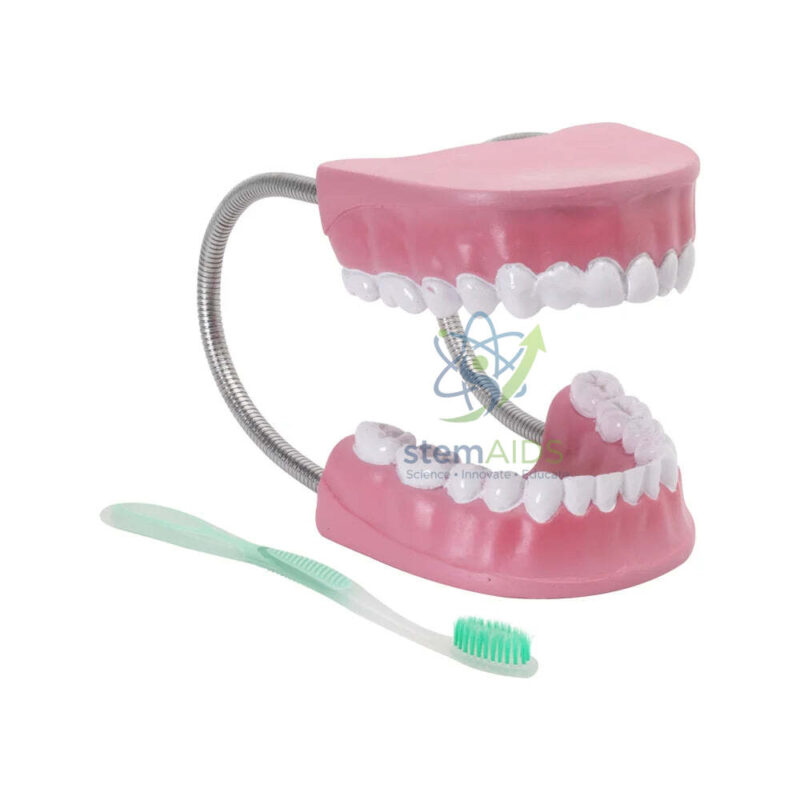
Quick Answer: The Jaw Model with its Toothbrush is a dental model of the teeth and gums supplied with a toothbrush, so brushing technique can be demonstrated directly on the teeth. Dental teams, school health workers and teachers use this jaw model with toothbrush to show children and patients how to clean every tooth surface.
Brushing Lessons with the Jaw Model
What sets this jaw model apart is that the toothbrush comes with it, so a demonstration can start straight away. The presenter holds the model so the audience sees the teeth from the front, angles the bristles towards the gum line and uses small, gentle movements over one or two teeth at a time. The outer, inner and chewing surfaces are cleaned in turn, and the brush is tipped upright to reach the inside of the front teeth.
For young children a tell-show-do approach works well: explain the step, show it on the model, then let the child try it on the model before trying it in their own mouth. The model also makes it easy to explain why brushing matters, since plaque, the soft film of bacteria that builds up every day, is behind both tooth decay and gum inflammation.
Compared with a general dental care model, whose toothbrush is not mentioned in its title, this listing names a toothbrush as part of the item.
Where the Model Is Used
- School dental-health visits and classroom lessons on caring for teeth
- Children’s dental clinics, to prepare a child before a first check-up
- Training dental nurses and hygienists to coach patients
- Parent sessions on brushing a young child’s teeth
Specifications
| Model of | Teeth and gums of the jaws, for oral-hygiene demonstration |
| Included | Toothbrush for use on the model (named in the title) |
| Skills shown | Brushing at the gum line, inner and chewing surfaces, back teeth, flossing |
| Audience | Children, patients, parents, dental and nursing students |
Care & Handling
- Brush the jaw model with water only; toothpaste dries into the gaps between the teeth and is hard to remove.
- Rinse and dry the toothbrush after each demonstration and replace it once the bristles splay.
- Wipe the gums and teeth with a damp cloth and let them dry before the model goes back in its box.
Why Choose LabEquip
Dental practices, school health programmes and nursing colleges choose a model that comes with its own brush so the same kit can travel from session to session. The jaw model is listed in LabEquip’s biology lab products, and orders or questions can go through the contact page.
Related Products
- Human Teeth Model, Dental Care: A dental care model for teaching brushing technique, flossing, plaque, tooth decay and gum disease to groups.
- Human Teeth Model, Dental Care, Small: A smaller dental care model suited to one-to-one, small-group and outreach oral health sessions.
- Human Teeth Model, Upper and Lower Jaw: Upper and lower jaws with permanent teeth for teaching tooth types, order and how the teeth meet.
- Dental Mirrors, Plastic: Plastic-handled mouth mirrors for showing children the inner surfaces of teeth that brushing must reach.
- Hand Hygiene Awareness kit: A hand hygiene awareness kit for pairing an oral health lesson with a lesson on handwashing.
Frequently Asked Questions
How do you demonstrate correct tooth brushing on a jaw model?
Hold the model so the audience sees the teeth, angle the bristles towards the gum line at about 45 degrees and use small, gentle movements over one or two teeth at a time. Work round the outer surfaces, then the inner surfaces and the chewing surfaces, not forgetting the back teeth. The toothbrush supplied with this model means the demonstration can start straight away.
How often and for how long should children brush their teeth?
Children and adults are generally advised to brush twice a day, last thing at night and at one other time, for about two minutes each time. Young children need an adult to help or check until they can brush every surface well. A jaw model lets them practise the movements before trying in their own mouth.
Why should brushing focus on the gum line?
Plaque collects where each tooth meets the gum. If it is left, it irritates the gum and causes gingivitis, with red, swollen gums that bleed when brushed. Angling the bristles into this edge on the model shows learners exactly which area needs the most attention.
How can flossing be shown on a jaw model?
Slide a length of floss between two teeth, curve it into a C-shape around one tooth and move it gently up and down, including just under the gum edge, then repeat on the neighbouring tooth. The model makes it clear that the spaces between teeth are areas a toothbrush cannot reach.
Should toothpaste be used on a teaching jaw model?
It is better to demonstrate on the model with a dry brush, because toothpaste dries in the gaps between the teeth and is hard to clean off. Instead, show the right amount separately: a smear for very young children and a pea-sized amount of fluoride toothpaste from about three years old.
Is a jaw model or a video better for teaching children to brush?
Both help, and they work well together. A video shows the routine to a whole group, while a jaw model with a toothbrush lets the presenter show angles from any side and lets children copy the movement themselves. Hands-on practice tends to stick, especially with younger children.
Last Updated: November 2026




Reviews
There are no reviews yet.