


In Stock
Inoculating Loops, Plastic
$5.98
Quick Answer: Plastic inoculating loops are single-use microbiology tools moulded in one piece, with a small ring at the tip of a plastic stem. They are used to streak agar plates, pick colonies and transfer cultures, and are discarded after use instead of being flamed.
Working Without a Flame
The reason most laboratories switch to plastic inoculating loops is the flame. A metal loop must be heated to red heat between every transfer, which needs a gas supply or spirit lamp and a student who has learnt to do it safely. A moulded plastic loop is used once and dropped into disinfectant, so there is no open flame on the bench and no risk of culture spattering from a hot wire. That makes plastic loops popular in schools without gas taps, in rooms shared with other subjects and in any session where many students work at once.
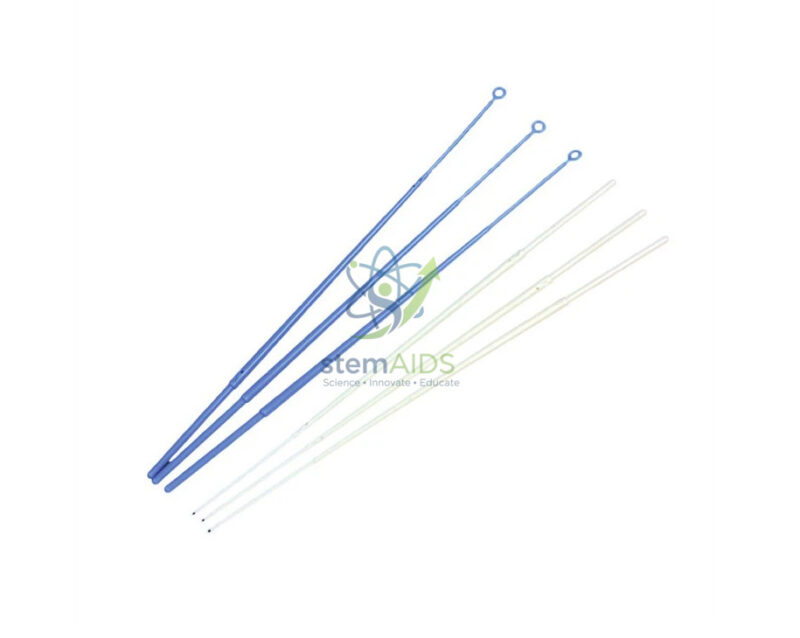
The listing photograph shows loops in blue and in clear or white plastic. In many ranges the stem colour indicates the loop volume, for example separating a smaller calibrated loop from a larger one, and some loops carry a needle at the opposite end. The title does not say which volumes, colours or end shapes are supplied, or whether the loops arrive sterile-packed, so confirm these points before a practical depends on them.
Sterility matters more with plastic than with metal. A wire loop is sterilised by the user at the bench; a plastic loop is only as sterile as its packaging. Loops from an opened pack must be kept closed between uses, and the tip should never touch the bench or fingers before it reaches the culture.
Handling and Disposal
- Take each loop out by the handle end and reclose the pack at once so the remaining tips stay clean.
- After use, place the loop straight into a disinfectant pot or an autoclavable waste bag; never lay a used loop on the bench.
- Treat used loops as contaminated waste and follow your institution’s rules for sterilising or disposing of microbiological waste.
Applications
- Streak-plate practicals in rooms without a gas supply
- Picking a single colony into broth or onto a fresh plate for a pure culture
- Moving a measured loopful of sample onto agar when a calibrated loop is used
- Large classes where many students inoculate plates at the same time
Specifications
| Item | Single-use inoculating loop, moulded plastic |
| Working end | Small ring at the tip of the stem |
| Colours shown | Blue and clear or white stems in the listing photograph |
| Heat | Not for flaming; plastic melts in a flame |
| Loop volume, sterility and pack size | Confirm at enquiry |
Why Choose LabEquip
Schools and colleges that have moved to flame-free microbiology usually reorder plastic loops each term. LabEquip lists them with the reusable metal inoculating loops and the flexible-tip Soft Loop Sterile, so a department can choose per practical. Send your class sizes through the LabEquip contact page to confirm volumes and packing.
Frequently Asked Questions
Can plastic inoculating loops be reused?
They are designed for one transfer. The plastic cannot be flamed, and washing does not reliably remove organisms from the ring. Reusing a loop risks carrying one culture into the next and undermines the aseptic technique students are learning.
Are these loops supplied sterile?
The product title does not state it. Many plastic loops are sold in sterile packs, while others are bulk-packed for non-sterile use. Confirm the packing at enquiry, and for aseptic work use only loops from an intact sterile pack.
What happens if a plastic loop is put into a flame?
It softens, drips and burns within seconds, and the melted plastic can stick to the burner or skin. Plastic loops should be kept well away from Bunsen burners and spirit lamps.
How is a streak plate made with a plastic loop?
Spread a loopful of culture across one edge of the plate, then turn the plate and draw a second set of lines crossing the first only once or twice. Repeat for a third and fourth section. With plastic loops, use a fresh loop or the unused side for each new section instead of flaming.
What is a calibrated loop?
It is a loop made to pick up a set volume of liquid, often 1 or 10 microlitres. It is used in semi-quantitative work such as estimating the number of organisms in a sample from the colonies that grow.
How should used loops be disposed of?
Drop them into a pot of suitable disinfectant or an autoclavable bag as soon as each transfer is finished. The waste is then autoclaved or treated as your institution requires before it leaves the lab.
Last Updated: September 2026
You must be logged in to post a review.
Bestsellers




Reviews
There are no reviews yet.