


In Stock
Dissecting Trays
₹542.00
Quick Answer: Dissecting trays are shallow, rimmed trays on which specimens are laid, and usually pinned, during dissection. The rim contains fluids and fragments, and a soft base layer lets pins hold the specimen open while students work.
Why Dissection Needs a Tray
A specimen on a bare bench slides around, leaks fluid and leaves debris everywhere. A dissecting tray keeps everything in one place: the raised sides hold liquid and fragments, and the tray can be carried to the sink for cleaning at the end. Most such trays have a layer of wax, rubber or silicone in the base, soft enough for pins to be pushed in, so that skin and body wall can be pinned back to expose organs underneath.
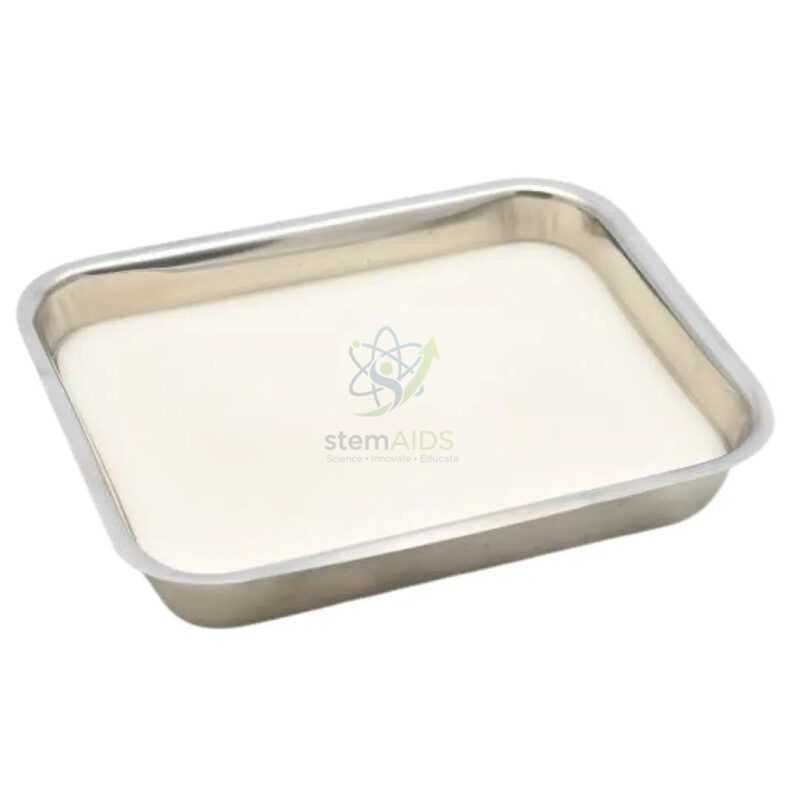
The product photo shows a metal tray with a pale lining filling the base. The material of the tray and of the lining, and the tray’s size, are not given in the listing. A pin-holding lining matters for most animal and some plant dissections, so it is worth confirming if pinning is part of your practical.
Trays of this kind also allow dissection under water. Once the specimen is pinned, the tray is filled with water until the specimen is covered; soft structures such as nerves, blood vessels and the gut then float apart and are much easier to see and separate than in air.
Uses in the Biology Lab
- Pinning out specimens with nickel-plated T-pins for dissection
- Dissection under water to float apart nerves, vessels and gut
- Flower and fruit dissections, where the rim keeps small parts together
- Sorting soil or leaf-litter invertebrates and seeds after fieldwork
Specifications
| Item | Rimmed trays for dissection work |
| Tray (from product photo) | Metal tray with a pale lining in the base |
| Purpose of the lining | Holds pins so specimens can be fixed open |
| Used with | T-pins, dissecting instruments, water for dissection under liquid |
| Tray size and lining material | Confirm at enquiry |
Cleaning and Maintenance
- Remove pins and tissue, then wash the dissecting tray in warm water with detergent and a soft brush.
- Disinfect after animal material with a disinfectant suitable for the tray and lining.
- Keep solvents and very hot water away from wax linings, which soften or melt.
- Dry metal trays completely before stacking to avoid corrosion at the corners.
Why Choose LabEquip
Schools and colleges order dissecting trays in sets, one per student pair, to go with their instrument kits. LabEquip supplies them with its biology lab products; a deluxe dissecting set of 14 with tray is also available for new benches.
Frequently Asked Questions
Why do the trays have a wax or rubber base?
The soft base lets pins be pushed in and hold firmly. Students can then pin back skin, body wall or petals to expose what lies underneath, keeping both hands free for the instruments.
How do I dissect under water in a tray?
Pin the specimen out first, then pour in water, or saline for fresh animal tissue, until it is just covered. Delicate structures float away from each other and become easier to trace. Drain the tray through a sieve afterwards so small parts are not lost down the sink.
How do I clean a wax-lined tray?
Remove pins and tissue, wash with warm, not hot, water and detergent using a soft brush, then disinfect and rinse. Avoid solvents, which dissolve wax, and very hot water, which softens it.
What can be done when the wax surface is full of pin holes?
Wax linings wear with use. Scraping the surface smooth restores it for a time, and a heavily worn lining can be melted carefully and re-set or replaced. Rubber and silicone linings recover from pinholes better but eventually need replacing too.
At what angle should pins be placed in the tray?
Push pins in at about 45 degrees, leaning outward away from the specimen. They hold tissue flaps back firmly and their heads stay out of the way of the instruments.
What size of tray do I need?
It depends on the specimen: flowers and earthworms fit small trays, while larger specimens need more room around them for pins and hands. The dimensions of these trays are not listed, so confirm them when you enquire.
Last Updated: September 2026
You must be logged in to post a review.
Bestsellers




Reviews
There are no reviews yet.