
In Stock
Cultural Tools
Outils de culture Features laser-etched metric graduations on the tool blades, enabling researchers to maintain precise, repeatable planting depths and root-zone measurements required for standardized experimental data.
Non-Reactive SS304 Construction Manufactured from industrial-grade stainless steel with high-torque resistance, ensuring chemical compatibility with diverse nutrient solutions and allowing for high-temperature autoclave sterilization in sterile tissue culture environments.
₹1,140.00
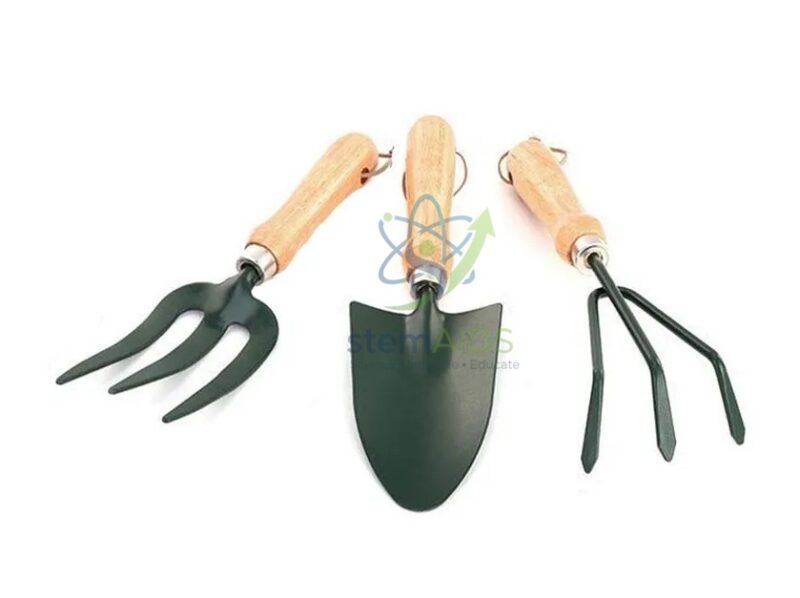
Quick Answer: Cultural Tools is the listing name for a set of cultivation hand tools: small garden tools used to prepare soil, plant, weed and pot up in school gardens and biology practicals. The product photo shows three wooden-handled pieces, a hand fork, a trowel and a claw-type cultivator.
Using Cultivation Tools in School Science
‘Cultural’ here comes from culture in the sense of cultivation, as in agriculture, and the tools are the hand-held version of what a gardener uses. A trowel digs planting holes and moves compost into pots; a hand fork breaks up compacted soil and lifts weeds with their roots; a claw cultivator scratches the surface to loosen crusted soil and mix in compost or fertiliser. Together they cover most of the jobs in a raised bed, a planter or a row of pots.
In biology these jobs become experiments. Pupils prepare identical plots or pots to compare growth with and without compost, dig soil samples to look for invertebrates, and follow a crop from sowing to harvest. Hand tools suit this work because school plots are small and several sets let every group work at the same time.
The number of pieces, the metal used and the handle length are not stated in the listing beyond what the photo shows. Pair the tools with a trigger sprayer for watering seedlings and with biodegradable pots for sowing.
Specifications
| Type | Hand tools for cultivation (gardening) work |
| Pieces shown in the product photo | Hand fork, trowel and claw cultivator with wooden handles |
| Tasks | Digging, loosening soil, weeding, planting and potting |
| Users | School gardens, biology and ecology practicals, eco-clubs |
| Number of pieces and blade material | Confirm at enquiry |
Typical Tasks
- Preparing school-garden beds and planters for sowing and transplanting
- Controlled growth experiments comparing soil treatments in pots or small plots
- Digging soil samples for invertebrate surveys and soil-texture tests
- Mixing compost into soil and potting on seedlings raised indoors
Care & Handling
- Knock off soil and wipe the blades after each use, then dry them before storage to slow rusting.
- Before long breaks such as school holidays, wipe the metal parts with a thin film of oil.
- Check wooden handles for splinters and loose fixings, and store the tools hanging up or boxed rather than loose with points upwards.
- Teach pupils to carry the tools points down and to lay them flat when not in use.
Why Choose LabEquip
Schools setting up a garden or a plant-growth practical usually need several sets so every group can work at once, and LabEquip can supply them with the pots and watering items in its biology lab products. Tell us how many groups you teach through the contact page.
Frequently Asked Questions
What does ‘Cultural Tools’ mean?
It means cultivation tools, the hand tools used to grow plants. The word comes from culture in its farming sense, as in agriculture and horticulture, not from art or society.
What is each tool used for?
The trowel digs holes and scoops compost, the hand fork breaks up soil and lifts weeds, and the claw cultivator loosens the soil surface and works in compost or fertiliser. Between them they cover most small-bed and pot work.
Are these tools suitable for children?
Hand tools of this size are commonly used in school gardens, but they have points and edges. Supervise their use, teach safe carrying, and match the number of tools out at once to the number of pupils you can watch.
How do the tools support biology experiments?
They let pupils prepare identical growing conditions, which is the basis of a fair test. They are also used to collect soil for invertebrate surveys, to transplant seedlings and to lift plants so that roots can be measured.
How can rust be prevented?
Clean off the soil, dry the metal after use and store the tools somewhere dry. Before a long break, wipe the metal with a thin film of oil. Leaving tools in wet soil or grass overnight is the main cause of rusting.
Should gloves be worn when gardening at school?
Gloves are sensible because soil can hide sharp objects and, occasionally, animal waste. Whatever gloves are used, pupils should wash their hands after gardening and before eating.
Last Updated: September 2026
You must be logged in to post a review.
Bestsellers




Reviews
There are no reviews yet.