
Quick Answer: The Biodegradable Pot is a plant pot that breaks down in the soil, so a seedling can be planted without being taken out of it. Biology classes and school gardens use it for sowing and transplanting, and for comparing how different materials decompose.
From Pot to Soil
A pot of this kind is made of a material that soil organisms can digest. Plant fibres such as coconut coir, wood pulp or peat are the usual choices; bacteria and fungi break down the cellulose, and within a season or so the pot becomes part of the soil. The seedling is planted pot and all, its roots grow out through the softened walls, and there is no plastic container to wash, store or throw away.
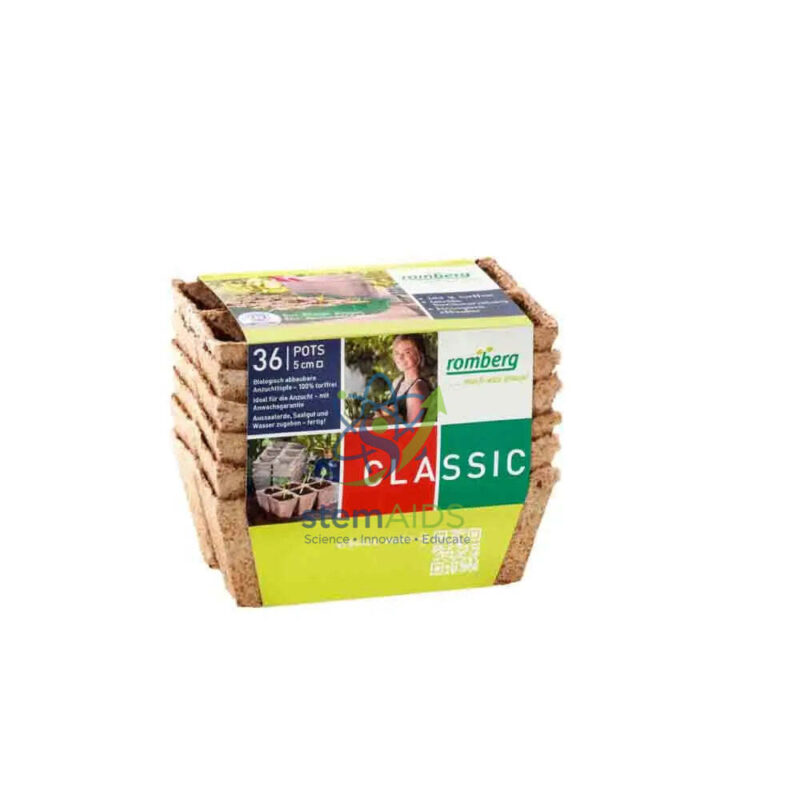
The product photo shows a pack of square fibre pots. Square pots sit together in a tray without gaps, which saves windowsill space and lets the pots support one another.
Because the pot itself decomposes, it doubles as a science object. Burying one and digging it up after a few weeks shows decomposition in progress, and setting it beside a plastic pot and a peat pot under the same conditions turns into a simple investigation of what biodegradable really means.
Specifications
| Type | Plant pot designed to break down in soil after planting |
| Shape shown in the product photo | Square pots in a pack |
| Typical materials for such pots | Coconut coir, wood pulp or peat fibre |
| Uses | Seed sowing, transplanting, decomposition investigations |
Classroom and Garden Uses
- Raising seedlings indoors for planting out in a school garden
- Decomposition experiments comparing biodegradable and plastic containers in soil
- Lessons on plastic waste, composting and the carbon cycle
- Growing plants that dislike root disturbance, such as beans and squash
Care & Handling
- Keep unused pots dry, since they soften and can grow mould once wet.
- Water from below where possible and group the pots in a tray so the fibre walls do not dry out.
- Soak each pot well before planting and set its rim below the soil surface.
Why Choose LabEquip
Schools running seed-sowing projects or sustainability lessons tend to order pots in class quantities, often with cultivation hand tools for the garden. The pot is part of LabEquip’s biology lab products; for pack sizes, ask through the contact page.
Related Products
- Peat Pots: Peat pots that are planted with the seedling, for comparing how a peat pot and a fibre pot break down.
- Plantation Pots, Plastic: Plastic plantation pots, the non-biodegradable control in a decomposition investigation.
- Indoor Greenhouse BoQube: A BoQube indoor greenhouse with a transparent cover for germinating seeds before planting out.
- Biodegradable Plastic Film kit: A practical kit for making starch-based biodegradable plastic film, extending the lesson to bioplastics.
Frequently Asked Questions
Can a biodegradable pot be planted straight into the ground?
Yes, that is the point of it. Water the pot well first, then plant it so the rim is completely below the soil surface, because an exposed rim acts like a wick and dries out the root ball. Tearing the base or sides slightly helps the roots grow out quickly into the surrounding soil.
How long does a biodegradable pot take to break down in soil?
It usually takes from several weeks to a season, depending on the material, how thick the walls are and how warm, moist and biologically active the soil is. Bacteria and fungi break down the plant fibre, so pots in warm, damp, compost-rich soil disappear faster than those in dry or cold ground.
What are biodegradable plant pots made from?
Pots of this kind are usually made from plant fibres such as coconut coir, wood pulp or peat, pressed into shape. Soil organisms can digest these materials, so the pot becomes part of the soil. The product photo shows a pack of square pots, which sit together in a tray without wasting space.
Why do seedlings in fibre pots sometimes dry out or turn yellow?
Fibre walls draw water out of the compost and lose it to the air, so the pots dry faster than plastic ones and need checking daily. As microbes start breaking down the fibre they also take up nitrogen, which can leave seedlings pale or yellow; a dilute feed corrects this.
How can students test whether a pot is really biodegradable?
Bury a biodegradable pot and a plastic pot side by side in the same soil, mark the spots and dig them up every two weeks to photograph and record their condition. Adding a peat or paper pot widens the comparison. Students can also test how moisture or temperature changes the rate of breakdown.
Are biodegradable pots better for the environment than plastic pots?
They avoid plastic waste because the pot goes into the ground with the plant, and there is no container to wash, store or throw away. The raw material still matters: peat is dug from bogs that store carbon, so coir or wood-pulp pots are often preferred. This trade-off makes a good discussion topic in environmental lessons.
Last Updated: November 2026




Reviews
There are no reviews yet.