




In Stock
Coconut Candy
Pastille de coco Engineered from triple-washed coconut husk fibers that expand up to four times their compressed volume upon hydration, providing a structurally stable, high-porosity environment for rapid primary root development.
Standardized pH and EC Levels. Each pellet is factory-calibrated to a neutral pH range and low electrical conductivity (EC), ensuring a chemically inert baseline for sensitive experimental nutrient delivery systems.
$1.69
Quick Answer: Coconut Candy is the listing name for coco coir pellets: flat, compressed discs of coconut-husk fibre that swell in water into small plugs of growing medium. They are not a food. Schools use them to sow seeds and root cuttings, and the expansion itself makes a quick classroom investigation.
From Dry Disc to Growing Plug
Coir is the fibrous material from the husk of the coconut, a by-product of coconut processing. Dried and compressed into discs, it takes up very little space; when water is added, the fibres absorb it and the disc rises to several times its height within minutes, usually held in shape by a fine net. A seed is then pressed into the top, and when roots show through the sides, the whole plug is planted in a pot or bed.
Coir holds water well while keeping air spaces open, and it re-wets easily after drying out, which makes it forgiving for classroom sowing. It contains very few nutrients, so seedlings need a weak liquid feed once their first true leaves open. Coir is often promoted as a peat-free growing medium, which links these pellets to the discussion of peat extraction on the peat pots page.
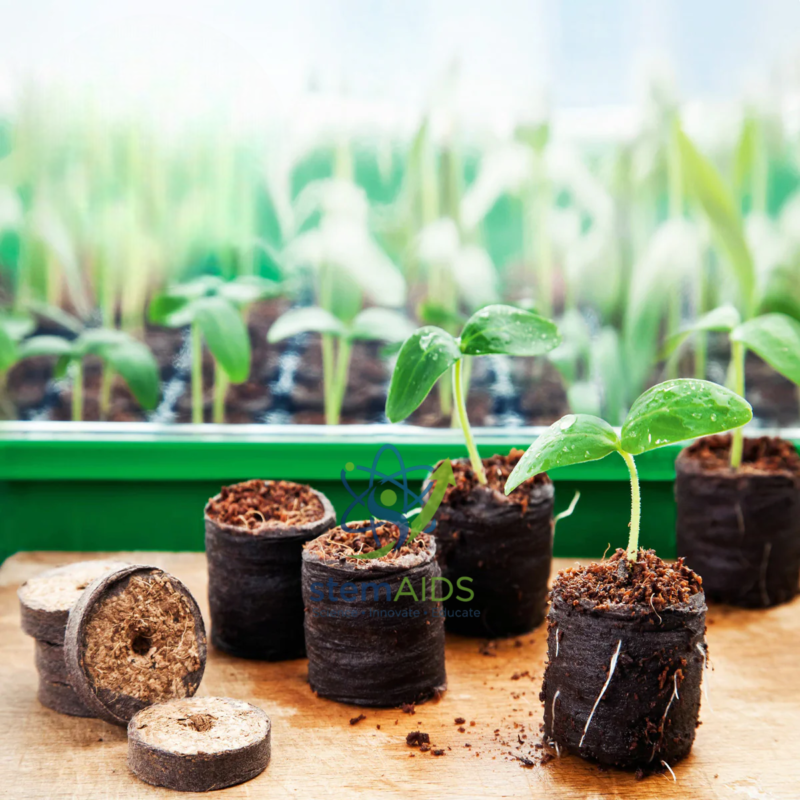
The product photo shows dry discs next to expanded plugs with seedlings. The listing does not give the disc diameter, the expanded height or the number per pack. The discs work well inside a mini greenhouse, where the humid air helps germination.
Classroom Uses
- Sowing single seeds for germination records, one plug per seed
- Measuring how much the discs expand and how much water they absorb
- Rooting soft cuttings of houseplants and herbs
- Comparing growth in coir with growth in soil or peat-based compost
Specifications
| What the item is | Compressed coconut-coir discs (coco coir pellets) |
| How it is used | Soaked in water to expand into a growing plug |
| Growing-medium properties | Water-retentive, airy, low in nutrients |
| Uses | Seed sowing, rooting cuttings, expansion investigations |
| Disc size and pack quantity | Confirm at enquiry |
Care & Handling
- Keep dry discs sealed in a dry place, because once they absorb moisture they swell and can go mouldy.
- Expand them with lukewarm water and pour off any excess before sowing.
- Label the discs clearly in class so younger pupils do not mistake them for sweets, given the name on the listing.
Why Choose LabEquip
Teachers who want a clean, compact sowing medium for a whole class often choose coir pellets, because nothing needs mixing or spilling. The pellets are part of LabEquip’s biology lab products; for pack sizes, use the contact page.
Frequently Asked Questions
Is Coconut Candy something to eat?
No. In this listing the name refers to compressed coconut-fibre discs used as a growing medium for plants. Keep them away from young children who might mistake them for food.
How do coir pellets expand?
Place the discs in a tray and pour lukewarm water over them. The compressed fibres absorb the water and each disc rises into a plug within a few minutes. Loosen the top slightly with a pencil before sowing.
Do seedlings in coir need feeding?
Yes, after a while. Coir holds water well but contains very few plant nutrients, so once the first true leaves appear, water with a weak liquid feed every week or two.
Why do some coir pellets have a net around them?
The fine net holds the expanded fibre in shape so the plug can be lifted and planted without falling apart. Gardeners often slit the net at planting to help the roots spread.
How does coir compare with peat?
Both hold water and air well and are low in nutrients. Coir comes from coconut husks and re-wets easily when dry, while peat is dug from bogs that store carbon. Coir is also less acidic than peat.
Can the pellets be used for cuttings?
Yes. Push a soft cutting into an expanded plug and keep it somewhere humid, such as a covered tray. Roots usually show through the sides within a few weeks, depending on the plant.
Last Updated: September 2026
You must be logged in to post a review.
Bestsellers




Reviews
There are no reviews yet.