

Sale
In Stock
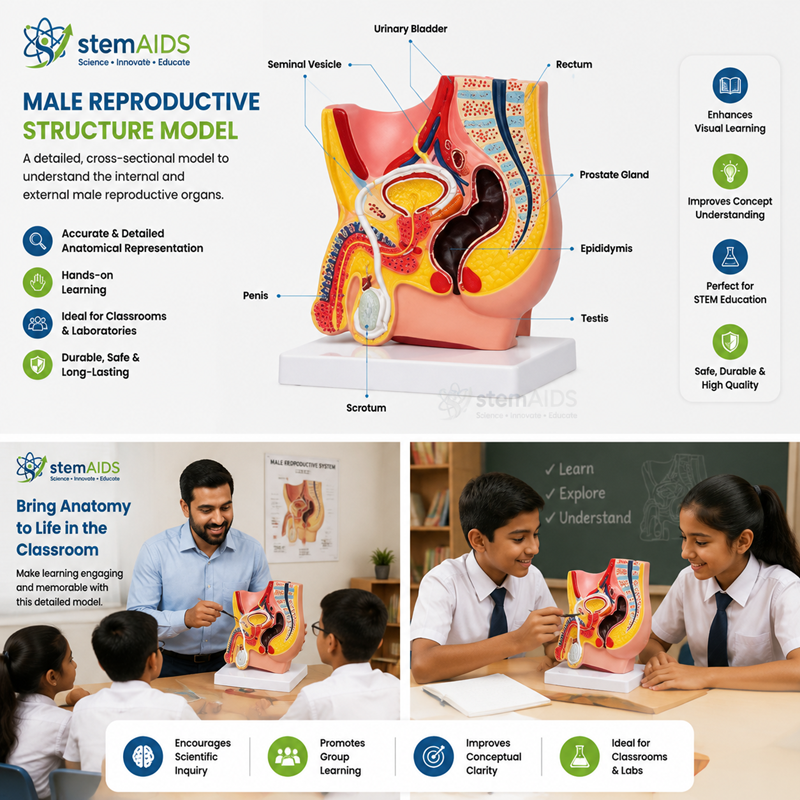
Male Reproductive Structure Model
Original price was: $7.90.$3.84Current price is: $3.84.
Quick Answer: The Male Reproductive Structure Model is a three-dimensional teaching model used in school and college biology classes to help students visualise the general structure of the male reproductive system. It is a classroom demonstration aid, not a certified medical device.
Product Description
The LabEquip Male Reproductive Structure Model gives biology teachers a physical reference for explaining reproductive system structure as part of the standard school and college biology curriculum. Instructors can use the model to point out the general arrangement of reproductive organs while covering topics such as the human life cycle and reproductive health, making lessons easier to follow than diagrams alone.
This model is intended for repeated use across school and college biology terms, laboratory demonstrations, and revision sessions, in line with standard curriculum requirements for teaching human reproduction.
Key Features
- Three-dimensional layout to support curriculum-based teaching of reproductive anatomy
- Designed for repeated use across multiple teaching sessions
- Compact enough for a lab bench, lecture table, or display shelf
- Supports both instructor-led teaching and independent student study
- Reusable resource suited to schools, colleges, and biology training centres
Specifications
| Specification | Detail |
| Product Name | Male Reproductive Structure Model |
| Brand | LabEquip |
| Category | Human Anatomy Teaching Model / Biology Lab Aid |
| Material | Not specified for this listing — confirm with our sales team |
| Scale | Demonstration scale — not stated as life-size for this listing; confirm with our sales team |
| Removable / Labelled Parts | Not specified for this listing — confirm with our sales team |
| Intended Users | Schools, colleges, biology teachers, anatomy educators |
Care & Maintenance
- Wipe gently with a soft, dry or slightly damp cloth — avoid soaking or harsh solvents.
- Keep away from direct sunlight and heat sources, which can cause discolouration or warping.
- Handle any detachable or hinged sections carefully to avoid stressing connection points.
- Store in a dry, dust-free location such as a lab cupboard or display case when not in use.
- Check periodically for loose parts or labels and report any damage before the next demonstration.
Why Choose LabEquip
LabEquip (The Lab Equipment Pvt Ltd) supplies science and biology teaching aids to schools and colleges. The Male Reproductive Structure Model is offered alongside our wider range of human anatomy models for classroom use, with straightforward, honestly described product information rather than overstated claims.
Explore related resources: see our Human Female Reproductive Anatomy Model and Human Pulmonary System Model for other curriculum topics, or browse the full Anatomy Models category.
Frequently Asked Questions
Q1. What is the Male Reproductive Structure Model used for?
It is used in school and college biology classes to help students visualise the general structure of the male reproductive system as part of the standard curriculum on human reproduction.
Q2. Is this model suitable for school-level teaching?
Yes, it is designed as a general classroom and laboratory teaching aid aligned with standard school and college biology curricula.
Q3. What material is the model made from?
Material is not specified for this particular listing. Please contact our sales team if you need this confirmed before ordering.
Q4. Is the model life-size?
Scale is not specified for this particular listing. Please check the product images or contact our sales team to confirm before ordering.
Q5. How should I clean and store the model?
Wipe gently with a dry or slightly damp cloth, avoid direct sunlight and heat, and store it in a dry cupboard or display case between uses.
Q6. Can I order this model in bulk for a school or college lab?
Yes, LabEquip supplies schools, colleges, and institutions. Contact [email protected] for bulk or institutional orders.
Last Updated: September 2026
Bestsellers

Sale

Sale
Sale

Sale
Sale

Sale

Sale

