
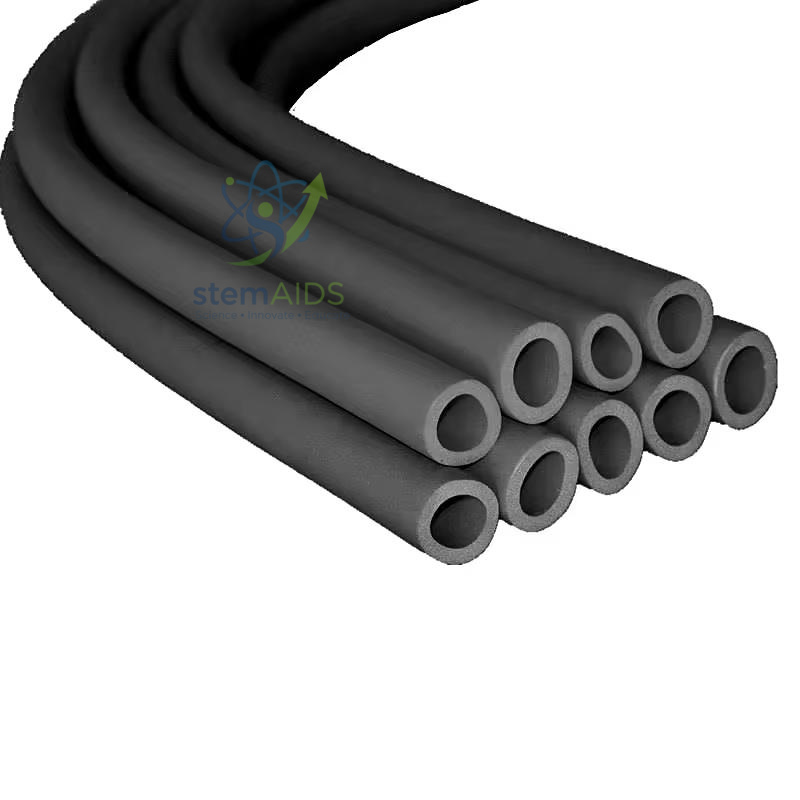
Quick Answer: The Chloroprene Hose is flexible tubing made from chloroprene rubber, better known as neoprene; the listing photo shows black, thick-walled foamed tubing of the kind slipped over circulator or coolant hoses to insulate them.
Chloroprene Rubber in a Lab Setting
Chloroprene, or polychloroprene, is the synthetic rubber sold widely as neoprene. As a material it is known for staying flexible over a broad temperature span and for resisting ozone, weathering and many oils better than natural rubber, while strong oxidising acids, ketones and some solvents attack it. These are general properties of the rubber family, not tested figures for this hose.
The photo shows a bundle of black tubes with thick, cellular walls. Foamed chloroprene tubing like this is used mainly as insulation: it is pushed over the hoses that run between a heating or cooling circulator and an external vessel, so less heat is lost or gained along the way and, on cold lines, less condensation drips onto the bench.
Because the title says hose while the picture shows foam insulation, the form supplied, with its inside diameter, wall thickness and length, should be agreed before ordering. Inside diameter matters most: an insulating sleeve should fit snugly over the hose it covers.
Specifications
| Material | Chloroprene (neoprene) rubber, as titled |
| Form shown | Black foamed tubing with thick walls, as pictured |
| Typical role | Insulating circulator and coolant lines |
| General properties | Flexible; resists ozone and weathering |
| Bore, wall and length | Confirm at enquiry |
Applications
- Insulating hoses between a circulator and a jacketed reactor or condenser
- Reducing condensation on chilled-water lines that cross a bench
- Limiting heat loss from warm lines feeding an external application
- Protecting hands from hot or very cold hose surfaces
Care & Handling
- Keep the chloroprene hose away from ketones, strong oxidising acids and aromatic solvents.
- Cut it to length with a sharp blade so the ends stay square and neat at fittings.
- Inspect it for cracks and permanent flattening after long use, especially near clamps and bends.
- Store it loosely coiled, out of direct sunlight and away from heat sources.
Why Choose LabEquip
Labs that run circulators to external vessels insulate the lines to hold temperatures and keep benches dry. LabEquip lists circulating baths such as the Thermostatic Bath Corio in General Lab Products, and confirms tubing sizes through the contact page.
Frequently Asked Questions
Is chloroprene the same as neoprene?
Yes. Neoprene is the familiar trade name for polychloroprene rubber, and chloroprene is the monomer it is made from. Both terms refer to the same family of synthetic rubber.
Why use foamed tubing on circulator hoses?
The gas cells trapped in foamed rubber conduct heat poorly, so a sleeve over a hose slows heat loss from warm lines and heat gain into cold ones. On chilled lines it also stops condensation forming.
Which chemicals should be kept away from chloroprene?
Chloroprene is generally attacked by strong oxidising acids, ketones such as acetone, and aromatic or chlorinated solvents. Wipe off splashes promptly and check the tubing for swelling or softening.
How do I choose the size?
Measure the outside diameter of the hose you want to insulate and pick a sleeve whose inside diameter fits snugly over it. A loose sleeve leaves air paths that reduce its effect.
Can the foam tubing carry liquid directly?
Foamed tubing is meant as insulation, not as a pressure-bearing line. Use a suitable solid-wall hose for the liquid and slide the foam over it.
How long does chloroprene tubing last?
Service life depends on temperature, chemicals and handling, so no fixed figure applies. Replace sections that have cracked, hardened or flattened permanently.
Last Updated: October 2026




Reviews
There are no reviews yet.