
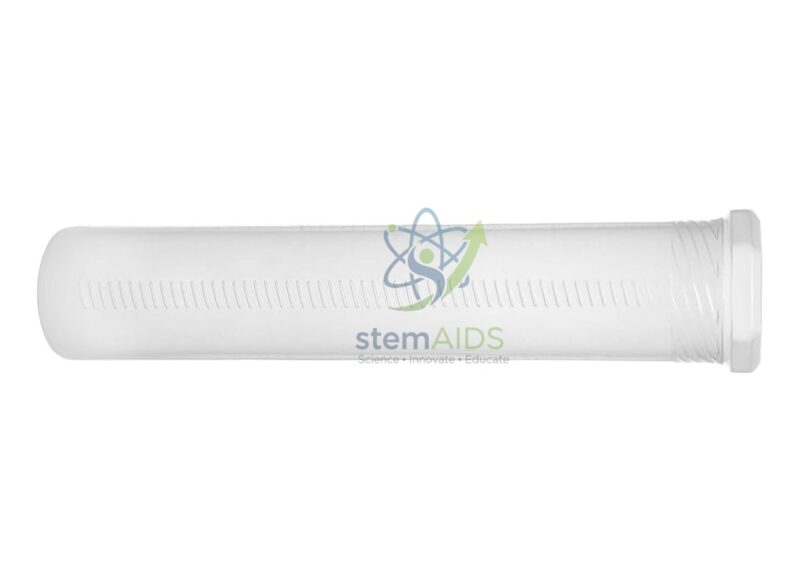
Quick Answer: A pipette box is a long, closed container that holds pipettes lengthwise so they are protected from dust, chipping and contamination between uses. The listing image shows a translucent tubular body with a screw cap at one end.
Closed Storage for Clean Pipettes
Open racks keep pipettes sorted but leave them exposed. Once pipettes have been cleaned, and especially once they have been sterilised for microbiology, they need a closed container that holds them full-length without bending or knocking the tips. This tube does that, and a batch of clean pipettes can be carried to the bench in it and opened only when needed.
The title gives no material, length or diameter. In laboratory practice, metal pipette canisters are used for dry-heat sterilisation in a hot-air oven, while polypropylene containers are generally autoclavable but would melt in a hot-air oven. If the container will be used for sterilising, confirm its material first and choose the method to match.
The internal length must exceed your longest pipette. Before pipettes go in, dry them tip down in a vertical pipette stand; graduated pipettes such as the analytical graduated pipette are a typical load.
Specifications
| Item | Closed container for storing pipettes lengthwise |
| Form | Translucent tube with a screw cap, as shown in the listing image |
| Protects against | Dust, contamination and chipped tips |
| Sterilisation | Depends on material: autoclave suitable plastics, never a hot-air oven |
Applications
- Storing sterile pipettes for microbiology practicals after autoclaving
- Keeping a cleaned titration set dust-free between lessons
- Carrying pipettes safely between prep room and laboratory
- Protecting long graduated pipettes from breakage in drawers
Care & Handling
- Load pipettes tips first and all the same way round, so they can be withdrawn by the upper end without touching the tips.
- Make sure pipettes are fully dry before closed storage, or mould and water spots form.
- Keep a plastic container out of hot-air ovens.
Why Choose LabEquip
Microbiology and analytical labs that need pipettes kept clean and ready use closed containers rather than open racks. LabEquip offers this one with its chemistry lab equipment; give us your pipette lengths through the contact page.
Related Products
- Pipette Box, Aluminium/Stainless Steel: An aluminium or stainless steel pipette canister for dry-heat sterilisation, which plastic boxes cannot take.
- Pipette Stand (Vertical): A vertical pipette stand for draining and drying pipettes tip down before they go into the box.
- Brush, Pipette: A long, slim pipette brush for scrubbing pipette bores clean before storage.
- Pipette, Graduated: A graduated measuring pipette of the kind this box protects between practicals.
- Pipette Tray: A pipette tray that keeps a set of pipettes flat and together at the workstation.
Frequently Asked Questions
What is a pipette box used for in the laboratory?
A pipette box is a closed container that holds clean pipettes lengthwise, protecting them from dust, chipped tips and contamination between uses. The listing image shows a translucent tube with a screw cap, so a batch of pipettes can be carried to the bench and opened only when needed.
Can pipettes be sterilised inside a plastic pipette box?
That depends on the plastic. Polypropylene containers can generally go through an autoclave, but no plastic box should go into a hot-air oven, where it would melt. Dry-heat sterilisation of glass pipettes needs a metal pipette canister.
Which way round should pipettes go into the box?
Load them tips first with the mouthpiece ends towards the cap. The tips are then protected at the closed end, and pipettes can be drawn out by the mouthpiece end without touching the part that enters the liquid.
How long does a pipette box need to be?
It should be longer than the longest pipette it will hold, so the cap closes without pressing on the mouthpiece. Measure the pipettes in use, including any cotton plug, before choosing a container.
Why store clean pipettes in a closed box rather than on a rack?
An open rack keeps pipettes sorted but leaves them exposed to dust and splashes. Once pipettes are cleaned, and especially after sterilising for microbiology, a closed box keeps them in that condition until use.
How should a plastic pipette box be cleaned?
Wash it inside with warm water and laboratory detergent, using a long brush, rinse with distilled water and leave it open to dry fully before reloading. Moisture left inside can encourage mould and spot clean pipettes.
Last Updated: November 2026





Reviews
There are no reviews yet.