

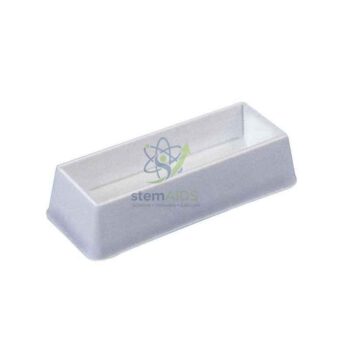
Quick Answer: A pneumatic trough is a wide, shallow water-filled vessel used to collect gases by displacement of water. A gas jar or test tube is filled with water, inverted in the trough, and gas from a delivery tube bubbles up into it, pushing the water out.
Collecting a Gas Over Water
Collection over water is the simplest way to gather a gas that does not dissolve much in water. The trough is filled with water, and a gas jar is filled to the brim, covered with a glass plate, inverted and stood mouth-down in the water.
The method works well for hydrogen, oxygen and nitrogen, and reasonably for carbon dioxide, which dissolves a little. It is unsuitable for very soluble gases such as ammonia, hydrogen chloride or sulfur dioxide, which dissolve before they can collect. A useful bonus is that the first jar, which contains air pushed out of the apparatus, can be discarded before pure gas is collected, and the falling water level shows how much gas has been gathered.
Rubber tubing and delivery tubes of suitable length link it to the generating flask or heated test tube.
Specifications
| Item | Trough for gas collection over water |
| Method | Displacement of water from an inverted jar or tube |
| Suits | Gases of low solubility: hydrogen, oxygen, nitrogen; carbon dioxide with some loss |
| Partners | Gas jars or test tubes, delivery tube, glass cover plates |
Care & Handling
- When a gas is prepared by heating, raise the end of the delivery tube clear of the water before taking the flame away, so cold water cannot be sucked back into the hot tube.
- Fill the trough only to a level that will not overflow when jars are lowered into it.
- Empty and dry the trough after use to prevent algae growth and scale.
- Stand the trough on a tray or a dry area of bench away from electrical sockets.
Applications
- Collecting the oxygen released when hydrogen peroxide decomposes over a manganese(IV) oxide catalyst, then relighting a glowing splint with it
- Collecting hydrogen from a metal and dilute acid for the lighted splint test
- Following the rate of a reaction by collecting gas in an inverted measuring cylinder
- Collecting oxygen from heated potassium permanganate in a test tube, a traditional school preparation
Why Choose LabEquip
Schools teaching gas preparation and tests for gases usually need one trough per working group. LabEquip stocks the trough among its chemistry lab equipment; send quantities for your class through the contact page.
Related Products
- Pneumatic Trough, Plastic: A plastic pneumatic trough that is light and will not shatter if dropped during a practical.
- Beehive Shelves: Beehive shelves that stand in the trough and support the gas jar over the delivery tube.
- Gas Jar With Ground Flange and Foot: A glass gas jar with ground flange for sealing the collected gas with a greased cover plate.
- Tubes, Delivery: Bent glass delivery tubes for carrying gas from the generating flask to the trough.
- Kipps Gas Generating Apparatus, Clear Glass: A Kipps gas generator for producing carbon dioxide or hydrogen on demand for collection.
Frequently Asked Questions
Which gases can be collected in a pneumatic trough?
A pneumatic trough suits gases that do not dissolve much in water, such as hydrogen, oxygen and nitrogen. Carbon dioxide can be collected with a little loss because it dissolves slightly. Very soluble gases such as ammonia and hydrogen chloride cannot be collected over water.
How do I fill and invert a gas jar in the trough without trapping air?
Fill the gas jar to the brim, slide a glass cover plate over the top so no air is left, turn it upside down and lower it into the trough water before removing the plate. Stand it over the delivery tube or on a beehive shelf.
What is suck-back and how can it be prevented?
If a heated flask cools while the delivery tube is still under water, the falling pressure can draw cold water back into the hot flask and crack it. Always lift the delivery tube out of the trough before removing the heat.
Why should the first jar of gas be discarded?
The first gas to bubble out is mostly air pushed out of the flask and delivery tube. Collecting it would dilute the gas being tested, so the first jar or tube is let go before collecting jars for tests.
What is a beehive shelf in a pneumatic trough?
A beehive shelf is a small dome with a hole in the top and an opening in the side. The delivery tube enters through the side and the gas jar stands over the top hole, so the jar sits steadily while gas bubbles up into it.
Can a pneumatic trough measure the volume of gas produced?
Yes, if gas is collected in an inverted measuring cylinder or burette filled with water. Raise or lower it until the water levels inside and outside match before reading, so the gas is at room pressure.
Last Updated: November 2026





Reviews
There are no reviews yet.