Basic Electricity Kit

Quick Answer: The Basic Electricity Kit is a school-level circuit-building kit that lets students connect cells, bulbs, switches, wires and a small buzzer or DC motor to explore current, voltage, resistance and simple series/parallel circuits using safe, low-voltage components.

Description

The Basic Electricity Kit from LabEquip is designed for classroom and lab use in introductory electricity topics. It gives students hands-on practice building open and closed circuits, comparing conductors and insulators, and observing how current behaves in series versus parallel arrangements. Because every component runs on low-voltage dry cells rather than mains power, the kit is suitable for supervised use by school-age students without exposing them to shock hazards.

Typical experiments performed with this kit include lighting a bulb with a single cell, wiring two bulbs in series and in parallel to compare brightness, testing everyday materials for conductivity, identifying broken circuits, and connecting a small DC motor or buzzer to demonstrate energy conversion from electrical to mechanical or sound energy. The components are housed in a labelled tray or case so that a class set can be issued, collected and inventoried quickly between periods.

Kit Contents & Specifications

Product type Educational electricity and circuit experiment kit
Core concepts covered Current, voltage, resistance, conductors and insulators, open/closed circuits, series and parallel circuits, polarity, energy conversion
Typical components Battery holder, bulbs and lamp holders, switches, connecting wires, crocodile clips, resistors, buzzer or bell, small DC motor with fan attachment
Power source Low-voltage dry cells
Typical voltage range 1.5V to 6V
Connection type Plug-in / spring clip / screw terminal / crocodile clip connections
Storage Compartmented tray or case

Care & Safety Note

This kit operates on low-voltage dry cells only and must never be connected to mains electricity. Use under teacher supervision, inspect wires and connectors for damage before each use, and disconnect the battery when the kit is not in use to prevent components from draining or overheating. Store the tray in a dry place and wipe components clean of dust between sessions.

Why Choose LabEquip

  • Low-voltage components designed for safe, supervised classroom use, with no mains connection required.
  • Covers the core school syllabus on current, voltage, resistance and circuit types in one kit.
  • Pairs well with our Basic Microelectricity Kit for schools building out a full electricity curriculum.
  • Part of our wider LEP Kits range, alongside kits such as the Forces, Motion and Dynamics Kit, so schools can standardise practical science supplies with one supplier.

Frequently Asked Questions

What is included in the Basic Electricity Kit?
The kit includes a battery holder, bulbs and lamp holders, switches, connecting wires, crocodile clips, resistors, and a buzzer or bell, along with a small DC motor with a fan attachment.

What electricity concepts can this kit teach?
It supports lessons on current, voltage, resistance, conductors and insulators, open and closed circuits, series and parallel wiring, polarity, and energy conversion.

What voltage does this kit operate at?
The kit runs on low-voltage dry cells, typically in the 1.5V to 6V range, so it is safe for supervised student use.

Can this kit power a motor or buzzer?
Yes, the kit includes a small DC motor with a fan attachment and a buzzer or bell, which students can wire into a circuit to demonstrate energy conversion.

Is this kit suitable for school physics labs?
Yes, it is designed for introductory school-level electricity topics and is commonly used in physics or general science lab sessions.

Are the kit components reusable?
Yes, the wires, holders, switches and other components are reusable across multiple classes and experiment sessions when stored and handled correctly.

Last Updated: September 2026

Advanced Microchemistry Kit

Quick Answer: The Advanced Microchemistry Kit is a microscale chemistry kit for senior secondary, higher secondary and college-foundation labs, letting students perform reactions, electrochemistry, gas collection, titration and conductivity experiments using small quantities of chemicals and reusable micro-apparatus.

Description

The Advanced Microchemistry Kit from LabEquip is built for practical chemistry work that goes beyond introductory microscale topics. It supports hands-on experiments in chemical reactions, electrochemistry, gas collection, conductivity testing, titration, equilibrium, acids and bases, catalysts and reaction-rate studies, using microplates, small wells, pipettes and electrodes instead of full-scale glassware.

Because each experiment uses only a small quantity of reagent, the kit reduces chemical consumption and laboratory waste compared with conventional apparatus, while still covering the core techniques students need for board-level and foundation-level practical chemistry. Components are supplied in a labelled storage box or compartment case so a class set can be issued, cleaned and returned quickly between sessions.

Kit Contents & Specifications

Product type Microscale chemistry experiment kit
Experiment topics covered Chemical reactions, equilibrium, titration, acids and bases, redox reactions, gas collection, conductivity, electrochemical cells and electrolysis
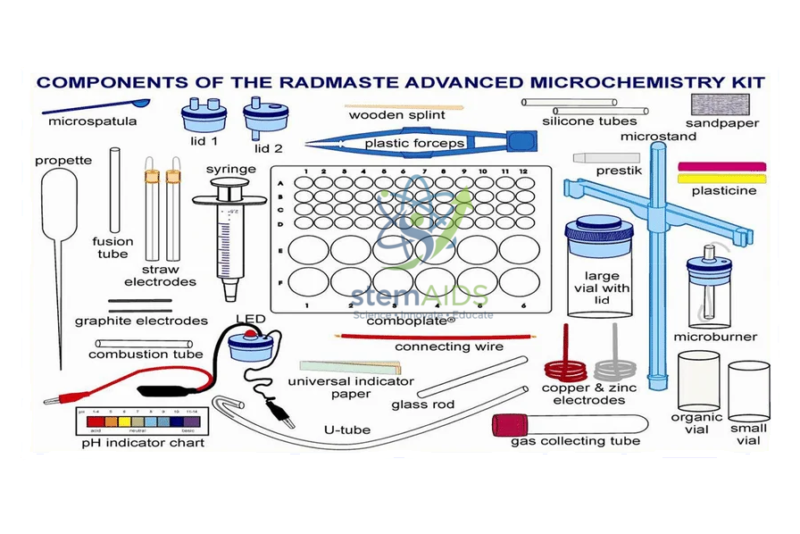
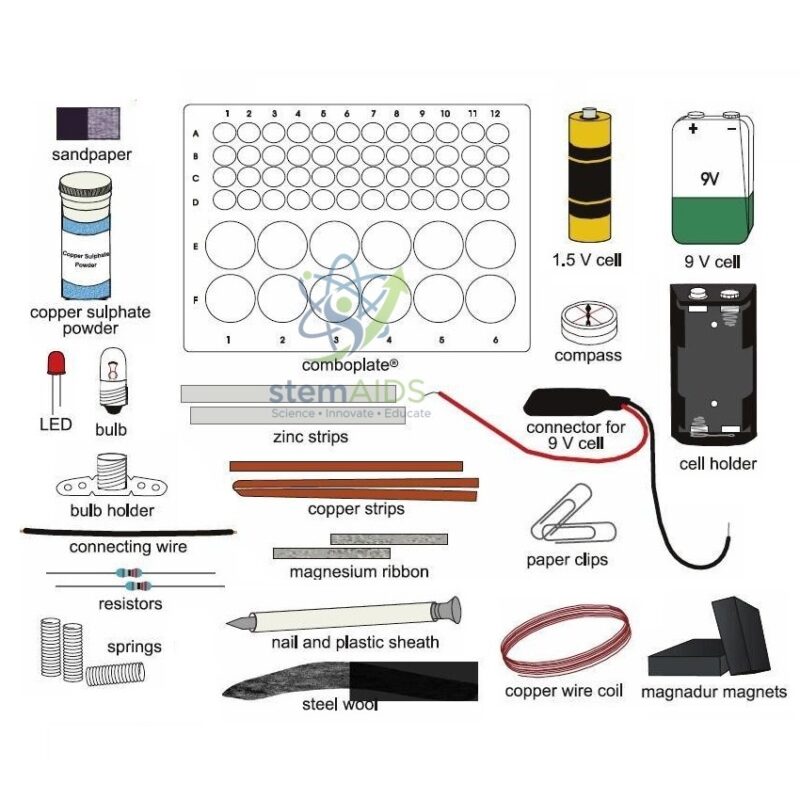
Typical components Comboplate or microplate, pipettes, microspatula, forceps, gas-collecting lid, connecting wire, current indicator or LED, copper electrode, zinc electrode, cotton wool, small tubes, syringe and stirring rod
Documentation Student experiment manual and teacher guide, depending on supply configuration
Reusable components Most plastic, metal and accessory components are reusable after proper cleaning
Chemical supply Chemicals may be included or supplied separately depending on institutional requirement and kit version
Storage Storage box or compartment case, depending on configuration

Care & Safety Note

Wear safety goggles, gloves and a lab coat before starting any experiment, and use only the recommended small quantity of reagent for each microplate well. Handle electrodes, wires and gas-collecting accessories according to the manual, dispose of chemical residues according to laboratory safety procedure, and wash, dry and return reusable components to the kit box after use. Store chemicals separately in labelled containers.

Why Choose LabEquip

  • Microscale format reduces chemical consumption and laboratory waste for senior secondary and college-foundation labs.
  • Covers electrochemistry, gas collection, titration and equilibrium in one reusable kit.
  • Pairs well with our Micro Bio-observation Kit and Basic Microelectricity Kit for schools building a full microscale practical programme.
  • Part of our wider LEP Kits range, so institutions can standardise practical science supplies with one supplier.

Frequently Asked Questions

What experiments can be performed with the Advanced Microchemistry Kit?
Students can study chemical reactions, equilibrium, titration, acids and bases, redox reactions, gas collection, conductivity, electrochemical cells and electrolysis.

What does the kit include?
A typical configuration includes a comboplate or microplate, pipettes, microspatula, forceps, a gas-collecting lid, connecting wire, a current indicator or LED, copper and zinc electrodes, cotton wool, small tubes, a syringe and a stirring rod.

Are chemicals included with the kit?
Chemicals may be included or supplied separately depending on institutional requirement and the kit version ordered.

Is this kit suitable for board-level chemistry practicals?
Yes, it is designed for senior secondary, higher secondary and college-foundation laboratories working through board-level and foundation-level practical chemistry.

Are the kit components reusable?
Most plastic, metal and accessory components are reusable after proper cleaning, though some consumables and chemicals are used up during experiments.

How should the kit be cleaned and stored?
Rinse reusable apparatus with water or a suitable cleaning solution depending on the chemical used, dry all components, and store them in the kit box, with chemicals kept separately in labelled containers.

Last Updated: September 2026

Basic Microchemistry Kit

Quick Answer: The Basic Microchemistry Kit is an entry-level microscale chemistry kit for middle school through college-foundation labs, letting students study reaction rates, titration, equilibrium, acids and bases and mole ratios using very small quantities of chemicals.

Description

The Basic Microchemistry Kit from LabEquip introduces students to chemistry practicals using compact, reusable micro-scale apparatus instead of large glassware and high chemical volumes. It supports experiments in microplates, small wells, pipettes, tubes and miniature apparatus, covering mole ratios, catalysts, reaction rates, equilibrium, titration, pH, acids and bases, precipitation and gas formation.

Because each experiment uses only a small quantity of reagent, the kit reduces chemical consumption, waste generation, preparation time and cleanup effort compared with conventional apparatus, making it well suited to individual learners or small groups working through introductory practical chemistry. Components are supplied in a kit box or storage case so a class set can be issued, cleaned and returned quickly between sessions.

Kit Contents & Specifications

Product type Educational microscale chemistry experiment kit
Learning level Middle school, senior secondary, high school, college foundation and teacher-training laboratories
Common experiment topics Mole ratios, catalysts, reaction rates, equilibrium, titration, pH, acids and bases, precipitation, gas formation and chemical reactions
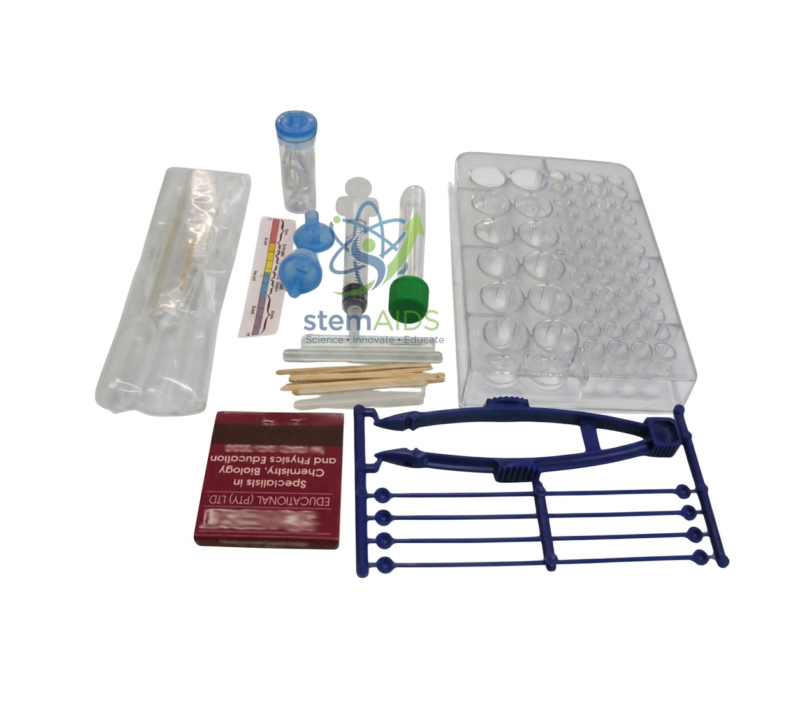
Typical components Microplate or comboplate, pipettes, microspatula, syringe, glass stirring rod, thermometer, micro burner or heating accessory, gas lids and small tubes
Documentation Student manual and teacher or instructor guide, depending on supply configuration
Reusable components Most apparatus items are reusable after proper cleaning
Chemical requirement Small quantities of standard laboratory chemicals may be required; chemicals may be included or supplied separately depending on kit version
Storage Kit box or storage case, depending on configuration

Care & Safety Note

Use the kit only under adult or teacher supervision, with appropriate personal protective equipment for the chemicals in use. Follow the laboratory’s standard operating procedure for handling, dispensing and disposing of chemicals, wash and dry reusable apparatus after each session, and store chemicals separately from cleaned equipment.

Why Choose LabEquip

  • Entry-level microscale format reduces chemical consumption and cleanup time for schools and colleges.
  • Covers reaction rates, titration, equilibrium and acid-base chemistry in one reusable kit.
  • Pairs well with our Advanced Microchemistry Kit for institutions progressing from introductory to advanced microscale practicals.
  • Part of our wider LEP Kits range, alongside kits such as our Basic Microelectricity Kit, so institutions can standardise practical science supplies with one supplier.

Frequently Asked Questions

What experiments can be performed with the Basic Microchemistry Kit?
Students can study mole ratios, catalysts, reaction rates, equilibrium, titration, pH, acids and bases, precipitation, gas formation and chemical reactions.

What does the kit include?
A typical configuration includes a microplate or comboplate, pipettes, microspatula, syringe, glass stirring rod, thermometer, a micro burner or heating accessory, gas lids and small tubes.

Who is this kit suitable for?
It is designed for middle school, senior secondary, high school and college-foundation laboratories, as well as teacher-training programmes.

Are chemicals included with the kit?
Chemicals may be included or supplied separately depending on institutional requirement and the kit version ordered.

Are the kit components reusable?
Most apparatus items are reusable after proper cleaning, though some consumables and chemicals are used up during experiments.

What safety precautions apply when using this kit?
Use the kit only under adult or teacher supervision, wear appropriate personal protective equipment, and follow the laboratory’s standard operating procedure for handling and disposing of chemicals.

Last Updated: September 2026

Earplugs with cord

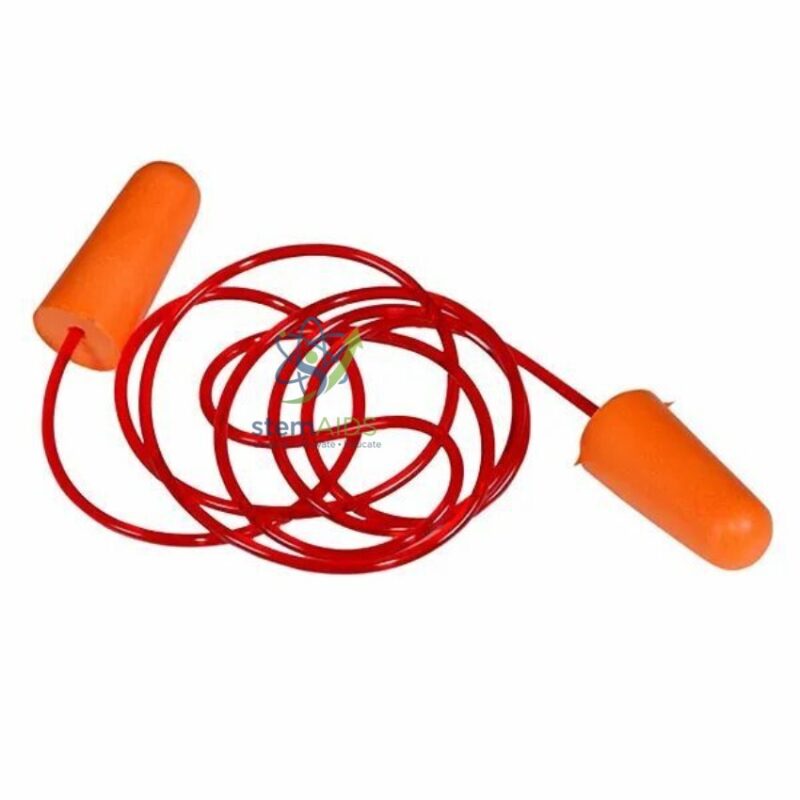
The StemAids Earplugs with Cord are personal hearing protection equipment designed to reduce noise exposure in laboratories, workshops, factories, construction areas, machine rooms, training centers, schools, colleges, and industrial workplaces. The attached cord helps keep both earplugs together, reduces loss, and allows convenient wearing around the neck when temporarily removed.

Product Description

The StemAids Earplugs with Cord are designed to fit inside the ear canal and reduce the amount of sound reaching the inner ear. They are suitable for users working around machinery, compressors, generators, power tools, testing equipment, industrial processes, and other noisy environments where hearing protection is required.

The corded design makes these earplugs practical for workplace use because the pair remains connected during storage, movement, and intermittent use. Depending on the selected model, the earplugs may be made from soft PU foam, TPR, silicone, or reusable flanged material.

Product Specifications

Parameter Details
Product Name Earplugs with Cord
Brand StemAids
Product Type Corded hearing protection earplugs
Application Noise reduction and hearing protection
Design In-ear plug design with attached cord
Material Options Soft PU foam, TPR, silicone, or reusable flanged material depending on model
Cord Material PVC, polyester, nylon, or model-specific flexible cord
Noise Reduction Rating NRR / SNR rating depends on selected model, material, and certification
Typical Rating Range Common corded earplug models may offer approximately 24–31 dB NRR or 30–36 dB SNR depending on design and certification
Common Compliance References EN 352-2, ANSI S3.19, or equivalent hearing-protection standards depending on supplied model
Reusable / Disposable Available as disposable foam type or reusable washable type depending on model
Colour High-visibility orange, yellow, green, blue, or model-specific colour
Packaging Individual polybag, dispenser box, or bulk pack depending on supply configuration
Suitable For Laboratories, workshops, factories, machine rooms, construction sites, schools, colleges, and industrial safety programs

Key Features

  • Corded design helps prevent loss and supports convenient storage
  • Designed to reduce exposure to harmful workplace noise
  • Suitable for intermittent and continuous noise environments
  • Soft material supports comfortable in-ear fitting
  • Available in disposable or reusable configurations
  • Compact and lightweight for easy carrying
  • Useful for laboratories, workshops, factories, and training areas
  • High-visibility colour options help supervisors check PPE compliance

How to Use

  1. Wash or clean hands before handling the StemAids Earplugs with Cord.
  2. Inspect both earplugs and the cord for dirt, damage, cracks, or deformation.
  3. If using foam earplugs, roll the earplug into a small compressed cylinder using clean fingers.
  4. Reach over the head with the opposite hand and gently pull the ear upward and outward to straighten the ear canal.
  5. Insert the earplug carefully into the ear canal.
  6. Hold the earplug in place for a few seconds until it expands and seals the ear canal.
  7. If using reusable flanged earplugs, gently push and twist the plug until a comfortable seal is formed.
  8. Repeat the same process for the other ear.
  9. Keep the cord behind the neck or in a safe position where it will not catch in machinery.
  10. Wear the earplugs continuously while exposed to noise.
  11. After use, remove slowly with a gentle twisting motion.
  12. Clean reusable earplugs according to instructions and store them in a clean container.

Applications

  • Laboratory noise protection
  • Workshop and machine-room safety
  • Factory and industrial PPE use
  • Construction and maintenance work
  • Power tool operation
  • Generator and compressor areas
  • Testing labs and equipment rooms
  • School and college technical training workshops
  • STEM, engineering, and vocational education labs
  • Institutional workplace safety programs

Safety and Handling Guidelines

  • Select earplugs with a suitable NRR or SNR rating for the actual workplace noise level.
  • Do not use damaged, dirty, hardened, cracked, or deformed earplugs.
  • Ensure the earplug is inserted correctly and seals the ear canal properly.
  • Do not share reusable earplugs unless they are properly cleaned and sanitised.
  • Do not use earplugs with cord near rotating machinery if the cord can become entangled.
  • Replace disposable foam earplugs after single-use or when dirty.
  • Replace reusable earplugs when they lose shape, become stiff, or no longer seal properly.
  • Do not insert earplugs too forcefully or use them if ear pain, infection, or irritation is present.
  • Use dual protection, such as earplugs with earmuffs, in very high-noise environments if required by safety assessment.
  • Follow workplace PPE rules, warning signs, supervisor instructions, and hearing conservation procedures.

Quality and E-E-A-T Notes

The StemAids Earplugs with Cord support evidence-based workplace safety by helping reduce noise exposure when correctly selected, inserted, worn, and maintained. For reliable protection, users should match the earplug rating to measured workplace noise levels, train workers in correct fitting, check the seal before use, and replace damaged or contaminated earplugs promptly.

FAQ

1. What are StemAids Earplugs with Cord used for?

They are used to reduce noise exposure and help protect hearing in noisy laboratories, workshops, factories, construction sites, machine rooms, and industrial areas.

2. Why do these earplugs have a cord?

The cord keeps both earplugs connected, reduces the chance of loss, and allows users to hang them around the neck during short breaks.

3. What is NRR?

NRR means Noise Reduction Rating. It is a rating used to indicate tested noise-reduction performance in decibels.

4. What is SNR?

SNR means Single Number Rating. It is another rating system used to show the average sound reduction provided by hearing protection.

5. Are corded earplugs reusable?

Some corded earplugs are reusable, while foam versions may be disposable. Reusable models should be cleaned and stored properly after use.

6. Can earplugs block all sound?

No, earplugs reduce sound but do not block all noise completely. Actual protection depends on rating, fit, insertion depth, and continuous use.

7. How do I know if the earplugs are fitted correctly?

A correctly fitted earplug should feel comfortable and should noticeably reduce surrounding noise. If noise reduction feels weak, remove and refit the earplug.

8. Can earplugs with cord be used near machines?

They can be used in many machine areas, but the cord must not be allowed to catch in rotating parts or moving equipment. For entanglement-risk areas, cordless earplugs may be preferred.

9. Are these suitable for school and college laboratories?

Yes, they are suitable for educational laboratories, STEM workshops, vocational training areas, and machine-practical rooms where noise protection is required.

10. How should reusable earplugs be cleaned?

Wash reusable earplugs with mild soap and clean water if permitted by the model instructions, dry completely, and store them in a clean case.

11. When should earplugs be replaced?

Replace them when they are dirty, damaged, hardened, cracked, misshaped, uncomfortable, or no longer provide a proper seal.

12. Can earplugs and earmuffs be worn together?

Yes, dual protection may be used in very high-noise environments when required by workplace noise assessment or safety instructions.

Why Choose StemAids?

StemAids safety products are selected for practical laboratory, educational, and industrial workflows. The StemAids Earplugs with Cord support hearing protection, PPE compliance, workshop safety, machine-area protection, and institutional safety programs for schools, colleges, laboratories, factories, training centers, and industrial workplaces.

SEO Keywords

StemAids Earplugs with Cord, Corded Earplugs, Hearing Protection Earplugs, Safety Earplugs, Noise Reduction Earplugs, Industrial Ear Protection, Laboratory Hearing Protection, Workshop Safety Earplugs, PPE Earplugs, Reusable Corded Earplugs, Disposable Foam Earplugs with Cord, School Laboratory Safety Earplugs

Earmuffs

The StemAids Earmuffs are personal hearing protection equipment designed to reduce exposure to high noise levels in laboratories, workshops, factories, construction areas, training centers, schools, colleges, and industrial workplaces. They are suitable for users working near machines, compressors, generators, power tools, testing equipment, and other noisy environments.

Product Description

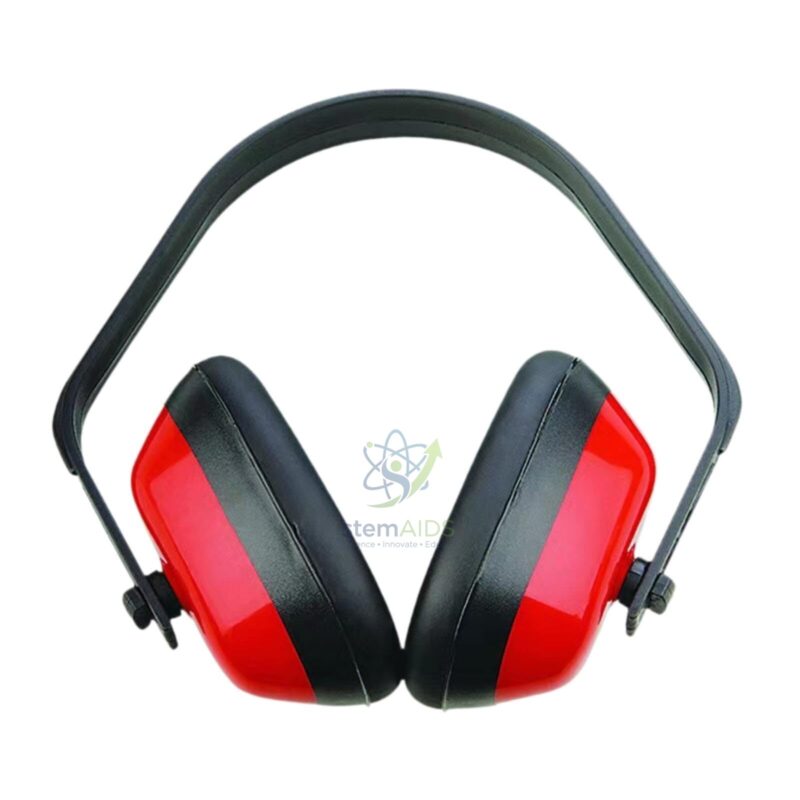
The StemAids Earmuffs are designed to cover the ears completely and reduce incoming sound through cushioned ear cups and an adjustable headband. They help protect users from occupational noise exposure and support safer working conditions during laboratory, educational, industrial, and maintenance activities.

These earmuffs are suitable for routine PPE use where reusable, easy-to-wear hearing protection is required. Their cushioned ear seals help create a comfortable fit around the ears, while the adjustable band allows users to position the earmuffs securely for better noise attenuation.

Product Specifications

Parameter Details
Product Name Earmuffs
Brand StemAids
Product Type Reusable hearing protection earmuffs
Application Noise reduction and hearing protection
Design Over-ear protective ear cup design
Headband Adjustable headband for secure fitting
Ear Cushions Soft cushioned ear pads for comfort and sealing
Noise Rating NRR / SNR rating depends on selected model and certification
Common Compliance References EN 352, ANSI S3.19, or equivalent hearing-protection standards depending on model
Material Durable plastic ear cups with foam / cushioned sealing pads
Reusable Yes, reusable when cleaned and maintained properly
Suitable For Laboratories, workshops, factories, schools, colleges, construction sites, machine rooms, and industrial areas

Key Features

  • Over-ear design helps reduce exposure to workplace noise
  • Adjustable headband supports comfortable fitting for different users
  • Soft ear cushions help improve sealing around the ears
  • Reusable PPE for laboratories, workshops, and industrial environments
  • Suitable for machine operation, maintenance work, and training activities
  • Lightweight design supports longer wearing comfort
  • Easy to clean and store after use
  • Useful for schools, colleges, factories, testing labs, and institutional safety programs

How to Use

  1. Inspect the StemAids Earmuffs before use for cracks, loose parts, damaged cushions, or broken headband.
  2. Remove hair, caps, spectacles arms, or objects that may affect the seal around the ear where possible.
  3. Place the ear cups fully over both ears.
  4. Adjust the headband so the earmuffs sit comfortably and firmly on the head.
  5. Check that the cushions seal properly around the ears without gaps.
  6. Wear the earmuffs before entering the noisy area.
  7. Keep the earmuffs on continuously while noise exposure is present.
  8. After use, wipe the ear cushions and outer cups with a clean cloth.
  9. Store the earmuffs in a clean, dry place away from heat, dust, oil, and chemicals.

Applications

  • Laboratory noise protection
  • Workshop and machine-room safety
  • Factory and industrial PPE use
  • Construction and maintenance work
  • Generator and compressor areas
  • Power tool operation
  • School and college technical training labs
  • STEM, engineering, and vocational education workshops
  • Quality-control and testing environments

Safety and Handling Guidelines

  • Select earmuffs with a suitable NRR / SNR rating for the workplace noise level.
  • Do not use damaged, cracked, loose, or worn-out earmuffs.
  • Ensure the cushions form a proper seal around the ears.
  • Do not modify the earmuffs, drill holes, cut cushions, or alter the headband.
  • Replace cushions if they become hard, cracked, flattened, or dirty.
  • Do not wear earphones or music headsets as a substitute for certified hearing protection.
  • Use dual protection, such as earplugs plus earmuffs, in very high-noise environments if required by safety assessment.
  • Follow workplace PPE rules, safety signage, and supervisor instructions.
  • Clean regularly to maintain hygiene for repeated use.
  • Store away from direct sunlight, chemicals, oil, moisture, and excessive heat.

Quality and E-E-A-T Notes

The StemAids Earmuffs support evidence-based workplace safety by helping reduce noise exposure when selected, fitted, and worn correctly. For reliable protection, users should match the hearing-protection rating to measured workplace noise levels, maintain a proper ear seal, inspect the product regularly, and replace worn cushions or damaged parts.

FAQ

1. What are StemAids Earmuffs used for?

They are used to reduce noise exposure and help protect hearing in noisy laboratories, workshops, factories, construction sites, and industrial areas.

2. What is NRR?

NRR means Noise Reduction Rating. It indicates the tested noise-reduction performance of hearing protection in decibels.

3. What is SNR?

SNR means Single Number Rating. It is commonly used in Europe to show the average sound reduction provided by hearing protection.

4. Are earmuffs reusable?

Yes, earmuffs are reusable when cleaned, stored, and maintained properly.

5. Can earmuffs block all noise?

No, earmuffs reduce noise but do not block all sound completely. The actual protection depends on rating, fit, seal, and correct usage.

6. When should earmuffs be worn?

They should be worn before entering noisy areas and kept on continuously while the noise exposure is present.

7. Can earmuffs be used with safety helmets?

Yes, helmet-mounted earmuff versions may be available. Standard headband earmuffs may not fit properly with some helmets.

8. Can spectacles reduce earmuff protection?

Yes, thick spectacle arms may create small gaps in the ear cushion seal and reduce protection. Thin safety glasses are usually preferred.

9. How should earmuffs be cleaned?

Wipe the ear cups and cushions with a clean damp cloth and mild cleaning solution if suitable. Dry completely before storage.

10. When should earmuffs be replaced?

Replace them if the headband is loose, cups are cracked, cushions are damaged, or the earmuffs no longer seal properly around the ears.

11. Are earmuffs suitable for school laboratories?

Yes, they are suitable for schools, colleges, training centers, and STEM workshops where noise-producing equipment is used.

12. Can earmuffs be shared?

They can be shared only after proper cleaning and hygiene control. For regular use, individually assigned earmuffs are recommended.

Why Choose StemAids?

StemAids safety products are selected for practical laboratory, educational, and industrial workflows. The StemAids Earmuffs support hearing protection, workplace PPE compliance, workshop safety, machine-area protection, and institutional safety programs for schools, colleges, laboratories, factories, and training centers.

SEO Keywords

StemAids Earmuffs, Hearing Protection Earmuffs, Safety Earmuffs, Noise Reduction Earmuffs, Industrial Ear Protection, Laboratory Hearing Protection, Workshop Safety Earmuffs, PPE Earmuffs, Noise Protection Earmuffs, School Laboratory Safety Earmuffs, Reusable Hearing Protection

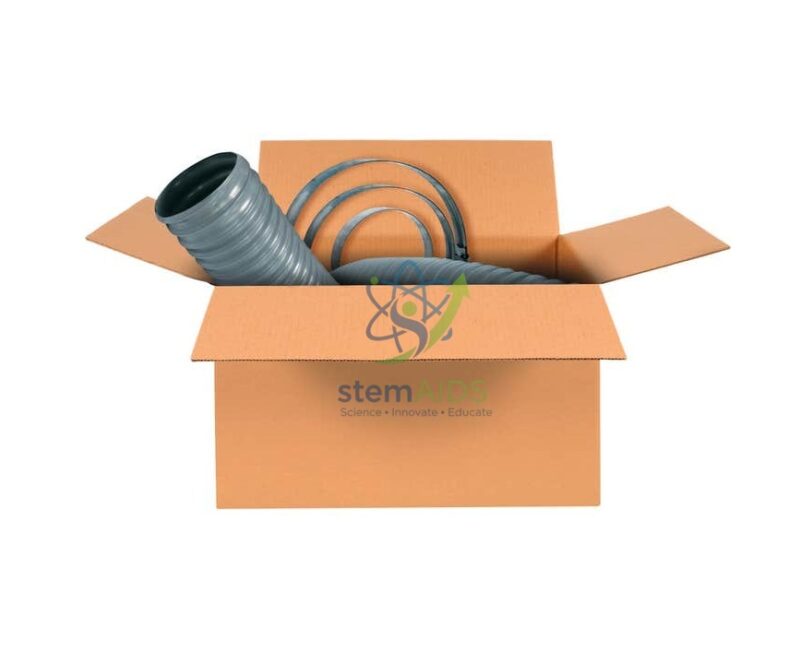
Complete Fan Support for ø125 with 7.5m Hose

The StemAids Complete Fan Support for Ø125 with 7.5 m Hose is a laboratory ventilation accessory designed for compatible APA fume hood and hazardous-material workstation installations. It supports external air extraction by connecting the hood outlet to a suitable ventilation route through a Ø125 mm ducting arrangement and 7.5 m hose.

Product Description

The StemAids Complete Fan Support for Ø125 with 7.5 m Hose is used where a laboratory hood, ducted enclosure, or APA-type workstation requires a dedicated fan-support and hose connection assembly. It helps create a structured extraction path for fumes, vapours, and laboratory air discharge when connected to a compatible ventilation system.

This accessory is suitable for chemistry laboratories, pharmaceutical labs, educational laboratories, research facilities, quality-control laboratories, and institutional science labs using compatible Asecos APA-type fume hood systems. The Ø125 mm connection size and 7.5 m hose length make it practical for installations where the exhaust connection point is positioned away from the hood.

Important Note: This product is a ventilation accessory, not a complete fume hood by itself. Final installation must be checked by qualified laboratory ventilation personnel to ensure correct airflow, duct route, fan performance, discharge point, and chemical safety compliance.

Product Specifications

Parameter Details
Product Name Complete Fan Support for Ø125 with 7.5 m Hose
Brand StemAids
Reference Compatibility Asecos APA-type laboratory hood / hazardous-material workstation ventilation accessory
Reference SKU 794884
Product Type Fan support and ventilation hose accessory
Duct / Hose Diameter Ø125 mm
Hose Length 7.5 m
Weight Approx. 20 kg
Installation Type External ventilation connection accessory for compatible laboratory hood systems
Main Function Supports extraction fan mounting and ducted air discharge connection
Compatible Use APA fume hood, ducted chemical hood, hazardous-material workstation, or compatible laboratory ventilation setup
Application Fume extraction support, chemical vapour exhaust, laboratory air discharge, ducted hood installation, and ventilation routing
Suitable For Schools, colleges, universities, chemistry labs, pharmaceutical labs, research labs, QC labs, and institutional laboratories

Key Features

  • Complete fan-support accessory for compatible APA ventilation systems
  • Ø125 mm duct connection for suitable laboratory extraction layouts
  • 7.5 m hose length supports flexible routing to the exhaust point
  • Useful for ducted fume hood and hazardous-material workstation installations
  • Supports controlled removal of laboratory fumes and vapours when correctly installed
  • Suitable for chemical, pharmaceutical, research, and educational laboratories
  • Helps connect hood extraction to an external ventilation system
  • Professional accessory for laboratory safety and ventilation planning

How to Use

  1. Confirm that the StemAids Complete Fan Support for Ø125 with 7.5 m Hose is compatible with the selected APA hood or laboratory workstation.
  2. Identify the correct exhaust outlet and ventilation discharge route before installation.
  3. Install the fan support securely according to the equipment installation layout.
  4. Connect the Ø125 mm hose to the compatible hood outlet or ventilation connection point.
  5. Route the 7.5 m hose carefully without sharp bends, crushing, twisting, or airflow obstruction.
  6. Connect the hose to the approved exhaust point or ducting system.
  7. Check all clamps, joints, supports, and hose connections for tightness.
  8. Switch on the extraction system and verify airflow direction and performance.
  9. Test the hood or workstation under normal operating conditions before chemical work begins.
  10. Record installation checks, airflow readings, and maintenance observations as per laboratory SOP.

Applications

  • APA laboratory hood ventilation setup
  • Ducted fume hood extraction support
  • Chemical vapour exhaust connection
  • Hazardous-material workstation installation
  • Laboratory air extraction routing
  • Pharmaceutical and QC laboratory ventilation
  • Research laboratory fume extraction
  • School and college chemistry laboratory safety setup
  • Institutional laboratory ventilation planning

Safety and Handling Guidelines

  • Install only with compatible laboratory hoods and approved ventilation systems.
  • Do not use the hose or fan support if it is cracked, crushed, torn, loose, or chemically damaged.
  • Do not reduce the Ø125 mm airflow path unless approved by a ventilation engineer.
  • Avoid sharp hose bends because they can reduce extraction efficiency.
  • Ensure all joints and clamps are properly sealed before using the hood.
  • Do not discharge hazardous fumes into occupied indoor areas.
  • Verify airflow before chemical handling work begins.
  • Follow SDS instructions, laboratory ventilation rules, and local safety regulations.
  • Keep the hose away from heat sources, flames, sharp edges, and corrosive spills.
  • Allow only trained personnel to install, inspect, and maintain the ventilation accessory.

Quality and E-E-A-T Notes

The StemAids Complete Fan Support for Ø125 with 7.5 m Hose supports evidence-based laboratory safety by helping create a defined extraction route for compatible fume hood systems. Correct installation, airflow verification, duct inspection, sealed hose joints, and documented maintenance help improve ventilation reliability and user safety in chemical laboratory workflows.

FAQ

1. What is the StemAids Complete Fan Support for Ø125 with 7.5 m Hose used for?

It is used as a ventilation accessory for compatible APA fume hood or hazardous-material workstation systems requiring Ø125 mm ducted extraction support.

2. What is the hose diameter?

The hose diameter is Ø125 mm.

3. What is the hose length?

The hose length is 7.5 m.

4. What is the approximate product weight?

The listed weight is approximately 20 kg.

5. Is this a complete fume hood?

No, it is a fan-support and hose accessory. It must be used with a compatible hood or ventilation system.

6. Can it be used with any laboratory hood?

No, compatibility must be confirmed with the exact hood model, outlet diameter, airflow requirement, and installation layout.

7. Does the product require professional installation?

Yes, installation should be performed or checked by trained laboratory ventilation personnel to ensure safe airflow and correct duct routing.

8. Why is Ø125 mm diameter important?

The duct diameter affects airflow resistance and extraction performance. The hood outlet, fan, hose, and ducting must match the required diameter and airflow design.

9. Can the hose be cut shorter?

Hose modification should be done only if permitted by the installation plan and ventilation requirements. Unapproved changes may affect airflow performance.

10. How should the hose be maintained?

Inspect the hose regularly for cracks, blockage, chemical residue, loose clamps, crushed sections, and airflow restrictions.

11. What should be checked before use?

Check hose connection, fan support stability, clamp tightness, exhaust route, airflow direction, and hood performance before starting chemical work.

12. Is it suitable for school and college laboratories?

Yes, it is suitable for educational laboratories using compatible ducted hoods, provided the installation meets ventilation and safety requirements.

Why Choose StemAids?

StemAids laboratory ventilation accessories are selected for practical installation support, safer chemical handling workflows, and institutional laboratory requirements. The StemAids Complete Fan Support for Ø125 with 7.5 m Hose supports ducted extraction, APA hood installation, fume removal routing, and reliable laboratory ventilation planning for schools, colleges, research laboratories, pharmaceutical units, chemistry labs, and quality-control departments.

SEO Keywords

StemAids Complete Fan Support Ø125 with 7.5 m Hose, Complete Fan Support for APA Hood, Ø125 Laboratory Ventilation Hose, Fume Hood Fan Support, Laboratory Extraction Hose, Asecos APA Fan Support, Ducted Hood Ventilation Accessory, Chemical Fume Extraction Hose, Laboratory Exhaust Hose, StemAids Laboratory Ventilation Equipment

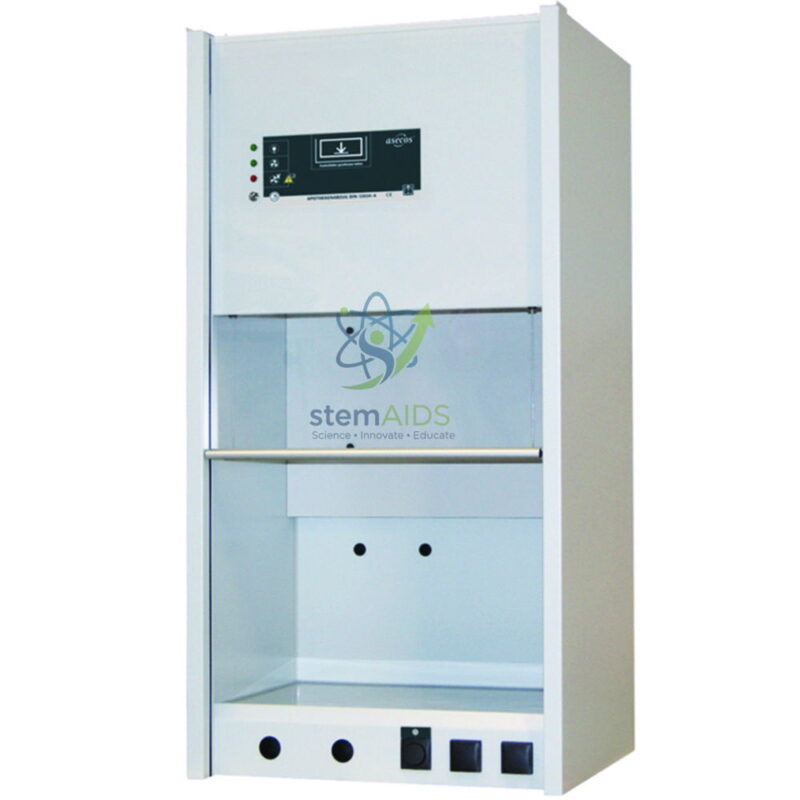
Asecos APA 900mm frame

The StemAids Asecos APA 900 mm Frame is a laboratory support frame designed for compatible Asecos APA.145.090 hazardous-material workplace and pharmaceutical exhaust systems. It provides a stable working base for safe chemical handling, laboratory preparation, reagent work, and controlled hazardous-material operations.

Product Description

The StemAids Asecos APA 900 mm Frame is used as a support structure for the 900 mm APA laboratory exhaust workstation. It helps position the workstation at a suitable working height and supports ergonomic laboratory operation for sitting or standing workflows.

This frame is suitable for laboratories where a dedicated base, support bench, or height-adjustable stand is required for an APA.145.090 type hazardous-material workplace. It is useful in pharmaceutical laboratories, research labs, chemical testing facilities, educational laboratories, QC departments, and institutional science labs.

The frame should be selected according to the exact APA model, working height requirement, bench depth, installation layout, and load-bearing conditions. Final compatibility should be confirmed before procurement.

Product Specifications

Parameter Details
Product Name Asecos APA 900 mm Frame
Brand StemAids
Reference Compatibility Asecos APA.145.090 hazardous-material workplace / pharmaceutical exhaust system
Product Type Laboratory support frame / support bench frame / workstation base frame
Nominal Width 900 mm
Standing Work Frame Option Approx. 865 × 900 × 625 mm, H × W × D
Sitting Work Frame Option Approx. 685 × 900 × 625 mm, H × W × D
Height-Adjustable Option 1 Approx. 740–770 mm height adjustment for APA.145.90 type setup
Height-Adjustable Option 2 Approx. 720–970 mm height adjustment for APA.145.90 type setup
Material Steel frame with chipboard or model-specific support surface, depending on selected configuration
Application Supporting APA hazardous-material workstation, laboratory exhaust unit, chemical handling enclosure, and pharmaceutical preparation setup
Installation Floor-standing or bench-support arrangement depending on frame type and laboratory layout
Suitable For Pharmaceutical labs, chemistry labs, research labs, QC labs, school laboratories, college laboratories, and institutional science facilities

Key Features

  • Designed for 900 mm APA.145.090 type laboratory exhaust workstation setup
  • Provides a stable support base for hazardous-material handling systems
  • Available in sitting, standing, and height-adjustable configurations
  • Helps improve ergonomic working height during laboratory procedures
  • Suitable for chemical, pharmaceutical, research, and educational laboratories
  • Supports organised installation of APA workstation and related accessories
  • Useful for laboratory furniture planning and safety-compliant workstation placement

How to Use

  1. Confirm that the StemAids Asecos APA 900 mm Frame matches the exact APA.145.090 workstation model.
  2. Select the correct frame type: sitting, standing, or height-adjustable as per user requirement.
  3. Place the frame on a clean, level, dry, and load-bearing laboratory floor.
  4. Adjust the height if using a height-adjustable version.
  5. Check that the frame is stable, level, and correctly aligned before placing the APA workstation.
  6. Install the APA workstation carefully on the frame according to the equipment installation instructions.
  7. Confirm that exhaust, electrical, gas, water, or media connections are not obstructed.
  8. Verify that the workstation sits horizontally and does not wobble.
  9. Connect ventilation and services only after the frame and workstation are correctly positioned.
  10. Carry out a safety inspection before starting laboratory work.

Applications

  • Support base for APA.145.090 hazardous-material workplace
  • Pharmaceutical exhaust workstation installation
  • Chemical handling workstation setup
  • Laboratory safety enclosure support
  • Research and QC laboratory furniture integration
  • School and college chemistry laboratory installation
  • Ergonomic sitting or standing laboratory workflows
  • Controlled hazardous-material preparation areas

Safety and Handling Guidelines

  • Use only with compatible APA.145.090 type systems or approved equivalent equipment.
  • Do not exceed the load-bearing capacity recommended for the frame and workstation.
  • Ensure the frame is installed on a level and stable floor.
  • Do not use the frame if it is bent, cracked, corroded, unstable, or damaged.
  • Check all fastening points before placing the workstation on the frame.
  • Keep enough clearance for ventilation ducts, exhaust connections, and service access.
  • Do not block gas, water, electrical, or exhaust connections.
  • Allow only trained personnel to install, relocate, or adjust the frame.
  • Inspect the frame regularly as part of laboratory safety maintenance.
  • Follow the APA workstation manual and institutional safety procedures during installation.

Quality and E-E-A-T Notes

The StemAids Asecos APA 900 mm Frame supports evidence-based laboratory safety by providing a stable, compatible, and ergonomic base for hazardous-material workstations. Correct frame selection, level installation, load verification, ventilation clearance, and documented safety inspection help improve reliability during chemical handling, pharmaceutical preparation, and laboratory exhaust workflows.

FAQ

1. What is the StemAids Asecos APA 900 mm Frame used for?

It is used as a support frame or laboratory bench frame for compatible Asecos APA.145.090 hazardous-material workplace systems.

2. Is this frame compatible with APA.145.090?

Yes, the 900 mm frame is intended for APA.145.090 type setups. Final compatibility should be confirmed with the exact model and configuration before purchase.

3. What frame sizes are available?

Reference options include standing work frame size 865 × 900 × 625 mm and sitting work frame size 685 × 900 × 625 mm.

4. Is a height-adjustable version available?

Yes, reference height-adjustable options include 740–770 mm and 720–970 mm configurations for APA.145.90 type systems.

5. Can it be used with any fume hood?

No, it should be used only with compatible APA hazardous-material workplace systems or approved equivalent equipment after checking dimensions and load capacity.

6. Is the frame suitable for sitting work?

Yes, a sitting work configuration is available with an approximate height of 685 mm.

7. Is the frame suitable for standing work?

Yes, a standing work configuration is available with an approximate height of 865 mm.

8. What should be checked before installation?

Check frame compatibility, floor level, load capacity, frame stability, workstation dimensions, ventilation path, and access to service connections.

9. Can the frame be moved after installation?

It should be moved only by trained personnel after disconnecting the workstation and following laboratory relocation procedures.

10. How should the frame be maintained?

Inspect the frame regularly for corrosion, loose fasteners, surface damage, instability, and alignment. Clean it with a suitable laboratory-safe method.

11. Is this product part of laboratory safety furniture?

Yes, it is a support accessory used as part of a safe and stable hazardous-material workstation installation.

12. Why is correct frame selection important?

Correct frame selection ensures proper workstation height, stability, ventilation clearance, safe service connection, and ergonomic laboratory operation.

Why Choose StemAids?

StemAids laboratory accessories are selected for practical workflows, safe installation, and institutional laboratory requirements. The StemAids Asecos APA 900 mm Frame supports stable APA workstation placement, ergonomic working height, chemical handling safety, pharmaceutical exhaust integration, and organised laboratory setup for schools, colleges, research laboratories, pharmaceutical units, chemistry labs, and quality-control departments.

SEO Keywords

StemAids Asecos APA 900 mm Frame, Asecos APA Frame, APA.145.090 Support Frame, Laboratory Support Frame, Hazardous Material Workplace Frame, Pharmaceutical Exhaust Frame, 900 mm Laboratory Frame, Laboratory Bench Frame, Chemical Workstation Support Frame, StemAids Laboratory Furniture

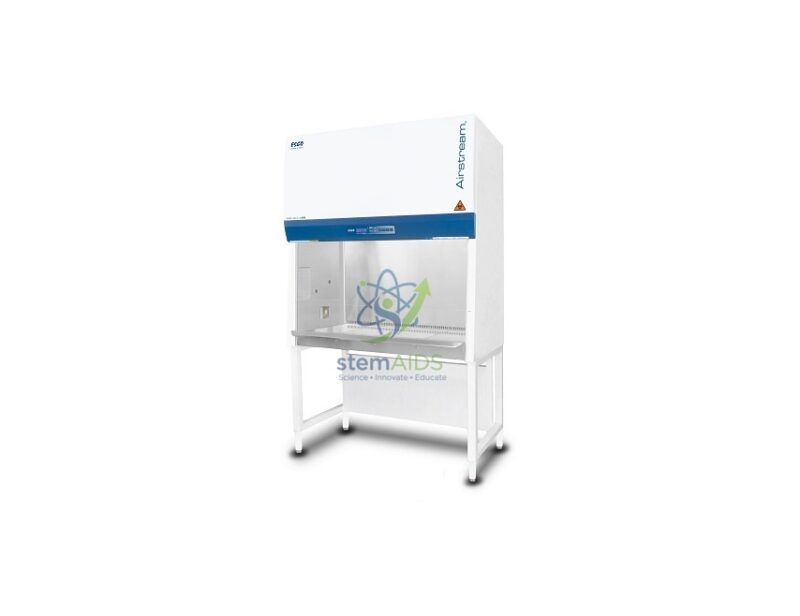
PSM (Microbiological Safety Cabinet)

The StemAids PSM Microbiological Safety Cabinet is a laboratory containment cabinet designed for safer handling of microbiological samples, cell cultures, clinical specimens, non-volatile biological materials, and sterile laboratory procedures. It provides personnel protection, product protection, and environmental protection through controlled airflow and HEPA / ULPA filtration.

Product Description

The StemAids PSM, also known as a Microbiological Safety Cabinet or Biological Safety Cabinet, is suitable for microbiology laboratories, biotechnology labs, pathology labs, pharmaceutical QC labs, diagnostic centers, hospitals, research institutions, universities, and teaching laboratories.

This cabinet is designed to create a controlled work zone by drawing room air through the front opening, passing air through high-efficiency filters, and maintaining clean vertical airflow over the work surface. It helps reduce contamination risk to the operator, sample, and surrounding laboratory environment when used correctly.

Important Note: A microbiological safety cabinet is not the same as a chemical fume hood. It should not be used for volatile toxic chemicals, flammable vapours, radioactive materials, or explosive procedures unless the selected cabinet and exhaust configuration are specifically designed and approved for that use.

Product Specifications

Parameter Details
Product Name PSM Microbiological Safety Cabinet
Brand StemAids
Product Type Microbiological Safety Cabinet / Biological Safety Cabinet
Cabinet Class Class II Type A2 style configuration, depending on selected model
Protection Provided Personnel protection, product protection, and environmental protection
Airflow Pattern Inflow through front opening, vertical downflow over work area, and filtered exhaust
Typical Airflow Distribution Approx. 70% recirculated air and 30% exhausted air in Type A2 style cabinets
Typical Inflow Velocity Approx. 0.45 to 0.50 m/s, depending on standard and model
Typical Downflow Velocity Approx. 0.25 to 0.50 m/s, depending on cabinet design and certification
Filtration HEPA or ULPA filter for downflow and exhaust air
Work Zone Clean filtered work area for microbiological and sterile handling procedures
Work Surface Stainless steel work tray / worktop, depending on configuration
Sash Front safety glass sash with working opening
Lighting LED or fluorescent work area illumination, depending on model
UV Lamp Optional UV germicidal lamp with safety interlock, depending on configuration
Control System Microprocessor control panel with airflow, filter, alarm, and operation indicators
Alarm System Airflow alarm, sash alarm, filter alarm, and system fault alarm depending on model
Available Widths Commonly 900 mm, 1200 mm, 1500 mm, or 1800 mm depending on selected cabinet size
Application Microbiology, cell culture, sample preparation, sterile handling, diagnostic work, and biological research
Suitable For Microbiology labs, biotechnology labs, hospitals, diagnostic labs, pharmaceutical labs, universities, research labs, and teaching laboratories
Standards Reference NSF/ANSI 49, EN 12469, or other applicable biosafety cabinet standards depending on supplied model

Key Features

  • Designed for microbiological safety and contamination control
  • Supports personnel, sample, and environmental protection
  • HEPA / ULPA filtered vertical airflow over the work zone
  • Front inflow helps reduce escape of aerosols from the cabinet
  • Filtered exhaust helps protect the laboratory environment
  • Stainless steel work surface supports easy cleaning and disinfection
  • Safety glass sash provides visibility and physical barrier support
  • Alarm system supports safer airflow and sash-position monitoring
  • Suitable for microbiology, biotechnology, diagnostic, and research workflows
  • Available in multiple working widths for different laboratory requirements

How to Use

  1. Place the StemAids PSM Microbiological Safety Cabinet in a low-traffic laboratory area away from doors, fans, windows, and strong air currents.
  2. Switch on the cabinet blower before starting work and allow the airflow to stabilize.
  3. Check the airflow indicator, sash position, alarm status, and filter condition before use.
  4. Disinfect the internal work surface with a suitable laboratory disinfectant.
  5. Place only the required materials inside the cabinet to avoid airflow obstruction.
  6. Arrange clean materials on one side and waste or used materials on the opposite side to maintain workflow direction.
  7. Keep the front grille and rear air vents clear at all times.
  8. Work slowly and keep hand movements controlled to avoid disturbing airflow.
  9. Keep all manipulations at least 10 cm inside the front opening where practical.
  10. After completing work, seal samples and containers before removing them from the cabinet.
  11. Disinfect the work surface, inner walls, and used equipment according to laboratory SOP.
  12. Allow the cabinet to run for a short purge period after work before switching off.

Applications

  • Microbiological sample handling
  • Cell culture work
  • Bacterial and fungal culture handling
  • Clinical and diagnostic sample preparation
  • Sterile media preparation
  • Pharmaceutical microbiology testing
  • Biotechnology research workflows
  • Pathology and hospital laboratory work
  • Educational microbiology demonstrations
  • Research sample protection from contamination

Safety and Handling Guidelines

  • Use the cabinet only after proper installation, certification, and airflow verification.
  • Do not use the cabinet if airflow alarm, sash alarm, or filter alarm is active.
  • Do not block front grille, rear grille, side vents, or exhaust filter area.
  • Do not use open flames inside the cabinet because flames disturb airflow and may damage filters.
  • Do not use for volatile toxic chemicals unless the exact cabinet and exhaust configuration are approved for that purpose.
  • Wear suitable PPE such as lab coat, gloves, mask, and eye protection as required by SOP.
  • Disinfect surfaces before and after every work session.
  • Use proper biological waste containers and decontamination procedures.
  • Keep movements slow to maintain airflow stability.
  • Do not store unnecessary items inside the cabinet.
  • Perform routine filter inspection and cabinet certification according to laboratory safety requirements.
  • Allow only trained personnel to operate, clean, certify, and maintain the cabinet.

Quality and E-E-A-T Notes

The StemAids PSM Microbiological Safety Cabinet supports evidence-based biosafety practice through controlled airflow, HEPA / ULPA filtration, certified cabinet performance, documented cleaning procedures, and trained user operation. For reliable protection, laboratories should maintain cabinet certification records, airflow verification reports, filter integrity test records, decontamination logs, SOPs, and user training documentation.

FAQ

1. What is the StemAids PSM Microbiological Safety Cabinet used for?

It is used for safer handling of microbiological samples, cell cultures, clinical specimens, sterile materials, and biological research samples.

2. What does PSM mean?

PSM commonly refers to Poste de Sécurité Microbiologique, meaning Microbiological Safety Cabinet.

3. Is a PSM the same as a biosafety cabinet?

Yes, PSM and microbiological safety cabinet are commonly used for biological safety cabinets designed for microbiology and contamination-control work.

4. What protection does the cabinet provide?

A Class II style cabinet provides personnel protection, product protection, and environmental protection when installed, certified, and used correctly.

5. What filters are used?

The cabinet uses HEPA or ULPA filters for filtered downflow and exhaust air, depending on the supplied model.

6. Can this cabinet be used for chemical fumes?

It should not be used like a chemical fume hood. Volatile toxic chemicals require a properly designed chemical fume hood or a certified cabinet configuration approved for that use.

7. Can an open flame be used inside the cabinet?

Open flames are not recommended because they disturb airflow, increase fire risk, and may damage HEPA / ULPA filters.

8. Is UV light required?

UV light is optional and does not replace proper cleaning and disinfection. If provided, it should be used only when the sash is closed and no personnel are exposed.

9. How often should the cabinet be certified?

Certification is commonly performed at installation, after relocation, after filter replacement, after major service, and at regular intervals according to laboratory SOP and applicable standards.

10. What should be checked before use?

Check airflow status, sash position, alarms, work surface cleanliness, filter condition, and availability of disinfectant and waste containers.

11. Can it be used in school and college laboratories?

Yes, it is suitable for educational microbiology laboratories when used under trained supervision and proper biosafety procedures.

12. How should the cabinet be cleaned?

Clean and disinfect the work surface, side walls, rear wall, and equipment surfaces before and after work using a disinfectant suitable for the biological material being handled.

Why Choose StemAids?

StemAids laboratory safety equipment is selected for practical workflows, contamination control, and institutional laboratory requirements. The StemAids PSM Microbiological Safety Cabinet supports microbiology work, sterile sample handling, cell culture protection, diagnostic testing, pharmaceutical microbiology, biotechnology research, and educational laboratory safety for schools, colleges, hospitals, research centers, and quality-control laboratories.

SEO Keywords

StemAids PSM Microbiological Safety Cabinet, PSM Cabinet, Microbiological Safety Cabinet, Biological Safety Cabinet, Class II Biosafety Cabinet, Class II Type A2 BSC, HEPA Filter Safety Cabinet, Microbiology Laboratory Cabinet, Cell Culture Safety Cabinet, Laboratory Biosafety Cabinet, StemAids Laboratory Safety Equipment

Laboratory Fume Cupboard with Extraction Fan

The StemAids Laboratory Fume Cupboard with Extraction Fan is a ducted chemical safety enclosure designed to remove harmful fumes, vapours, odours, gases, and airborne contaminants from the laboratory working area. It is suitable for chemistry laboratories, schools, colleges, pharmaceutical labs, research facilities, industrial quality-control laboratories, testing labs, and institutional science laboratories.

Product Description

The StemAids Laboratory Fume Cupboard with Extraction Fan provides a controlled workspace for handling chemicals that may release fumes or vapours during experiments, heating, mixing, reagent preparation, sample digestion, solvent handling, acid handling, and routine laboratory processes. The extraction fan draws contaminated air away from the user and directs it through a ducting system for safe discharge outside the laboratory.

The fume cupboard is designed with a front sash, work chamber, chemical-resistant worktop, exhaust collar, internal lighting, and extraction fan system. It helps protect laboratory personnel by maintaining inward airflow at the front opening and reducing the risk of fumes spreading into the room.

Important Note: This is a chemical fume cupboard, not a biological safety cabinet. It should not be used for infectious biological materials, radioactive substances, explosive reactions, or highly toxic chemicals unless the complete system design, ducting, airflow, filtration, and safety controls are approved by qualified laboratory safety personnel.

Product Specifications

Parameter Details
Product Name Laboratory Fume Cupboard with Extraction Fan
Brand StemAids
Product Type Ducted laboratory fume cupboard / chemical fume hood
Function Extraction of fumes, vapours, odours, gases, and airborne contaminants from laboratory work area
Airflow Type External ducted exhaust with extraction fan
Recommended Face Velocity Typically 0.4 to 0.6 m/s, depending on laboratory standard, sash height, and installation design
Extraction Fan Type FRP centrifugal blower, PP blower, or corrosion-resistant exhaust fan depending on configuration
Sash Type Vertical sliding toughened glass sash or model-specific safety glass sash
Body Material Powder-coated mild steel, stainless steel, PP, or chemical-resistant construction depending on selected model
Inner Lining Chemical-resistant PP, FRP, stainless steel, or compact laminate depending on application
Worktop Epoxy resin, granite, ceramic, PP, or chemical-resistant worktop depending on configuration
Lighting Internal LED / fluorescent illumination, isolated from chemical work zone depending on design
Electrical Sockets Optional laboratory-grade electrical sockets with suitable protection, depending on configuration
Utility Options Optional gas tap, water tap, vacuum tap, sink, drain cup, and service valves
Duct Connection Top or rear exhaust collar suitable for external ducting
Available Widths Commonly 900 mm, 1200 mm, 1500 mm, 1800 mm, or custom size as per laboratory requirement
Installation Type Bench-mounted, floor-mounted, or cabinet-mounted depending on model
Base Cabinet Optional chemical storage base cabinet, acid/alkali cabinet, or open stand
Application Chemical handling, solvent work, acid digestion, reagent preparation, sample heating, fume extraction, and laboratory safety
Suitable For Schools, colleges, universities, chemistry labs, pharmaceutical labs, research labs, QC labs, testing labs, and institutional laboratories

Key Features

  • Ducted fume cupboard for chemical fume and vapour extraction
  • Integrated extraction fan supports continuous removal of contaminated air
  • Vertical sash helps create a physical barrier between user and experiment
  • Chemical-resistant work chamber suitable for routine laboratory handling
  • Optional utility services such as gas, water, vacuum, sink, and electrical sockets
  • Designed to maintain inward airflow at the working opening
  • Suitable for schools, colleges, research labs, pharmaceutical labs, and QC facilities
  • Available in different widths and material configurations
  • Supports safer handling of acids, solvents, reagents, odours, and fumes when properly installed
  • Can be supplied with base cabinet or bench-mounted setup as per laboratory layout

How to Use

  1. Ensure the StemAids Laboratory Fume Cupboard is connected to a properly designed external ducting system.
  2. Switch on the extraction fan before placing chemicals or apparatus inside the work chamber.
  3. Check the airflow indicator, tissue test, or installed airflow monitor before starting work.
  4. Keep the sash at the recommended working height to maintain proper face velocity.
  5. Place chemicals, beakers, flasks, burners, and instruments at least 150 mm inside the hood opening where practical.
  6. Keep only the required chemicals and apparatus inside the fume cupboard.
  7. Do not block the rear baffle, side airflow path, or exhaust opening.
  8. Keep chemical containers closed when not actively in use.
  9. Perform work slowly to avoid disturbing airflow inside the cupboard.
  10. After completing the work, allow the extraction fan to run for a short purge period.
  11. Clean the worktop and remove chemical residues using a suitable laboratory-safe method.
  12. Switch off the fan only after fumes have been cleared from the chamber.

Applications

  • Chemical fume extraction
  • Solvent handling and evaporation work
  • Acid and alkali handling
  • Reagent preparation and sample transfer
  • Heating and digestion of chemical samples
  • Odour removal from laboratory processes
  • School and college chemistry practicals
  • Pharmaceutical and industrial QC testing
  • Research laboratory sample preparation
  • Environmental and analytical laboratory workflows

Safety and Handling Guidelines

  • Use the fume cupboard only after confirming that the extraction fan and ducting are working properly.
  • Do not use the fume cupboard if airflow is weak, reversed, unstable, or not verified.
  • Keep the sash as low as practical during operation for better user protection.
  • Do not store unnecessary chemicals inside the working chamber.
  • Do not use for explosive reactions unless the hood is specially designed for that risk.
  • Do not use for biological containment unless the equipment is specifically certified for biological safety.
  • Keep ignition sources away when working with flammable solvents.
  • Use suitable PPE such as lab coat, gloves, goggles, and face protection where required.
  • Follow SDS instructions for every chemical used inside the fume cupboard.
  • Do not place your head inside the hood while work is in progress.
  • Clean spills immediately using approved spill-control procedures.
  • Schedule periodic airflow testing, duct inspection, fan maintenance, and sash inspection.

Quality and E-E-A-T Notes

The StemAids Laboratory Fume Cupboard with Extraction Fan supports evidence-based laboratory safety by using controlled airflow, external exhaust, physical sash protection, chemical-resistant construction, and planned ventilation. For reliable safety performance, laboratories should maintain airflow test records, fan maintenance logs, duct inspection reports, chemical compatibility records, SDS documentation, and SOP-based user training.

FAQ

1. What is the StemAids Laboratory Fume Cupboard with Extraction Fan used for?

It is used to remove chemical fumes, vapours, odours, gases, and airborne contaminants from laboratory work areas through a ducted exhaust system.

2. Does this fume cupboard require ducting?

Yes, it is a ducted fume cupboard and must be connected to a suitable external exhaust ducting system.

3. What is the role of the extraction fan?

The extraction fan creates airflow that pulls contaminated air from the work chamber and discharges it through the duct system.

4. What is the recommended face velocity?

Many laboratory fume cupboards are designed around a face velocity of approximately 0.4 to 0.6 m/s, depending on the applicable safety standard and laboratory design.

5. Can it be used for acid handling?

Yes, acid handling is possible when the fume cupboard lining, worktop, ducting, and fan material are compatible with the acid vapours being used.

6. Can it be used for solvent handling?

Yes, solvent vapour handling is possible when ventilation, airflow, fan type, ducting, and fire-safety precautions are suitable for the solvent risk.

7. Is this a ductless fume hood?

No, this is a ducted fume cupboard. It removes contaminated air through external ducting instead of recirculating filtered air back into the room.

8. Is it suitable for school and college laboratories?

Yes, it is suitable for educational chemistry laboratories when installed correctly and used under supervision with proper safety procedures.

9. Can chemicals be stored inside the fume cupboard?

The work chamber should not be used as a chemical storage area. Only chemicals required for the current procedure should be kept inside during work.

10. What should be checked before use?

Check fan operation, airflow direction, sash movement, worktop cleanliness, duct connection, and chemical compatibility before starting work.

11. What happens if the airflow is weak?

Stop work immediately and do not use the fume cupboard until the fan, ducting, airflow path, and exhaust system are inspected and corrected.

12. How should the fume cupboard be maintained?

Clean the worktop regularly, inspect the sash and seals, verify airflow, service the extraction fan, check ducting, inspect the work chamber lining, and document maintenance according to laboratory SOP.

Why Choose StemAids?

StemAids laboratory safety equipment is selected for practical workflows, user protection, and institutional laboratory requirements. The StemAids Laboratory Fume Cupboard with Extraction Fan supports chemical fume extraction, controlled airflow, external exhaust connection, durable laboratory construction, and safer handling for schools, colleges, chemistry labs, pharmaceutical units, research laboratories, and industrial quality-control departments.

SEO Keywords

StemAids Laboratory Fume Cupboard with Extraction Fan, Laboratory Fume Cupboard, Chemical Fume Hood, Ducted Fume Hood, Fume Hood with Blower, Laboratory Exhaust Hood, Fume Cupboard for Chemistry Lab, School Laboratory Fume Hood, Pharmaceutical Fume Hood, Acid Fume Cupboard, Solvent Fume Hood, Laboratory Safety Equipment

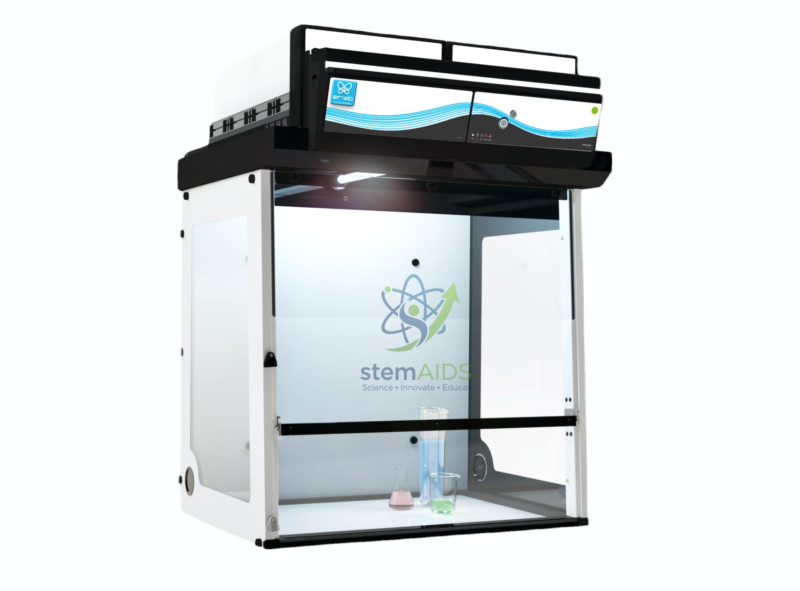
Filtration hood without connection

The StemAids Filtration Hood Without Connection Smart 392 / 483 / 633 / 714 is a ductless laboratory filtration hood designed for safer handling of compatible chemical vapours, solvents, acids, formaldehyde, ammonia vapours, powders, and particles when fitted with the correct filter configuration. It is suitable for schools, colleges, chemistry laboratories, pharmaceutical labs, research facilities, quality-control laboratories, and institutional science laboratories.

Product Description

The StemAids Smart Filtration Hood is designed to protect laboratory users from inhalation exposure by capturing contaminated air inside the hood and passing it through application-specific filters. Since it works without external duct connection, it supports flexible installation, reduced ducting cost, and easier laboratory layout planning.

The Smart 392, 483, 633, and 714 models are available in different working widths to match small, medium, and large laboratory applications. These hoods can be configured with activated carbon filters for chemical vapours, HEPA H14 filters for particles, ULPA U17 filters for high-efficiency particle filtration, or combined filtration depending on the laboratory process.

Important Note: This is a chemical filtration hood, not a biological safety cabinet. It should not be used for infectious biological materials, radioactive substances, explosive vapours, or unknown high-risk chemicals unless the exact configuration is approved by qualified laboratory safety personnel.

Product Specifications

Parameter Smart 392 Smart 483 Smart 633 Smart 714
Product Type Ductless filtration hood Ductless filtration hood Ductless filtration hood Ductless filtration hood
Brand StemAids StemAids StemAids StemAids
External Connection No external duct required No external duct required No external duct required No external duct required
Approx. External Dimensions 1005 × 750 × 1332–1518 mm 1298 × 750 × 1332–1518 mm 1604–1620 × 750 × 1332–1518 mm 1819 × 750 × 1332–1518 mm
Airflow Approx. 440 m³/h Approx. 660 m³/h Approx. 660 m³/h Approx. 880 m³/h
Air Face Velocity 0.4 to 0.6 m/s 0.4 to 0.6 m/s 0.4 to 0.6 m/s 0.4 to 0.6 m/s
Power Consumption Approx. 105 W Approx. 160 W Approx. 160 W Approx. 220 W
Voltage / Frequency 220 V / 50–60 Hz 220 V / 50–60 Hz 220 V / 50–60 Hz 220 V / 50–60 Hz
Sash Opening Total opening or Reverso sash Total opening or Reverso sash Total opening or Reverso sash Total opening or Reverso sash
Structure Anti-acid polymer coated electro-galvanised steel Anti-acid polymer coated electro-galvanised steel Anti-acid polymer coated electro-galvanised steel Anti-acid polymer coated electro-galvanised steel
Panels Chemical-resistant acrylic Chemical-resistant acrylic Chemical-resistant acrylic Chemical-resistant acrylic
Filtration Module Polypropylene Polypropylene Polypropylene Polypropylene
Internal Lighting LED lighting > 650 lux LED lighting > 650 lux LED lighting > 650 lux LED lighting > 650 lux
Filter Options Carbon, HEPA H14, ULPA U17, or combined filtration Carbon, HEPA H14, ULPA U17, or combined filtration Carbon, HEPA H14, ULPA U17, or combined filtration Carbon, HEPA H14, ULPA U17, or combined filtration
Work Surface Options Tempered glass, Trespa TopLab PLUS, or 304L stainless steel Tempered glass, Trespa TopLab PLUS, or 304L stainless steel Tempered glass, Trespa TopLab PLUS, or 304L stainless steel Tempered glass, Trespa TopLab PLUS, or 304L stainless steel
Suitable Use Small to medium chemical handling Medium chemical handling Large laboratory applications Large-capacity chemical handling

Key Features

  • Ductless filtration hood without external duct connection
  • Available in 392, 483, 633, and 714 working sizes
  • Suitable for compatible vapours, solvents, acids, powders, and particles
  • Configurable carbon, HEPA, ULPA, or combined filtration system
  • Smart monitoring interface for airflow and filter safety indication
  • Air face velocity range of 0.4 to 0.6 m/s
  • Chemical-resistant acrylic panels for clear visibility
  • Anti-acid polymer coated steel structure for laboratory durability
  • LED lighting above 650 lux for better working visibility
  • Low energy consumption compared with traditional ducted fume hoods
  • Suitable for schools, colleges, research labs, pharma labs, and QC labs

How to Use

  1. Place the StemAids Smart Filtration Hood on a stable laboratory bench or approved support stand.
  2. Check the chemical list, vapour type, powder type, quantity, and concentration before use.
  3. Select the correct filter type: carbon filter for vapours, HEPA/ULPA filter for particles, or combined filtration for mixed applications.
  4. Install the selected filter module correctly before switching on the hood.
  5. Connect the hood to the correct electrical supply as mentioned on the rating plate.
  6. Switch on the hood and confirm airflow status through the safety monitoring system.
  7. Place only the required chemicals, containers, samples, and apparatus inside the work zone.
  8. Keep the sash opening and airflow path clear during operation.
  9. Work slowly to avoid disturbing containment airflow.
  10. Keep chemical containers closed when they are not actively being used.
  11. After work, allow the hood to run for a short purge period as per laboratory SOP.
  12. Clean the work surface with a compatible laboratory-safe cleaning method.
  13. Record filter usage hours, airflow checks, and filter replacement history.

Applications

  • Chemical vapour filtration
  • Solvent vapour handling with correct carbon filter
  • Acid and organic vapour handling with suitable filter configuration
  • Formaldehyde vapour filtration with compatible filter
  • Ammonia vapour filtration with compatible filter
  • Powder and particle handling with HEPA or ULPA filtration
  • Reagent preparation and transfer
  • Sample preparation in pharmaceutical and QC laboratories
  • School and college chemistry demonstrations
  • Research laboratory chemical handling
  • Industrial laboratory safety workflows

Safety and Handling Guidelines

  • Use only with approved chemicals and known applications.
  • Select the correct filter before handling any chemical or powder.
  • Do not use the hood without a correctly installed filter.
  • Do not use for unknown, explosive, radioactive, highly toxic, or infectious substances without formal risk assessment.
  • Do not exceed the chemical quantity or filter capacity recommended by the safety assessment.
  • Check airflow before each use.
  • Replace saturated, expired, clogged, or incompatible filters immediately.
  • Do not block the sash opening, air intake, exhaust area, or filtration module.
  • Wear suitable PPE such as gloves, goggles, lab coat, and respiratory protection where required.
  • Keep ignition sources away when working with flammable vapours.
  • Follow SDS instructions, institutional safety rules, and local laboratory regulations.
  • Allow only trained personnel to install filters, service the hood, and approve chemical use.

Quality and E-E-A-T Notes

The StemAids Filtration Hood Without Connection Smart 392 / 483 / 633 / 714 supports evidence-based laboratory safety through controlled airflow, configurable filtration, chemical compatibility assessment, filter monitoring, and documented maintenance. For safe and reliable operation, laboratories should maintain chemical lists, SDS records, filter selection documents, airflow verification records, filter replacement logs, and SOP-based user training.

FAQ

1. What is the StemAids Smart Filtration Hood used for?

It is used for ductless filtered handling of compatible chemical vapours, solvents, acids, powders, particles, and laboratory reagents.

2. Does this hood require external ducting?

No, it is a filtration hood without external connection. It filters contaminated air and returns filtered air to the laboratory room.

3. Which models are included in this range?

The range includes Smart 392, Smart 483, Smart 633, and Smart 714 models.

4. What is the difference between 392, 483, 633, and 714?

The main differences are working width, airflow capacity, power consumption, and internal working space. Larger models are suitable for larger apparatus and higher workflow capacity.

5. What filter types can be used?

Filter options include activated carbon filters for gases and vapours, HEPA H14 filters for particles, ULPA U17 filters for high-efficiency particle filtration, and combined filtration systems.

6. Can it be used for solvent vapours?

Yes, compatible solvent vapours can be handled when the correct activated carbon filter is selected and the chemical quantity is within approved safety limits.

7. Can it be used for powders?

Yes, powder handling is possible when a suitable HEPA or ULPA particulate filter is installed and the application is approved by laboratory safety personnel.

8. Is this hood a biological safety cabinet?

No, this is a chemical filtration hood. It should not be used for biological containment unless the exact system is certified for that purpose.

9. What is the air face velocity?

The reference air face velocity is 0.4 to 0.6 m/s.

10. What power supply is required?

These Smart filtration hoods commonly operate on 220 V, 50–60 Hz supply, depending on supplied configuration.

11. How often should filters be replaced?

Filter replacement depends on chemical type, concentration, quantity, operating hours, saturation indication, and laboratory safety assessment.

12. How should the hood be maintained?

Keep the work area clean, verify airflow, monitor filter condition, replace filters on time, inspect panels and seals, and document all safety checks according to laboratory SOP.

Why Choose StemAids?

StemAids laboratory safety equipment is selected for practical workflows, user protection, and institutional laboratory requirements. The StemAids Filtration Hood Without Connection Smart 392 / 483 / 633 / 714 supports ductless chemical handling, configurable filtration, flexible installation, airflow monitoring, filter safety control, and safer laboratory workflows for schools, colleges, research laboratories, pharmaceutical units, chemistry labs, and industrial quality-control departments.

SEO Keywords

StemAids Filtration Hood Without Connection Smart 392, StemAids Smart 483 Filtration Hood, StemAids Smart 633 Ductless Hood, StemAids Smart 714 Filtration Hood, Ductless Fume Hood, Chemical Filtration Hood, Laboratory Filtration Hood, Carbon Filter Fume Hood, HEPA Filtration Hood, ULPA Filtration Hood, Laboratory Safety Hood, StemAids Laboratory Equipment

Select your currency
USD United States (US) dollar
×

No WhatsApp Number Found!

WhatsApp us
Exit mobile version