Kipps Apparatus, Plastic

Quick Answer: A plastic Kipps apparatus, or Kipp’s generator, is a three-bulb gas generator that produces gas from a lump solid and a dilute acid on demand. Closing the outlet tap forces the acid away from the solid and stops the reaction, so gas is made only while it is being drawn off.

How the Three Bulbs Regulate Themselves

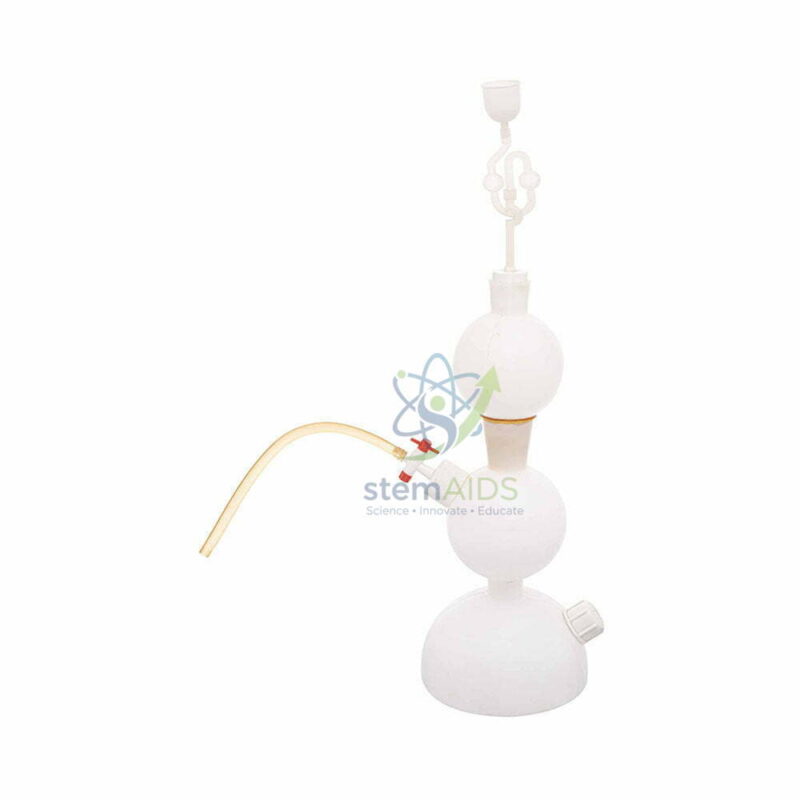
The listing image shows the classic form in white plastic: a top reservoir whose long stem runs down through the middle bulb into the bottom bulb, a side outlet with a tap and tubing on the middle bulb, and a small drain outlet on the lowest bulb. Lumps of solid, such as marble chips or granulated zinc, sit in the middle bulb. Acid poured into the top reservoir runs down to the bottom bulb and rises until it reaches the solid, at which point gas starts to form.

When the outlet tap is open, gas leaves as fast as it forms. With the tap shut, gas collecting in the middle bulb forces the liquid downward, off the solid and back up into the top reservoir. Nothing more is produced until the tap is reopened. That self-regulation made the Kipp’s generator the standard gas supply in school labs for generations.

A plastic body avoids the weight and breakage risk of the large glass generator. Check the plastic against the acid in use, and keep to reactions that run at room temperature between a lump solid and a dilute liquid. Gas can be collected in a gas jar over water in a pneumatic trough.

Care & Handling

  • Use lumps, not powder; powder falls into the lower bulb, reacts continuously and cannot be stopped.
  • Check that the tap and joints hold pressure when closed before leaving the apparatus charged.
  • When making hydrogen, never ignite gas at the outlet until a collected test tube burns with a quiet pop, showing the air has been flushed out.
  • Drain the acid and rinse all bulbs when the apparatus will stand unused.

Specifications

Item Three-bulb Kipp’s gas generator in plastic
Principle Closing the outlet lets trapped gas drive the acid off the solid
Suitable reactions Lump solid with dilute acid at room temperature
Outlets Side outlet with tap; drain outlet on the lowest bulb (listing image)
Capacity and plastic type Confirm at enquiry

Applications

  • Carbon dioxide from marble chips and dilute hydrochloric acid for limewater and extinguishing demonstrations
  • Hydrogen from granulated zinc and dilute acid, collected over water
  • Hydrogen sulfide, made from iron(II) sulfide with dilute acid, for qualitative analysis and only ever in a fume cupboard
  • A steady gas supply for a class, drawn off in turn by opening the tap

Why Choose LabEquip

Chemistry teachers who prepare gases for demonstrations and class tests choose a Kipp’s generator for a supply they can start and stop at will. LabEquip lists this plastic version in its chemistry lab equipment range; ask about size through the contact page.

Frequently Asked Questions

How does a Kipps apparatus stop producing gas?

Shutting the outlet tap traps the gas that is still forming. As it accumulates, it drives the liquid downward from the middle bulb and back up into the top reservoir, so acid and solid part company and the reaction halts.

Which gases can be made in a Kipps apparatus?

Gases formed without heating from a lump solid and a dilute acid: carbon dioxide from marble chips, hydrogen from zinc, and hydrogen sulfide from iron(II) sulfide. Reactions that need heating, use powders or need concentrated acid are not suitable.

Why must the solid be in lumps?

Lumps stay on their support in the middle bulb. Powder or small fragments fall through into the lower bulb, where they remain in contact with the acid and keep reacting even when the tap is closed.

Is a plastic Kipps apparatus suitable for hydrogen sulfide?

It can generate it, but hydrogen sulfide is highly toxic, so the whole set-up must stand in a working fume cupboard. Many schools now avoid preparing it and use other tests.

How is spent acid replaced?

Close the tap and let the acid settle, then drain it from the lowest bulb through its outlet, or dismantle the apparatus over a sink or tray. Rinse the solid with water before adding fresh acid, and wear gloves and eye protection.

Why use a plastic Kipps apparatus instead of glass?

A glass generator is heavy and costly to replace if it cracks, and a broken one releases acid and gas together. Plastic is light and does not shatter, though it should be kept away from heat and checked against the acid used.

Last Updated: September 2026
Instrument Tray, Plastic

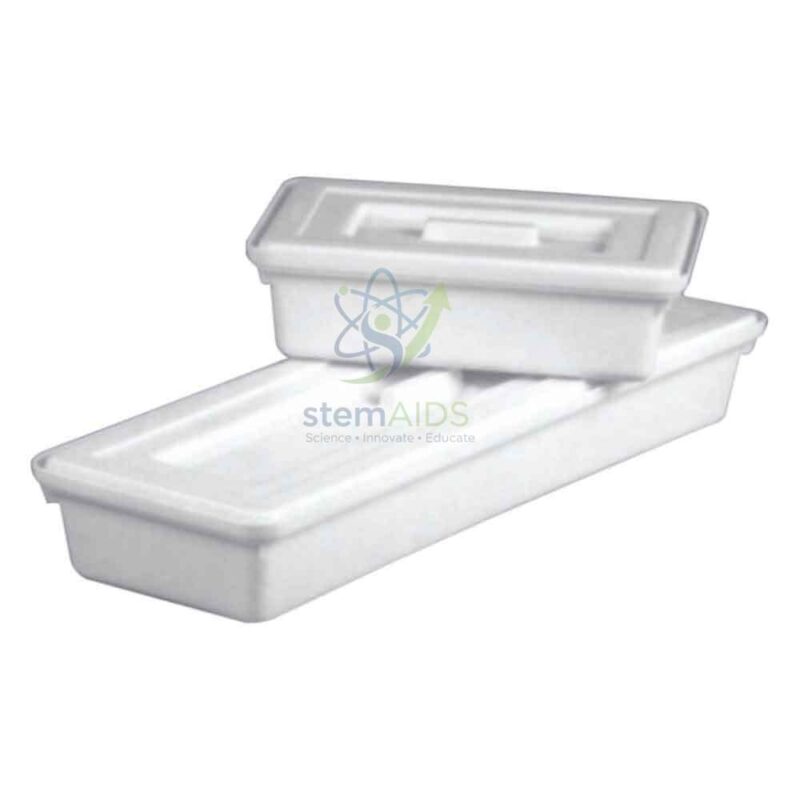
Quick Answer: The Instrument Tray, Plastic from LabEquip is a plastic tray used to organize, carry and hold lab instruments and tools during practical work.

Description

This instrument tray gives students and lab staff a dedicated space to lay out and organize instruments before, during and after an experiment. It is a practical, reusable item suited to school, college and general laboratory settings where instruments need to be kept together and moved safely between stations.

The exact dimensions, material grade and whether the tray is autoclavable or chemical-resistant are not specified for this listing. If your application requires sterilization compatibility or a particular size, please confirm these details with our sales team before ordering.

Specifications

Product Name Instrument Tray, Plastic
Material Plastic
Dimensions Not specified for this listing — confirm with our sales team
Recommended Use Organizing and carrying instruments during lab work

Care & Maintenance / Safety Note

  • Clean with mild soap and water and allow the tray to air-dry fully before storing instruments in it.
  • Do not assume the tray is autoclavable or chemical-resistant unless confirmed with our sales team, as this is not specified for this listing.
  • Handle sharp or pointed instruments carefully within the tray to avoid scratching or puncturing the plastic.
  • Inspect periodically and stop using a tray that is cracked or has sharp broken edges.

Why Choose LabEquip

LabEquip supplies practical lab consumables and general items for schools, colleges and laboratories, with honest specifications and a sales team ready to confirm details before you order. Browse our General Items range, pair this tray with our Utility Tray, Plastic for broader storage needs, or visit the LabEquip homepage to browse our full catalogue.

Frequently Asked Questions

What is this tray used for?
It is used to organize, carry and hold lab instruments and tools during practical work.

What size is the tray?
Exact dimensions are not specified for this listing. Please contact our sales team to confirm before you order.

Is the tray autoclavable or chemical-resistant?
Autoclave and chemical resistance are not specified for this listing — please confirm with our sales team if this matters for your application.

How do I clean the tray?
Wash with mild soap and water and let it air-dry fully before reuse.

Can sharp instruments be placed directly in the tray?
Yes, but handle sharp or pointed tools carefully to avoid scratching or puncturing the plastic surface.

What should I do if the tray cracks?
Stop using it and contact our sales team about a replacement, since sharp broken edges can be a safety hazard.

Last Updated: September 2026

Industrial Funnels, Plastic

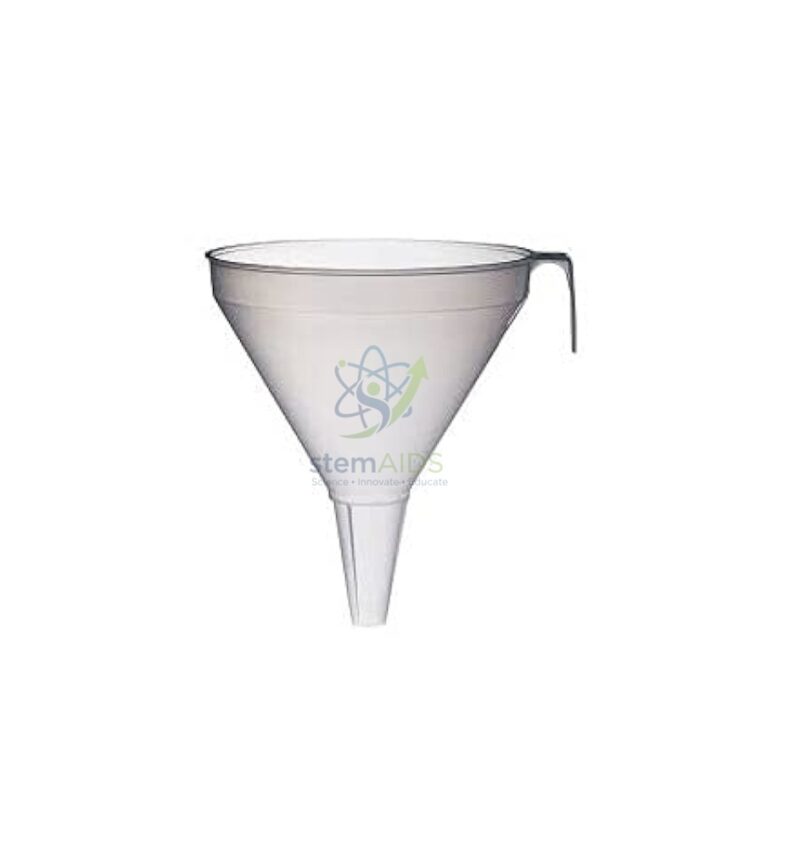
Quick Answer: An industrial plastic funnel is a large, sturdy funnel for transferring bulk volumes of liquid into carboys, drums and large bottles. The listing image shows a wide funnel with a side handle and a plain stem.

Sized for Bulk, Not for Filtering

Laboratory filter funnels are small, with a 60 degree cone and a narrow stem meant to support a paper filter. Moving several litres of distilled water, a bulk buffer or a stock of dilute acid into a carboy needs something else: a wide mouth that catches the whole stream from a large container, and a stem wide enough to let liquid through quickly. The industrial funnel is made for that job.

The handle shown in the image lets the funnel be held steady with one hand, or hung up to drain after use. The title gives no size or material; large funnels of this kind are commonly polypropylene or polyethylene, both of which resist water, aqueous salt solutions and dilute acids and alkalis. Check compatibility before pouring solvents or concentrated acids.

Use it to fill the plastic carboy with stopcock from a bulk container. For solids, the plastic powder funnel has a short, wide stem that suits powders better.

Specifications

Item Large plastic funnel for bulk liquid transfer
Handle Side handle, as shown in the listing image
Stem Wide stem for fast flow
Uses Filling carboys, drums and large bottles
Size and material Confirm at enquiry

Care & Handling

  • Leave an air gap between stem and container neck, or lift the funnel slightly, so air can escape and the funnel does not overflow.
  • Keep separate, labelled funnels for water, acids and solvents.
  • Rinse after each use and dry upside down.

Applications

  • Refilling distilled water carboys in a prep room
  • Pouring bulk buffer or salt solutions into dispensing containers
  • Transferring aqueous or solvent waste into collection containers
  • Filling large bottles of cleaning solution or detergent

Why Choose LabEquip

Prep rooms and lab stores that handle liquids in bulk use a large funnel for refilling carboys and waste containers. LabEquip lists it with its chemistry lab equipment; ask about size through the contact page.

Frequently Asked Questions

Why does liquid back up in the funnel when filling a carboy?

Air in the carboy has to escape as liquid enters. If the stem fits tightly in the neck, air cannot get out, and the funnel fills and overflows. Lift the funnel slightly or use one with an air-release groove.

Can an industrial funnel be used for filtration?

It can hold a coarse strainer or filter cloth, but it is not designed to support a paper filter cone. For laboratory filtration, use a 60 degree filter funnel.

Which chemicals can be poured through it?

Polypropylene and polyethylene funnels handle water, aqueous solutions and dilute acids and alkalis well. Concentrated oxidising acids and many organic solvents need checking against the material first.

Should one funnel be used for everything?

No. Keep dedicated funnels for water, acids, alkalis and solvents, clearly labelled. A funnel used for waste should never be used to fill a reagent container.

How do I use the handle?

Grip it to steady the funnel while pouring from a heavy container, or hang the funnel by it to drain after use. Do not carry a funnel full of liquid by the handle.

How is the funnel cleaned?

Rinse it straight after use with water, wash with detergent if needed, and let it dry upside down. Dried residues are harder to remove and can contaminate the next liquid.

Last Updated: September 2026

Ice Bucket

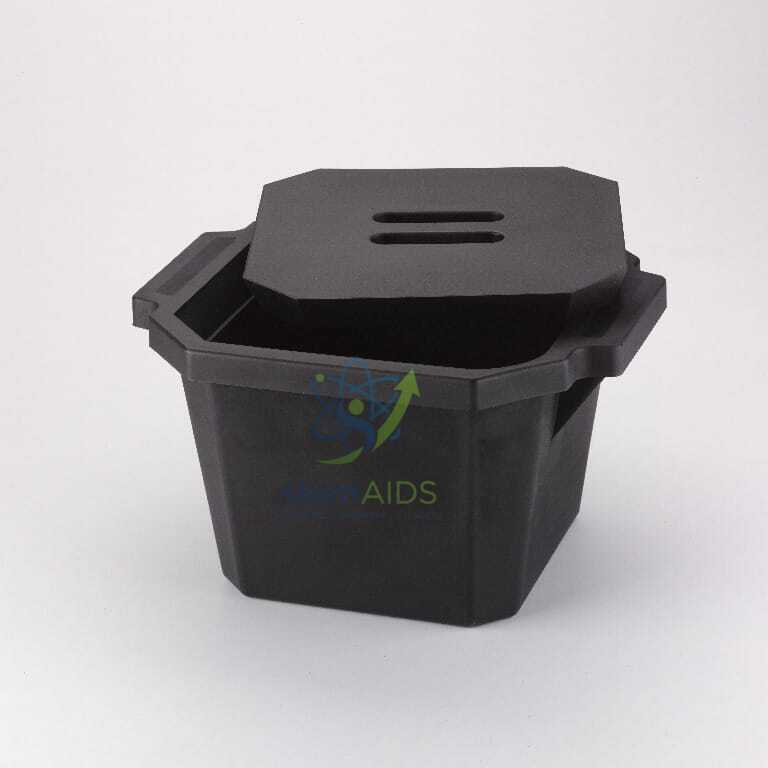
Quick Answer: The Ice Bucket from LabEquip is an insulated container used to hold ice and keep temperature-sensitive samples, reagents or enzymes cool on the bench during lab work.

Description

This lab ice bucket holds crushed or cubed ice so that samples, reagents and enzymes can be kept cold at the workstation without needing to walk back and forth to a freezer or fridge. It is a practical bench accessory for biology, chemistry and biochemistry labs where short-term cold storage is needed during an experiment.

The exact capacity, insulation material and duration of cold retention are not specified for this listing. If your work requires a specific hold time or capacity, please confirm these details with our sales team before ordering.

Specifications

Product Name Ice Bucket
Type Insulated laboratory ice bucket
Capacity Not specified for this listing — confirm with our sales team
Recommended Use Short-term cold storage of samples, reagents and enzymes at the bench

Care & Maintenance / Safety Note

  • Empty and dry the bucket after use to prevent residual water from pooling or freezing solid inside.
  • Clean with mild soap and water; avoid abrasive cleaners that could damage the insulation or exterior finish.
  • Do not use the bucket for chemicals unless chemical resistance is confirmed with our sales team, as this is not specified for this listing.
  • Handle carefully when full of ice, as a loaded bucket can be heavy and slippery with condensation.

Why Choose LabEquip

LabEquip supplies practical lab consumables and general items for schools, colleges and laboratories, with honest specifications and a sales team ready to confirm capacity or material details before you order. Browse our General Items range, pair this bucket with our Megenta Box for related biology lab work, or visit the LabEquip homepage to browse our full catalogue.

Frequently Asked Questions

What is this ice bucket used for?
It is used to hold ice at the bench so temperature-sensitive samples, reagents or enzymes can be kept cool during lab work.

What is the capacity of the bucket?
Exact capacity is not specified for this listing. Please contact our sales team to confirm before you order.

How long does the ice stay frozen in the bucket?
Cold retention time is not specified for this listing — please confirm with our sales team if you need a particular hold duration.

Can I use the bucket for chemicals as well as ice?
Chemical resistance is not specified for this listing — please confirm with our sales team before using it for anything other than ice and water.

How should I clean the bucket?
Empty it, wash with mild soap and water, and dry fully before storing.

Is the bucket safe to carry when full of ice?
Handle it carefully, as a full bucket can be heavy and the exterior can become slippery with condensation.

Last Updated: September 2026
Funnel Holder, Plastic

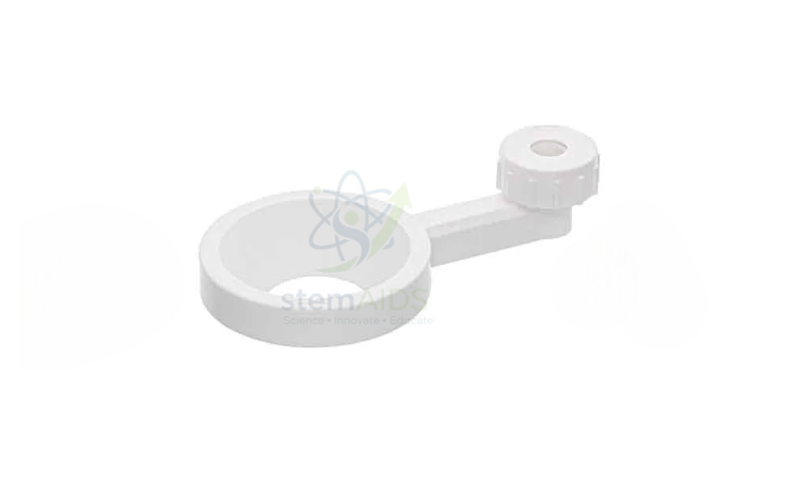
Quick Answer: A plastic funnel holder is a ring on an arm that clamps to a laboratory stand rod and supports a funnel at a chosen height. The listing image shows a ring, a short arm and a knob-tightened clamp.

A Ring That Does Not Rust

Filtration needs the funnel held steady above the receiving vessel, with its stem touching the inner wall so the filtrate runs down without splashing. The traditional iron ring and boss rusts in the damp, acidic air of a chemistry lab, and hard metal against a glass funnel risks chipping it. A plastic holder does the same job without corrosion and is gentler on the glass.

Judging from the image, the holder slides onto a vertical stand rod through the opening at the end of the arm and is locked by turning the knob. The title does not give the ring diameter, so check that it will support the funnel sizes you use: a ring that is too large lets the funnel drop through, and one that is too small holds it too high up the cone.

The holder suits long stem filter funnels for gravity filtration, and it can also cradle a separating funnel during an extraction if the ring size fits.

Applications

  • Gravity filtration of a precipitate into a beaker or conical flask
  • Holding a funnel above a burette or bottle for filling
  • Supporting a separating funnel during solvent extraction
  • Filtration set-ups in damp or corrosive areas where iron rings rust

Specifications

Item Funnel holder: ring on an arm with a stand-rod clamp
Mounting Clamps to a vertical stand rod; tightened by a knob
Supports Filter funnels, and separating funnels of suitable size
Material Plastic, as titled
Ring diameter and rod size Confirm at enquiry

Care & Handling

  • Tighten the knob only enough to hold; overtightening can crack a plastic clamp.
  • Position the funnel so its stem touches the inside wall of the receiver.
  • Rinse off acid splashes and dry the holder after use.

Why Choose LabEquip

Chemistry labs replacing rusting iron rings on their retort stands, and schools setting up many filtration stations at once, buy plastic funnel holders in sets. LabEquip lists them in its chemistry lab equipment range; share your stand rod diameter through the contact page.

Frequently Asked Questions

How does the funnel holder attach to a stand?

The clamp at the end of the arm slides over a vertical stand rod and is locked with the knob. Loosen the knob to move the holder up or down, then retighten it.

Why use a plastic holder instead of an iron ring?

Plastic does not rust in acid fumes and is gentler on glass funnels. Iron rings are stronger and heat-resistant, so they are still used wherever heating is involved.

Can it hold a separating funnel full of liquid?

It can if the ring fits the funnel and the clamp grips the rod firmly. A full separating funnel is heavy, so check that the holder does not slip, and keep the stand base under the funnel.

Where should the funnel stem sit?

Touching the inside wall of the beaker or flask below. The filtrate then runs down the glass smoothly, which reduces splashing and speeds up filtration.

How do I stop the funnel tipping?

Choose a ring that meets the funnel at about the middle of the cone, and turn the stand so its base lies beneath the funnel. A small funnel perched high on a wide ring is easily knocked.

Can the holder be used near a Bunsen burner?

Keep it away from flames and hot surfaces. Plastic softens with heat, and filtration of hot liquids should use a support suited to the temperature.

Last Updated: September 2026

Float Rack

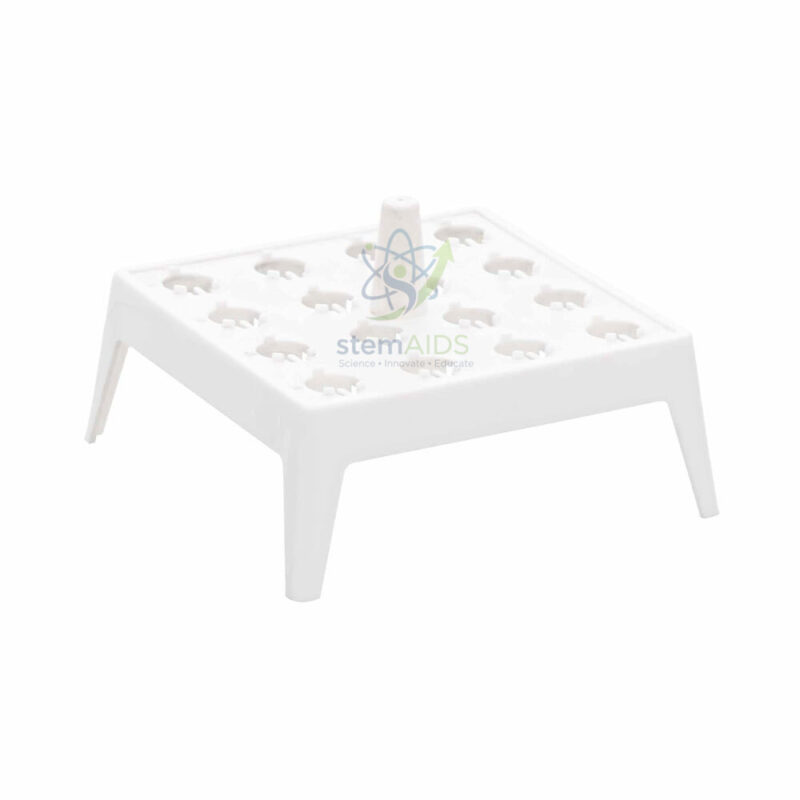
Quick answer: A float rack is a buoyant laboratory rack that floats on a water bath, holding test tubes or small vials upright and partially submerged for incubation, enzyme reactions or other temperature-controlled procedures.

Many biology and biochemistry procedures require test tubes to sit at a specific, evenly controlled temperature for a set time — for example during enzyme kinetics work, microbiological incubation or serology testing. A float rack makes this practical by carrying multiple tubes on the surface of a water bath, keeping them upright and stable while the surrounding water maintains the required temperature around the lower portion of each tube.

Because the rack floats rather than resting on the base of the bath, it naturally follows the water level and keeps tubes at a consistent depth, which is useful in both still water baths and gently circulating ones.

Technical Specifications

Parameter Detail
Function Buoyant rack for floating test tubes in a water bath
Orientation Holds tubes upright, partially submerged
Typical use Incubation, enzyme reactions, serology and water-bath procedures
Tube capacity Sized for standard laboratory test tubes — confirm the exact hole diameter and tube count at enquiry

Applications

  • Water-bath incubation of test tube cultures in microbiology
  • Enzyme kinetics and other temperature-dependent biochemistry procedures
  • Serology and immunology tube incubation steps
  • General temperature-controlled sample holding in a water bath

Care & Handling

  • Rinse and dry the rack after use, especially if used with biological samples
  • Check for cracked holes that could allow a tube to tip or fall
  • Avoid prolonged contact with strong solvents unless chemical compatibility has been confirmed
  • Load tubes evenly to keep the rack balanced and stable on the water surface

Why Choose LabEquip

LabEquip supplies water-bath accessories alongside our wider lab glassware range and chemistry lab equipment for schools, colleges and research laboratories across India. For bulk or institutional requirements, contact us and our team will help confirm the right rack for your water bath.

Frequently Asked Questions

What is a float rack used for?

It is used to hold test tubes or small vials upright while they are partially submerged and suspended in a water bath, commonly for incubation, enzyme reactions or serology work.

Does the float rack sink in water?

No, it is designed to be buoyant so that it floats on the surface of a water bath while holding tubes upright and partially submerged.

What tube sizes fit in a float rack?

Float racks are made with holes sized for standard laboratory test tubes; confirm the exact tube diameter this rack accommodates at enquiry.

Can a float rack be used in an incubator water bath?

Yes, float racks are commonly used in water bath incubators to keep tubes at a controlled, even temperature during microbiology and biochemistry procedures.

Is the float rack chemical resistant?

Float racks are generally resistant to water and common aqueous laboratory solutions; check compatibility before use with strong solvents or aggressive chemicals.

Does LabEquip supply float racks for bulk or institutional orders?

Yes. LabEquip supplies float racks to schools, colleges and laboratories across India, including bulk and institutional orders. Contact us for a quotation.

Last Updated: September 2026
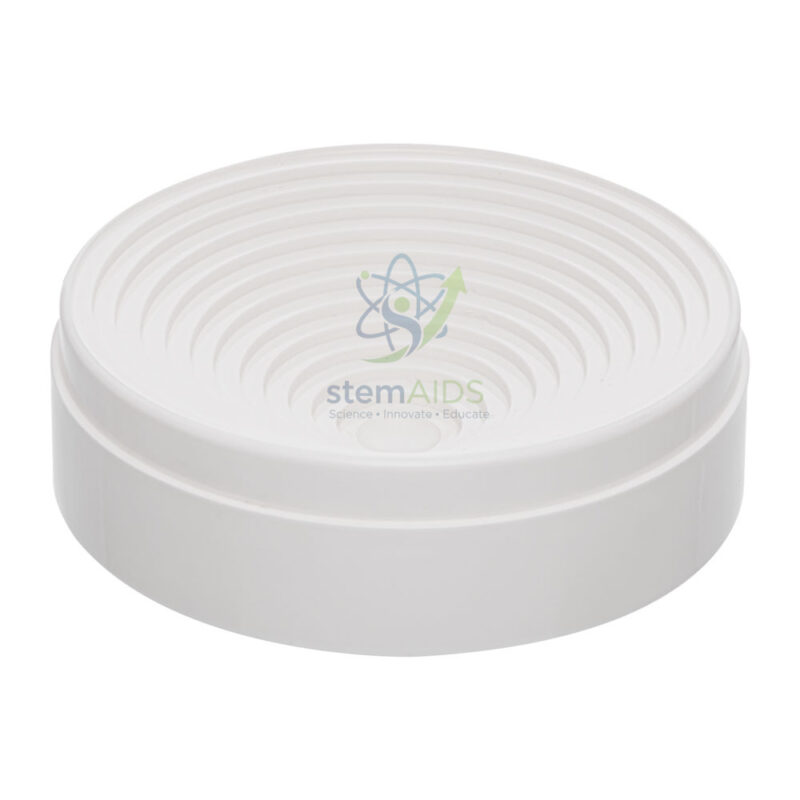
Flask Stand, Plastic

Quick Answer: A plastic flask stand is a ring-shaped support with stepped, concentric ledges on which a round bottom flask sits upright. The listing image shows a circular stand with several steps, so one stand can take flasks of different sizes.

Keeping Round Bottom Flasks Upright

A round bottom flask will not stand on a bench by itself. Traditionally it rests in a cork ring, which works but takes only one size, absorbs spills and eventually crumbles. A stepped plastic stand does the same job for a range of flask sizes: small flasks drop into the inner step, larger flasks sit on the outer ones, and the stand’s wide base resists tipping.

The title does not name the plastic. Polypropylene and polyethylene stands wipe clean, do not absorb chemicals and can be rinsed under the tap. They are not intended to take a flask straight from a heating mantle or oil bath, so let hot flasks cool in a clamp or on a cork ring first unless the stand’s temperature limit is known.

Multi-neck flasks such as the two or three neck flask become top-heavy once condensers and funnels are fitted, so the stand is for the empty or simply stoppered flask; clamp the neck whenever apparatus is attached.

Care & Handling

  • Place the flask centrally so it rests on one complete step.
  • Wipe spills at once and rinse the stand with water; plastic does not soak up liquids the way cork does.
  • Do not rely on the stand for a flask with apparatus attached; clamp the neck to a retort stand.

Specifications

Item Stepped ring stand for round bottom flasks
Design Concentric steps in a circular base, as shown in the listing image
Material Plastic, as titled; grade not stated
Heat Not for flasks taken straight from heating
Flask size range Confirm at enquiry

Applications

  • Holding a round bottom flask while it is weighed empty and again after adding reagents
  • Filling flasks through a funnel before a reflux or distillation set-up is assembled
  • Resting flasks of cooled product before crystallisation
  • Storing clean round bottom flasks on shelves without them rolling

Why Choose LabEquip

Organic chemistry labs with many round bottom flasks of mixed sizes use stepped stands in place of a drawer full of cork rings. LabEquip lists the stand with its chemistry lab equipment; ask about the sizes it takes through the contact page.

Frequently Asked Questions

How does a stepped flask stand hold different sizes?

Each step is a ring of a different diameter. A small flask sits low in the centre and a larger one rests on a wider ring higher up, so the curved base is always supported around its circumference.

Is a plastic stand better than a cork ring?

It covers several flask sizes in one piece, does not crumble, and can be washed. Cork rings tolerate hot flasks better, so many labs keep both.

Can I put a hot flask on the stand?

Only if the plastic’s temperature limit is known to be high enough. As a rule, let flasks from a heating mantle or oil bath cool first, or rest them on a cork ring.

Can the stand hold a separating funnel or a volumetric flask?

It is made for curved flask bottoms. Separating funnels belong in a ring on a retort stand, and volumetric flasks have flat bases and stand on the bench.

How do I clean the stand?

Rinse it under the tap and wash with mild detergent, then dry before use. Avoid scouring pads, which roughen the plastic and hold dirt.

Is the stand stable with a full flask?

Yes for a flask filled to a normal working level, because the weight sits low in the stand. Keep the stand away from the bench edge and clamp any flask that has apparatus fitted to its neck.

Last Updated: September 2026

Fast Releaser Pipette Pump

Quick Answer: A fast releaser pipette pump is a hand-held pipette filler in which a thumbwheel raises or lowers liquid in the pipette, and a quick-release lever empties it at once. It replaces mouth pipetting with safe, one-handed control.

Thumbwheel Control With a Quick Release

The listing image shows pump bodies in blue, green and red, each with a soft chuck at one end, a thumbwheel on top and a release lever. The pipette’s upper end is pushed gently into the chuck. Turning the thumbwheel one way draws a piston back and lifts the liquid; turning it the other way lowers the liquid to the mark. Pressing the lever vents the pump so the pipette drains straight away, which is what the “fast releaser” name refers to.

Pumps of this pattern are made in sizes for different pipette capacities, and the body colour usually shows which size a pump suits. The image filename mentions 25 ml, but the title does not state a size. Check that the pump matches the pipettes you use, since a pipette that is too narrow will not seal and one that is too wide will not enter the chuck.

Thumbwheel pumps are slower to fill than a rubber bulb but far more controlled when setting a meniscus on the line, which is why they are preferred for graduated pipettes and for class titration work while students are still learning technique.

Applications

  • Filling volumetric pipettes to the mark for acid-base titrations
  • Delivering measured volumes from graduated pipettes in a dilution series
  • Replacing mouth pipetting in school and college labs
  • Handling mildly hazardous solutions where a rubber bulb gives too little control

Specifications

Item Thumbwheel pipette pump with quick-release lever
Operation Thumbwheel to fill and set the level; lever to release
Fits Graduated and volumetric pipettes of the matching size
Colours Pump bodies shown in blue, green and red in the listing image
Pipette size range Confirm at enquiry

Care & Handling

  • Insert the pipette with a gentle twist, holding it near the top, to avoid snapping the glass.
  • Never draw liquid into the pump itself; if it happens, flush and dry the pump before further use.
  • Keep the pipette pointing down while it holds liquid, and never lay the filled assembly tip-up.
  • Wipe the chuck and body with a damp cloth rather than immersing the pump.

Why Choose LabEquip

Schools and colleges that have stopped mouth pipetting need a pump at every titration station, usually in two or three sizes. LabEquip lists this pump in its chemistry lab equipment range; tell us your pipette sizes through the contact page.

Frequently Asked Questions

Why use a pipette pump instead of mouth pipetting?

Mouth pipetting risks swallowing or inhaling the solution and is prohibited in most laboratories. A pump gives equal or better control of the meniscus without any contact between the user and the liquid.

How is the pipette fitted into the pump?

Hold the pipette near its upper end and push it gently into the soft chuck with a slight twist until it seals. Forcing it, or holding it far down the stem, can snap the glass and cause a cut.

What does the release lever do?

It vents the pump so the pipette empties freely. Use it to deliver the full contents of a volumetric pipette quickly, or to empty the pipette to waste before refilling.

Do the different colours mean different sizes?

In most pump ranges the body colour indicates the pipette capacity the pump is made for. Match the pump to your pipettes, since the chuck must seal on the pipette’s top end.

What should I do if liquid enters the pump?

Detach the pipette, expel the liquid and rinse the chuck with water, then let the pump dry fully before use. Liquid inside can damage the piston seal and contaminate the next pipette.

Can the pump be used with plastic pipettes?

Yes, if the top end of the plastic pipette is the right diameter to seal in the chuck. Plastic serological pipettes are often used with pumps or electronic pipette controllers.

Last Updated: September 2026

Draining Tray

Quick Answer: The Draining Tray from LabEquip is a plastic tray used to drain and air-dry glassware and plasticware after washing in the lab.

Description

This draining tray gives washed glassware and plasticware a place to sit and air-dry, helping keep the bench organized and reducing water pooling on work surfaces. It is a practical, reusable item suited to school, college and general laboratory settings where items need to dry after cleaning before reuse or storage.

The exact dimensions, drainage design and material grade are not specified for this listing. If your lab needs a particular size or drainage capacity, please confirm these details with our sales team before ordering.

Specifications

Product Name Draining Tray
Material Plastic
Dimensions Not specified for this listing — confirm with our sales team
Recommended Use Draining and air-drying glassware and plasticware after washing

Care & Maintenance / Safety Note

  • Empty standing water from the tray regularly to keep the bench area dry and reduce slip hazards.
  • Clean with mild soap and water and let it air-dry before reuse.
  • Do not assume the tray is chemical-resistant unless confirmed with our sales team, as this is not specified for this listing.
  • Arrange glassware securely on the tray so it cannot roll or tip while draining.

Why Choose LabEquip

LabEquip supplies practical lab consumables and general items for schools, colleges and laboratories, with honest specifications and a sales team ready to confirm details before you order. Browse our General Items range, pair this tray with our Instrument Tray, Plastic for organized bench storage, or visit the LabEquip homepage to browse our full catalogue.

Frequently Asked Questions

What is a draining tray used for?
It is used to hold washed glassware and plasticware while they air-dry, keeping the bench organized and reducing water pooling.

What size is the tray?
Exact dimensions are not specified for this listing. Please contact our sales team to confirm before you order.

Is the tray chemical-resistant?
Chemical resistance is not specified for this listing — please confirm with our sales team if this matters for your application.

How do I clean the tray?
Wash with mild soap and water and let it air-dry fully before reuse.

Can glassware roll around on the tray while draining?
Arrange items securely so they cannot roll or tip; the tray does not include dedicated slots unless otherwise specified.

What should I do if the tray cracks?
Stop using it and contact our sales team about a replacement, since a cracked tray can hold water unevenly or create sharp edges.

Last Updated: September 2026

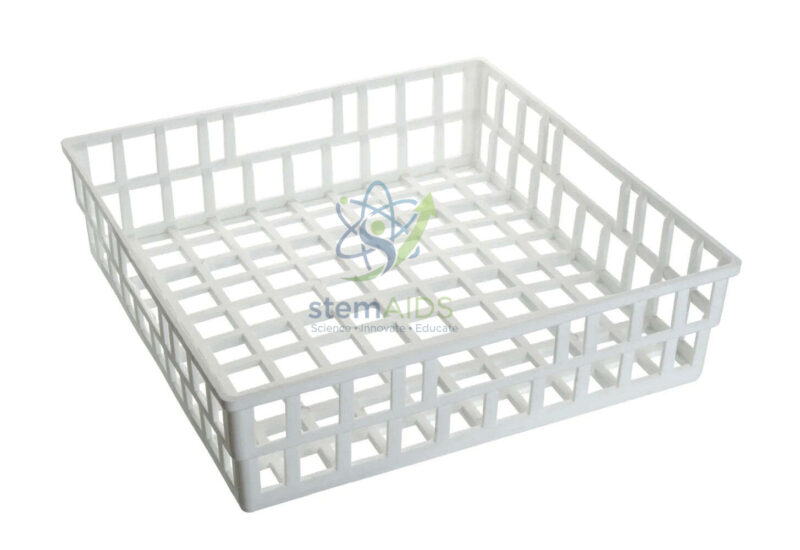
Draining Basket

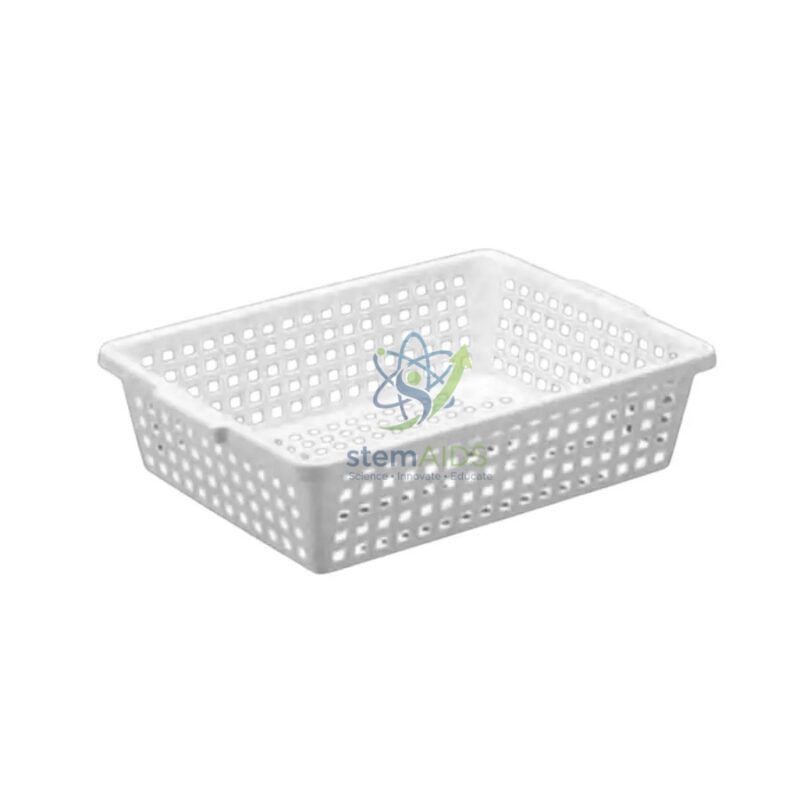
Quick answer: A draining basket is a perforated laboratory basket used to hold washed glassware and small labware at the wash-up station so that rinse water drains away before the items are dried or put back into storage.

After glassware is washed, items are often still wet and cannot be dried or stored immediately. Placing beakers, flasks, test tubes and other labware into a draining basket lets water drip through the perforated or slotted body rather than pooling on the bench, which speeds up drying and keeps the wash-up area tidy. The open, ventilated construction also allows air to circulate around the glassware while it drains.

Draining baskets are a simple but essential piece of everyday lab housekeeping equipment, used alongside sinks, draining boards and drying racks in school, college and research laboratory wash-up areas.

Technical Specifications

Parameter Detail
Construction Perforated / slotted basket body for water drainage
Typical use Draining washed glassware and small labware
Placement Positioned over a sink, drainer or draining board
Size Supplied in standard laboratory sizes — confirm the exact dimensions required at enquiry

Applications

  • Draining washed beakers, flasks and test tubes at the lab sink
  • General wash-up station housekeeping in school and college laboratories
  • Air-drying small glassware before storage
  • Temporary holding of clean glassware between uses

Care & Handling

  • Rinse the basket periodically to prevent residue or limescale build-up in the perforations
  • Avoid overloading the basket beyond its stable carrying capacity
  • Check for cracked or broken sections that could snag glassware
  • Allow the basket itself to dry before stacking for storage

Why Choose LabEquip

LabEquip supplies everyday laboratory housekeeping equipment alongside our wider lab glassware range and chemistry lab equipment for schools, colleges and research laboratories across India. For bulk or institutional requirements, contact us and our team will help confirm the right size and quantity.

Frequently Asked Questions

What is a laboratory draining basket used for?

It is used to hold washed glassware and small labware so that rinse water drains away freely before the items are dried or put away.

What items can be placed in the draining basket?

Beakers, flasks, test tubes, petri dishes and other small glassware can be placed in the basket after washing, positioned so water drains through the perforations.

Can the basket be used directly over a sink?

Yes, it is designed to sit over a sink or drainer so that water drips away from the washed items rather than pooling around them.

Is the basket suitable for daily use in a busy teaching lab?

Yes, draining baskets are built for repeated daily use at the wash-up station in school, college and research laboratories.

Can the basket be stacked or nested for storage?

Many draining baskets are designed to stack or nest for compact storage when not in use; confirm the exact stacking behaviour of this model at enquiry.

Does LabEquip supply draining baskets for bulk or institutional orders?

Yes. LabEquip supplies draining baskets to schools, colleges and laboratories across India, including bulk and institutional orders. Contact us for a quotation.

Last Updated: September 2026

Select your currency
INR Indian rupee
×

No WhatsApp Number Found!

WhatsApp us
Exit mobile version