




In Stock
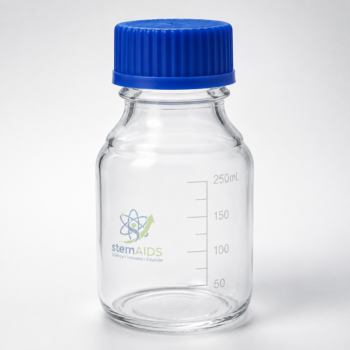
Heavy Duty Vacuum Bottle, Plastic
Implosion-Resistant Geometry: Fabricated with ultra-thick walls and a reinforced base designed to withstand 29.9" Hg (1 bar) of vacuum pressure without structural deformation or material fatigue.
Hermetic Seal Integrity: Features a precision-threaded closure system with an integrated chemically inert gasket, ensuring a vacuum-tight seal for sterile aspiration and standardized fluid transfer.
$5.25
Quick Answer: The Heavy Duty Vacuum Bottle, Plastic is a thick-walled plastic bottle built for use under reduced pressure, serving in vacuum filtration as the filtrate receiver or as a trap between the filter and the vacuum pump or aspirator.
Why a Vacuum Bottle Needs Heavy Walls
An ordinary plastic storage bottle is designed for atmospheric pressure; if air is pumped out of it, the thin walls can pull inward and collapse. A heavy duty vacuum bottle has thicker walls and a sturdier shape so it can be evacuated as part of a filtration or aspiration line. It is closed with a cap or stopper carrying tubing connections: one line goes to the filter holder or aspirating tip, the other to the vacuum source.
In a set-up it does the job of a glass Buchner (side-arm) filtering flask, but in plastic. It will not shatter if knocked over and is lighter to handle at larger volumes. On the other side, plastic is less clear than glass and less tolerant of organic solvents, so the bottle suits aqueous work such as clarifying buffers, filtering water samples and collecting media filtrate.
Placed between the filtration vessel and the pump, the same bottle acts as a trap: any liquid drawn past the filter collects in it instead of reaching the pump oil or the aspirator line. Many labs run two in series, one as receiver and one as trap.
Applications
- Receiving filtrate beneath a membrane filter holder or Buchner funnel during vacuum filtration of aqueous solutions.
- Acting as a liquid trap that protects a vacuum pump or water aspirator.
- Collecting aspirated supernatant or waste liquid in microbiology teaching labs, with a suitable disinfectant in the bottle.
- Holding aqueous buffers while they are degassed under vacuum.
Care & Handling
- Inspect the bottle for cracks, crazing, deep scratches or deformation before each use, and retire it if any appear.
- Keep organic solvents out of it; a wall weakened by solvent is a hazard under vacuum.
- Release the vacuum slowly and fully before opening the cap or disconnecting the tubing.
- Stand the evacuated set-up where a sudden collapse would not tip liquid onto people or electrical equipment.
Specifications
| Type | Vacuum-duty receiver and trap bottle |
| Material | Plastic; vacuum bottles of this kind are commonly made in polypropylene or polycarbonate |
| Construction | Heavy, thick walls for use under reduced pressure |
| Connection | Joined to the filter holder and vacuum source with flexible tubing |
| Vacuum rating | Not stated in the product title |
| Capacity | To be confirmed at enquiry |
Why Choose LabEquip
Colleges, microbiology labs and water-testing labs that filter aqueous samples in volume, and want to avoid glass flasks at student benches, are the main buyers of this bottle. It pairs with the vacuum filtration apparatus and with T and Y plastic connectors for branching the vacuum line. To plan a complete filtration set-up, write to LabEquip with your filter size and bottle volume.
Frequently Asked Questions
What is a heavy duty vacuum bottle used for?
It is used under reduced pressure in vacuum filtration, either as the vessel that collects the filtrate or as a trap that stops liquid reaching the vacuum pump or aspirator. Its thick walls are what set it apart from an ordinary storage bottle.
How is it different from a glass Buchner flask?
Both collect filtrate under vacuum. The glass flask is clearer and copes better with organic solvents; the plastic bottle is lighter and will not shatter if knocked over, which makes it practical for aqueous filtrations and larger volumes.
What level of vacuum can the bottle take?
The product title does not give a vacuum rating, so check the rating of this bottle before use and stay within it. Never substitute an ordinary thin-walled plastic bottle, which can collapse under vacuum.
Can the vacuum bottle be used with organic solvents?
It is not advisable. Polycarbonate is attacked by chlorinated solvents, ketones and strong alkalis, and polypropylene can swell in some solvents. A softened wall is dangerous under vacuum, so use a glass filtering flask for solvent filtrations.
How do I stop water sucking back from a tap aspirator?
Fit a trap between the aspirator and the filtration vessel, and always break the vacuum at the filter side before turning off the water. Turning the water off first lets the pressure difference pull water back into the bottle.
Can the bottle be autoclaved?
That depends on its plastic. Polypropylene is generally autoclavable, and polycarbonate tolerates a limited number of cycles before it starts to craze and lose strength. Because the bottle is used under vacuum, inspect it closely after every autoclave cycle.
Last Updated: September 2026
You must be logged in to post a review.
Bestsellers


Sale


Sale



Reviews
There are no reviews yet.