


In Stock
Streak Plates, Glass
$5.36
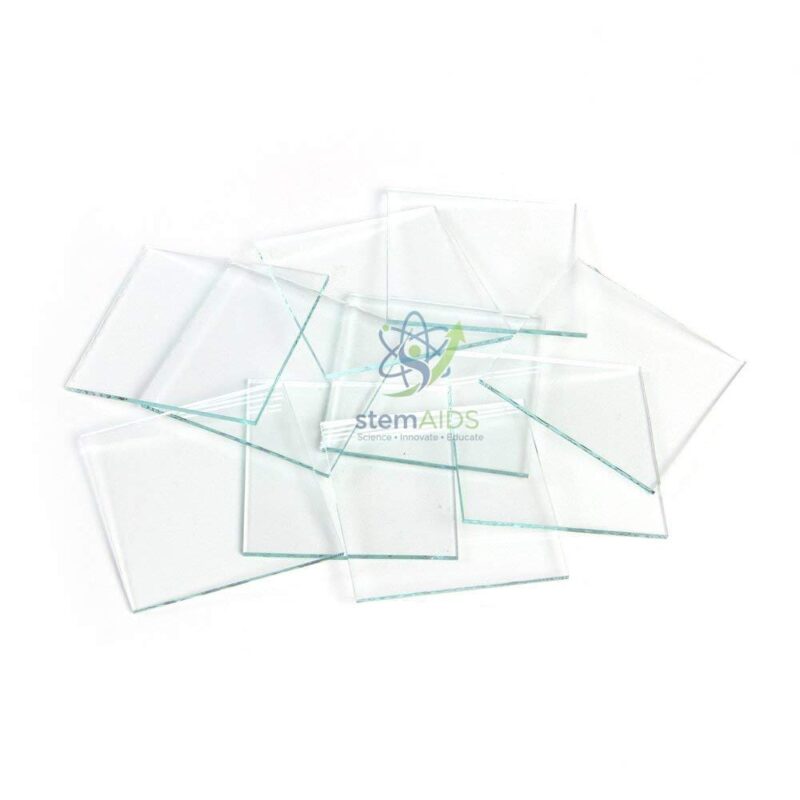
Quick Answer: Glass streak plates are small, flat squares of clear glass. The listing photograph shows a set of thin square plates; in earth-science practicals such glass squares serve as the reference surface in mineral hardness tests, and they are also handy clean surfaces for small bench tasks.
Glass and Porcelain in Mineral Testing
Mineral identification uses two simple surfaces, and they do different jobs. The streak test, which shows the colour of a mineral’s powder, is normally done on unglazed porcelain: its slightly rough, hard surface grinds off a thin line of powder. The hardness test asks a different question, whether a mineral is harder than a known material. Glass is the classic reference because it sits in the middle of the scale: minerals such as quartz and feldspar scratch it, while calcite, fluorite and gypsum do not.
Glass streak plates suit that scratch step. Students press a sharp edge of the specimen across the plate, wipe it with a finger, and look for a groove that remains. A mark that wipes away is powder from a softer mineral, not a scratch. Because the plates are small and clear, they fit into bench kits, and a scratch can be checked against the light.
The title does not say what the plates are intended for, and the name can confuse. They are not agar streak plates, the Petri dishes of culture medium used in microbiology, and they will not give the coloured powder line that a porcelain tile gives. Plate size, thickness and edge finish are also not stated. For larger sheets, see the laboratory glass plates in the same range.
Specifications
| Item | Small square plates of clear glass |
| Form | Thin flat squares, several shown in the listing photograph |
| Main use | Glass reference surface in mineral scratch-hardness tests |
| Not suitable for | Colour-of-powder streak tests (use unglazed porcelain) or agar culture |
| Size, thickness and edge finish | Confirm at enquiry |
Applications
- Scratch tests that sort minerals into harder or softer than glass
- Rock and mineral identification practicals alongside porcelain streak tiles
- A clean surface for placing a drop of dilute acid on a mineral fragment
- Holding small specimens flat under a hand lens
Care & Handling
- Test on a fresh area of the plate each time; old scratches confuse the next student’s result.
- Wash off rock dust with water and a soft brush, then dry the plates flat.
- Retire plates that are heavily scratched or chipped, and hold them by the faces until the edge finish is known.
Why Choose LabEquip
Earth-science and general science departments order these plates for rock and mineral practicals. LabEquip lists them in Biology Lab Products next to the Mineral Test Kit, which covers the other identification tests. Ask through the LabEquip contact page if you need matching porcelain tiles or a particular plate size.
Frequently Asked Questions
Are glass streak plates the same as porcelain streak plates?
No. Porcelain tiles are used to see the colour of a mineral’s powder. Glass plates are mainly used to test hardness, showing whether a mineral is hard enough to scratch glass.
How is a glass plate used in the hardness test?
Hold the plate flat on the bench and press a sharp corner of the mineral across it. Wipe the mark and look closely. A groove that stays means the mineral is harder than glass; a line that rubs off is powder from a softer mineral.
Which common minerals scratch glass?
Quartz, feldspar and topaz scratch glass. Calcite, fluorite, gypsum and talc do not. This single test separates many look-alike pairs, such as quartz and calcite.
Are these the streak plates used in microbiology?
No. In microbiology a streak plate is a Petri dish of agar on which bacteria are spread with a loop to grow separate colonies. These are plain glass squares with no culture medium.
Can a scratched plate be reused?
Yes, as long as there is a clean area left. Use an unmarked part for each test so that old scratches are not mistaken for new ones. Replace the plate when little clean surface remains.
Are the edges safe to handle?
The title does not say whether the edges are ground smooth. Small cut-glass squares can have sharp edges, so hold them by the faces and store them in a box rather than loose.
Last Updated: September 2026
You must be logged in to post a review.
Bestsellers




Reviews
There are no reviews yet.