








In Stock
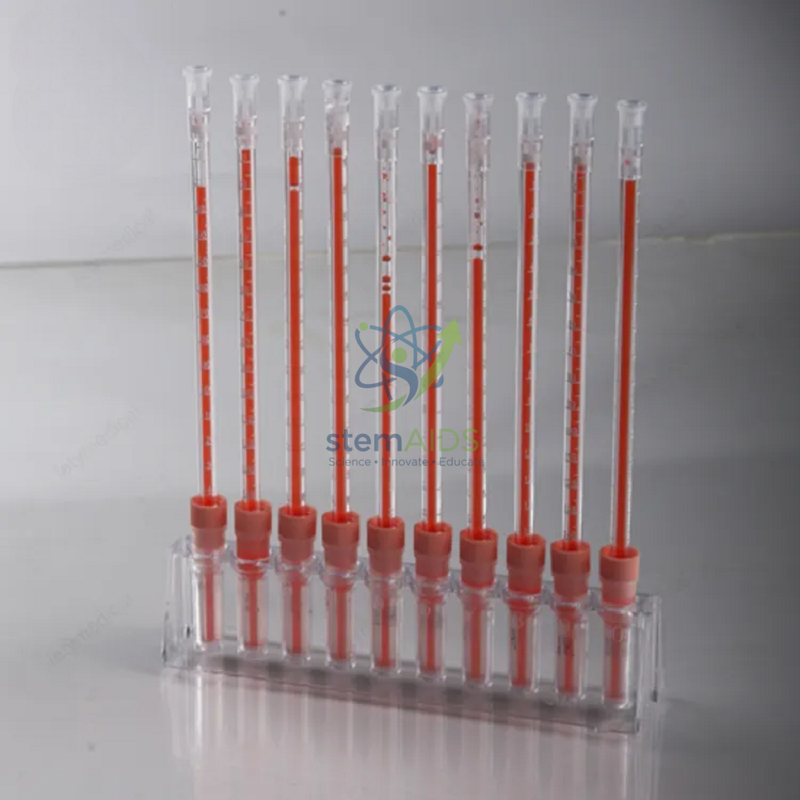
Disposable ESR Tubes/Kit
Precision-Bore Polystyrene Architecture: Manufactured with a strictly controlled internal diameter and optical-grade transparency, ensuring uniform laminar flow and precise meniscus visualization for consistent Westergren sedimentation readings across all diagnostic samples.
Integrated Zero-Leak Reservoir System: Features a pre-calibrated pipette-to-vial fitment utilizing a pressure-sealing mechanism, which facilitates aseptic sample aspiration and secure containment without the requirement for manual pipetting or external adapters.
$1.64
Quick Answer: Disposable ESR tubes are single-use graduated tubes, supplied alone or as a kit, used to measure the erythrocyte sedimentation rate: how far red blood cells settle in anticoagulated blood in one hour. They replace reusable glass ESR pipettes and remove the need to wash and dry tubes between patients.
How the ESR Test Works
In the Westergren method, venous blood is mixed with sodium citrate anticoagulant, traditionally four parts blood to one part citrate, and drawn into a vertical graduated tube. After exactly 60 minutes the height of clear plasma above the settled red cells is read in millimetres and reported in mm per hour. A raised ESR is a non-specific sign of inflammation, infection or other disease and is interpreted alongside other findings.
Disposable systems usually pair a tube that already contains citrate with a graduated pipette or column that stands in a rack, so the blood-to-citrate ratio is set by the fill mark. What this kit contains, whether a stand is included and how the graduations are marked can be confirmed with the order. The reusable glass option is the E.S.R. tube.
Accurate readings depend on technique: the tube must stand exactly vertical, away from vibration, direct sunlight and draughts, at room temperature, and it must be read at 60 minutes. Tilting the tube even slightly speeds sedimentation and gives a falsely high result.
Specifications
| Test | Erythrocyte sedimentation rate (ESR) |
| Type | Single-use tubes or kit |
| Anticoagulant | Sodium citrate, as used in the Westergren method |
| Kit contents and graduation | Confirm at enquiry |
| Reading | Millimetres of clear plasma after 60 minutes |
Applications
- Routine ESR testing in hospital and clinic laboratories
- Haematology practicals for medical laboratory technology students
- Health camps and small labs without facilities to wash glass ESR pipettes
- Following the course of inflammatory conditions alongside other tests
Care & Handling
- Mix blood and citrate gently by inversion; do not shake.
- Stand tubes in a level rack out of sunlight, heat and vibration.
- Start a timer at filling and read at exactly 60 minutes.
- Dispose of used tubes as biomedical waste according to local rules, and never reuse them.
Why Choose LabEquip
Pathology labs, diagnostic centres, health camps and paramedical colleges use disposable ESR tubes to save washing time and reduce blood exposure. LabEquip lists the kit in the Biology Lab Products range; send your test volume and preferred format through the contact page.
Frequently Asked Questions
What does ESR measure?
ESR measures how many millimetres red blood cells settle in a column of anticoagulated blood in one hour. Faster settling usually reflects higher levels of certain plasma proteins, which rise with inflammation.
Why use disposable ESR tubes instead of glass tubes?
Disposable tubes remove washing and drying, avoid errors from dirty or wet glass and reduce staff exposure to blood. Glass tubes can be reused but need careful cleaning between tests.
How long does the ESR test take?
The standard reading is taken after exactly 60 minutes. Reading early or late changes the result, so start a timer when the tube is set up.
What can give a wrong ESR result?
A tilted tube and a warm room speed up settling and raise the reading, while a clotted sample or an incorrect blood-to-citrate ratio distorts it. Keep the tube vertical, at room temperature and filled to the correct mark.
Can ESR be measured on blood kept in the fridge?
Refrigerated blood should be brought back to room temperature and mixed before testing, and the test set up within the time the laboratory allows. Cold blood settles differently and gives unreliable results.
What is a normal ESR?
Normal ranges depend on age and sex and differ slightly between laboratories. Values are generally higher in women and older people, so a result should always be compared with the lab’s own reference range.
Last Updated: September 2026
You must be logged in to post a review.
Bestsellers




Reviews
There are no reviews yet.