


In Stock
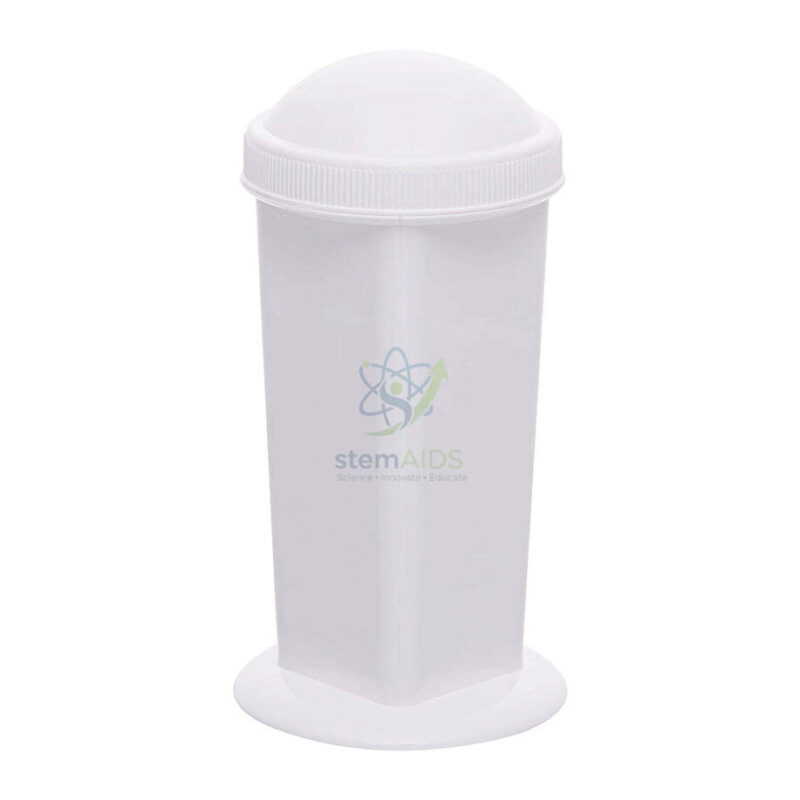
Coplin Staining Jar, PP, Domed Cap
$6.15
Quick Answer: The Coplin Staining Jar, PP, Domed Cap is a Coplin staining jar moulded from polypropylene, with internal grooves that hold microscope slides upright and a domed cap that closes over them. It is used to immerse slides in stains, fixatives and rinses in histology, cytology and microbiology labs.
Polypropylene versus Glass Coplin Jars
A Coplin jar is a small, tall vessel with vertical grooves moulded inside, spaced so that slides stand on edge without touching each other and stain reaches both faces evenly. Rows of Coplin jars, each holding a different reagent, let a batch of slides pass through a staining sequence by simply lifting them from one jar to the next.
This version is made of polypropylene (PP) rather than glass. PP does not shatter when knocked over or dropped into a sink, which matters in student labs, and it is generally resistant to water-based stains, dilute acids and alkalis and alcohols. Polypropylene labware is also commonly autoclavable at 121 °C, though the rating of the specific jar should be checked first. The trade-offs are lower clarity than glass and weaker resistance to aromatic solvents such as xylene, for which a glass Coplin jar is the usual choice.
The domed cap sits higher than a flat lid, leaving headroom above the slide ends so that labels and frosted tops are not pressed or smeared, and it reduces evaporation of alcohols between uses. The number of slides the grooves hold and the jar’s volume are not stated in the listing.
Specifications
| Item | Coplin staining jar for microscope slides |
| Material | Polypropylene (PP), as stated in the product name |
| Closure | Domed cap |
| Slide position | Upright in internal grooves, faces separated |
| Slide capacity and volume | Confirm at enquiry |
Staining Tasks
- Haematoxylin and eosin staining sequences in histology teaching
- Fixing and staining blood and cytology smears
- Alcohol dehydration series before mounting, where the reagent is compatible with PP
- Rinsing and holding slides between steps of Gram staining
Using and Cleaning the Jar
- Label each Coplin staining jar with its reagent and keep it capped when not in use to limit evaporation.
- Do not use PP jars for xylene or other aromatic solvents; use glass for those steps.
- Wash with warm water and laboratory detergent; avoid abrasive pads that scratch the grooves.
- Check the jar’s temperature rating before autoclaving and leave the cap loose in the autoclave.
Why Choose LabEquip
Histology and pathology teaching labs buy PP Coplin jars for the water and alcohol steps where students handle jars most and breakages are likely. LabEquip lists it among its biology lab products; the Euro-design Coplin jar is an alternative in the lab glassware range.
Frequently Asked Questions
Should I choose a PP or a glass Coplin jar?
Choose polypropylene for water-based stains, alcohols and busy student benches, since it does not break when dropped. Choose glass where slides pass through xylene or other aromatic solvents, or where you need to see the slides clearly through the wall.
Can a polypropylene Coplin jar be autoclaved?
Polypropylene labware is generally autoclavable at 121 °C, but temperature ratings differ between products, so check this jar’s rating first. Autoclave with the cap loose so pressure can equalise, and let it cool before tightening.
Why does the jar have a domed cap?
The dome leaves space above the tops of the slides, so frosted ends and labels are not pressed against the lid. It also closes the jar to slow evaporation of alcohols and stains between staining runs.
How many slides fit in a Coplin jar?
Coplin jars are usually grooved for about five slides, and some take ten when slides are placed back to back. The capacity of this jar is not stated in the listing and should be confirmed when you enquire.
How are slides moved through a staining sequence?
Arrange Coplin jars in a row, each labelled with its reagent in the order of the protocol. Lift the slides from one jar, drain the excess on tissue and place them in the next, timing each step. Keep water rinse jars between stains to limit carry-over.
Does polypropylene absorb stains?
Polypropylene does not soak up water-based stains the way porous materials do, but strong dyes can tint the plastic over time. Rinse the jar promptly after use, and keep separate jars for heavily coloured stains such as haematoxylin.
Last Updated: September 2026
You must be logged in to post a review.
Bestsellers




Reviews
There are no reviews yet.